History
-
The Wall and the Watchmen: A Chinese History Story
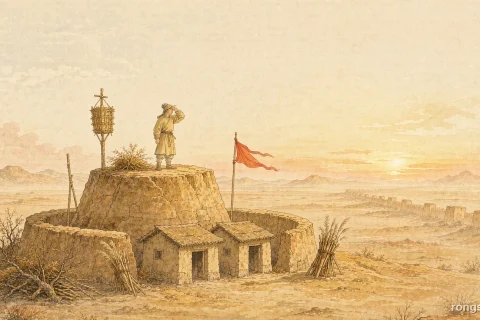
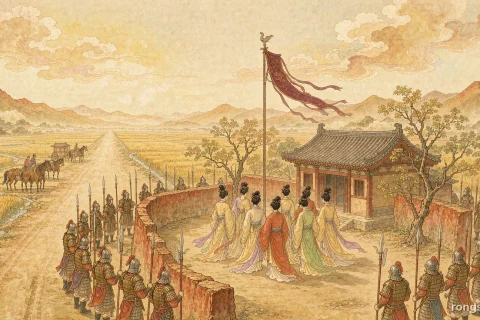
A conscript climbs an earthen platform at dawn and looks north across the desert. He and two other men hold one tower of the Han frontier, watching for dust, reading footprints in the sand, and waiting for the order to light a fire that will run tower to tower toward the capital. The wooden slips they left behind have outlasted the wall.
-
The General Who Won and Was Killed: A Chinese History Story
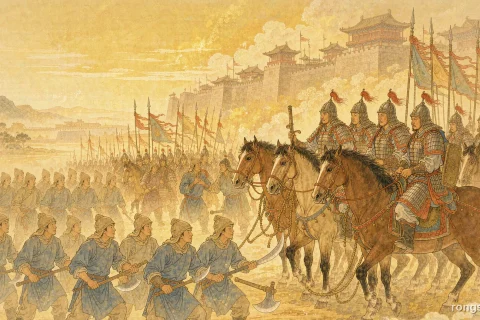
In the summer of 1140 his infantry broke the iron cavalry of the Jin at Yancheng, and for a moment the road to the old capital lay open. Then the orders came from the court in the south, one after another, telling him to pull back. A year later he was in a prison cell, and the men who put him there could not even name his crime.
-
Counting Wealth Instead of Heads: A Chinese History Story
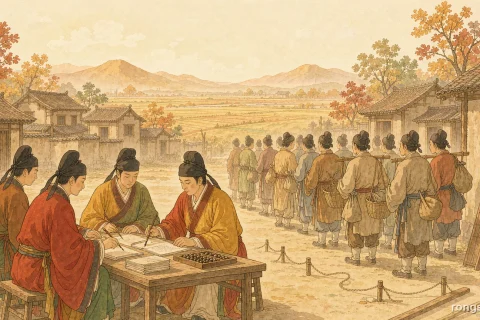
For four hundred years the Tang state taxed men by counting them: land, body, household. Then the registers stopped matching the fields, the rebellion emptied the rolls, and several hundred separate charges were being collected with no one to stop them. In 780 a chief councillor named Yang Yan tried something else. Count wealth, not heads. It held for eight centuries.
-
The Crossbow Bolt at Chanyuan: A Chinese History Story
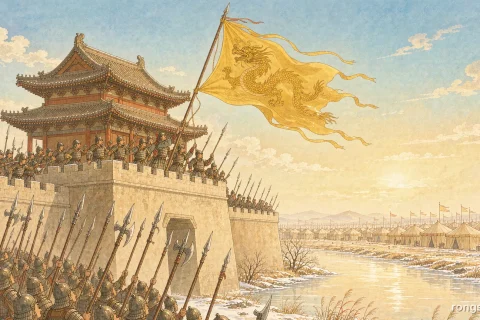
In 1004 the Liao army drove south to the Yellow River, and the Song court argued about running. One minister held the emperor to his post, and at the town of Chanzhou a single crossbow bolt brought down the Liao field commander. That winter the two empires swore a treaty: no land would change hands, and the Song would send silk and silver every year. It held for a hundred and twenty years.
-
The Day the Army Stopped at Mawei: A Chinese History Story
In the summer of 756 the imperial guard halted on the road west of the Tang capital. The pass at Tongguan had fallen, the signal fire had not come, and the emperor had slipped out of the city before dawn. Two days without food later, the soldiers stopped at a post station called Mawei and would not move until the emperor gave up the woman at his side.
-
The Sealed Library at Dunhuang: A Chinese History Story
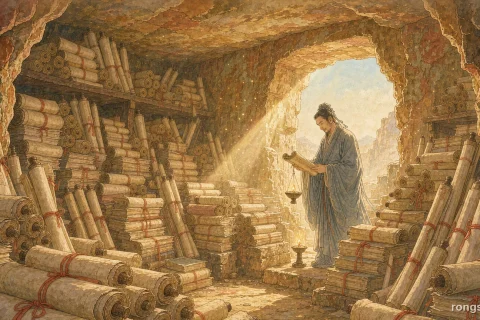
In the summer of 1900 a Taoist priest had sand cleared from the caves at Dunhuang, and the wall at the end of a passage turned out to be hollow. Behind it was a room about three metres across, packed to the ceiling with cloth-wrapped bundles: fifty thousand manuscripts, laid up in the dark since the eleventh century. He reported the find up the chain. Nobody came for seven years. Then the buyers arrived, and the cave began to empty.
-
The Envoy Who Would Not Kneel: A Chinese History Story
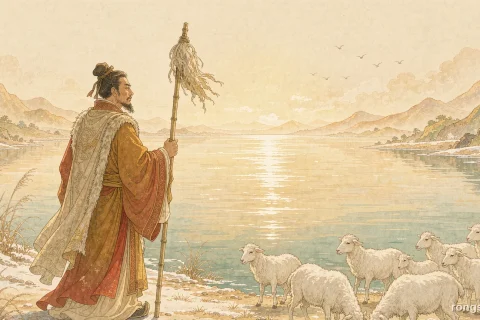
In 100 BCE a Han envoy named Su Wu drove a knife into his own chest rather than be questioned in a Xiongnu tent. They saved him. When he still would not kneel, they sent him north to a cold lake to herd rams, and told him he could go home when the rams bore lambs. He kept the envoy’s staff in his hands for nineteen years, until the yak hair had all fallen off it.
-
The Pole at the South Gate: A Chinese History Story
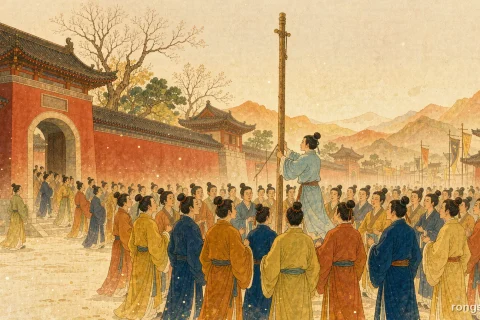
In 338 BCE the man who had remade the state of Qin reached a frontier post and asked for a bed. The innkeeper wanted his papers, because the law of Lord Shang said that anyone who sheltered a traveller without checking his papers answered for it himself. He had none. He sighed, and went on. Twenty years earlier he had set a pole outside the south gate of the market and paid a man fifty jin to carry it across the square, so that the country would believe what he said next.
-
Seven Voyages, Then Silence: A Chinese History Story
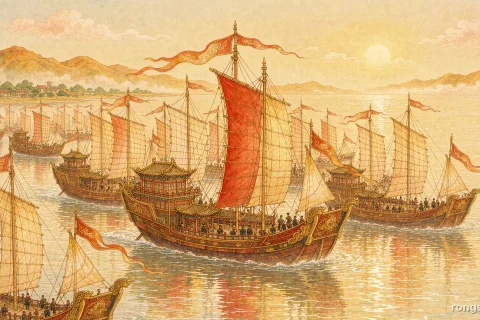
In 1405 a fleet of more than two hundred ships and twenty seven thousand men sailed out of Fujian under a eunuch admiral named Zheng He. Over twenty eight years it went to Calicut, Hormuz and the coast of Africa, took a pirate chief alive, brought a giraffe home as a qilin, and set up one stone in Ceylon inscribed in three languages. Then the emperor who sent it died, the records were hidden or burned, and the ships rotted in the harbour at Liujiagang.
-
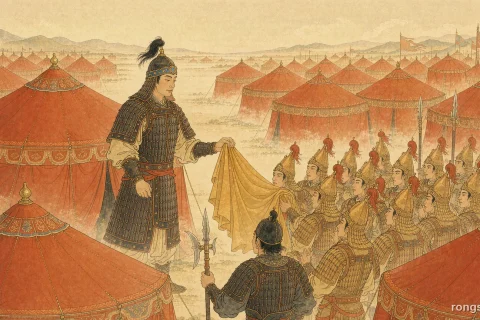
The Yellow Robe at Chenqiao: A Chinese History Story
On the first day of the new year in 960 a frontier dispatch sent the commander of the palace guards out of Kaifeng with the whole army. Three days later his own soldiers wrapped a yellow robe around him in the dark at Chenqiao. The robe was ready, folded, the right size. Four days after the dispatch arrived, a boy of seven signed away the throne and the dynasty changed its name without a single market closing.