The sword turned once in the lamplight, and then it turned again.
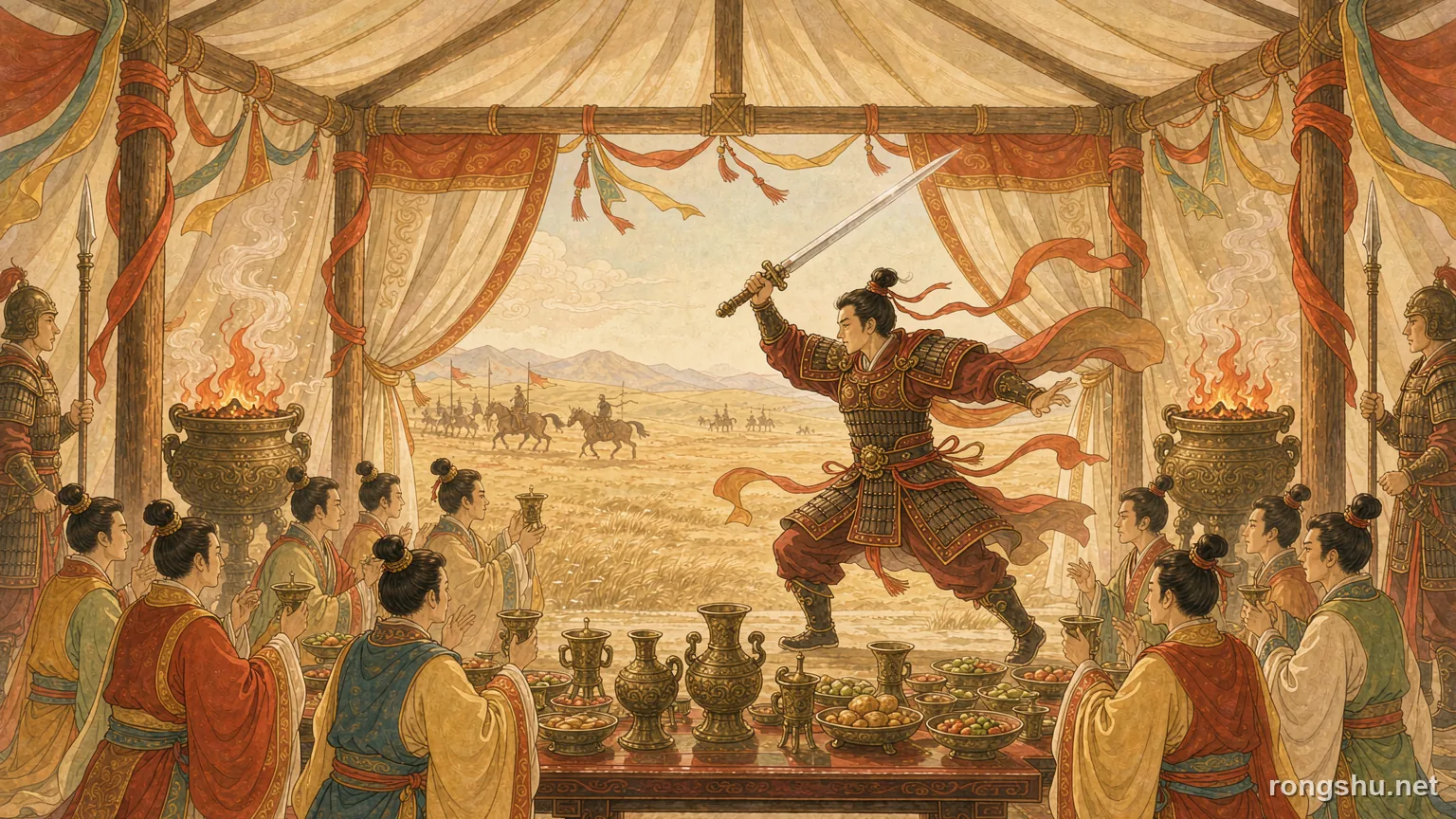
The wine was still warm. The man dancing with the sword said it was for the pleasure of the guests. Each time the blade drifted close to one particular man, another man stepped in front of him and took it on his own body.
The man doing the blocking was the host’s uncle. The man the sword kept finding was a guest, invited that morning by name.
The host sat facing east and did not move.
His name was Xiang Yu. He had forty thousand men behind the hills. His guest had brought a hundred and one riders.
Behind them lay the wreck of the empire that had first stitched ancient China into one country. In front of them lay the argument over who would build the next one.
To understand that dinner, you have to know what the month before it had done.
Everyone in China agreed by then that the Qin empire was finished. Its first emperor had built roads, standardised writing and weights, walled the north, and buried himself under an army of clay.
A pact had been made among the rebel commanders: the first of them to reach the heartland would rule it.
That man was Liu Bang.
He did not storm the passes. He took surrenders and walked through the last gate with no battle worth the name. The last Qin ruler came out to meet him in a plain carriage drawn by white horses, the imperial seal hung around his own neck.
Inside the capital he looked at the palaces, the gold and the women, and wanted them. Two of his men talked him out of it. He sealed the treasuries, took his army back out to camp in the fields, and spoke to the elders of the region. Three rules, he said. Kill a man and you die. Wound a man or rob him and you answer for it. Everything else the Qin called law is abolished.
The people brought him cattle and wine, and he refused it, saying the granaries were full.
Then somebody gave him advice. This land is rich and walled by mountains and rivers, the man said. If Xiang Yu walks in here, you will never hold it. Close the pass and keep the other armies out.
Liu Bang did it. It was the decision he least liked to be reminded of.
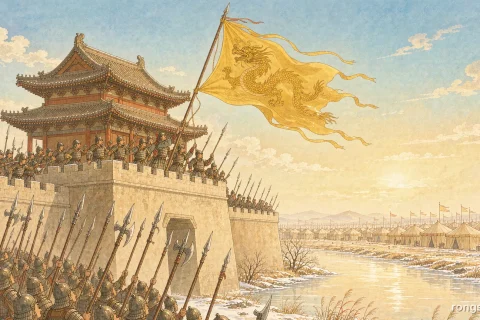
Xiang Yu arrived at the pass and found the gate shut.
Four months earlier he had crossed a river against the Qin, burned his own boats behind him, smashed the cooking pots, and given his men three days of dry food so nobody could think about going home. He fought nine engagements and broke the Qin field army. The other commanders, when they came to his camp, crawled in on their knees and did not look up.
He was twenty-six.
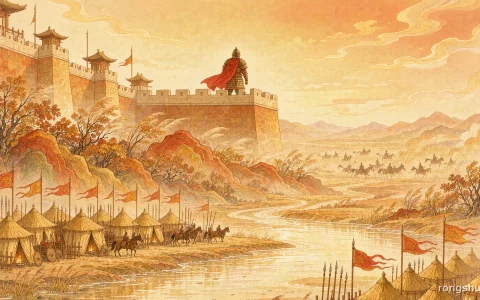
Now he could not get through a gate. He stormed it and moved west until his camp lay a few miles from the capital.
Then a small thing set him alight. One of Liu Bang’s staff officers, a man named Cao Wushang, sent him a message. Liu Bang intends to make himself king of this region, the message said. He means to appoint the last Qin ruler as his prime minister, and he has taken the whole treasury for himself.
Cao Wushang wanted a reward.
Xiang Yu gave an order for the morning. Feed the men before dawn. We are going to destroy Liu Bang’s army.
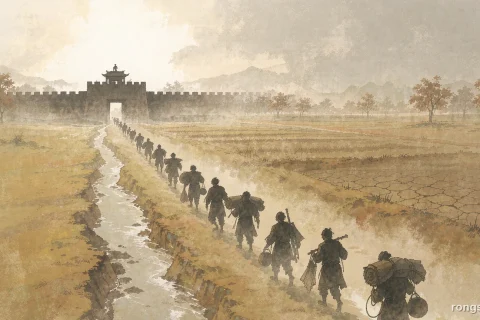
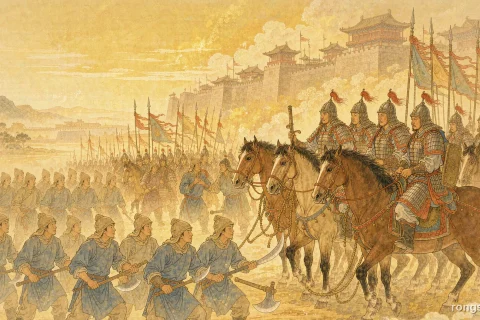
That night the numbers were forty thousand against ten thousand.
His chief adviser, Fan Zeng, added a reason of his own. Liu Bang was greedy for money and fond of women, he said, and since he came through the pass he has taken nothing and touched no one. That is not the behaviour of a small man. I had his fortune read. The signs above him are those of a dragon. Strike before he moves.
Inside Xiang Yu’s camp there was exactly one loose thread.
The thread was the uncle, Xiang Bo, an old friend of Liu Bang’s strategist, Zhang Liang.
Years before, Xiang Bo had killed a man and Zhang Liang had saved his life.
That night Xiang Bo rode over to Liu Bang’s camp, found Zhang Liang, and told him the whole plan for the morning. Come away with me, he said. There is no reason for you to die with the rest of them.
Zhang Liang said he could not leave without a word. He had been sent to escort Liu Bang, and a man does not walk out on his post in the middle of an emergency.
Then he told Liu Bang everything.
Liu Bang heard it out, and asked a question first. Who gave you the idea about the pass?
A shallow man, said Zhang Liang.
And your soldiers, said Zhang Liang. Can they stand against Xiang Yu?
Liu Bang was quiet for a long moment. No, he said. They cannot. What do we do?
Tell Xiang Bo you would never turn against Xiang Yu, said Zhang Liang. I will do the telling.
How do you know him?
Zhang Liang explained.
Liu Bang asked how old Xiang Bo was. Zhang Liang said older than himself. Then bring him in, said Liu Bang, and I will treat him as an elder brother.
A Visit in the Night
Xiang Bo came in. Liu Bang toasted him, and before the cup was empty he had proposed a marriage between their two families.
Then he said the rest of it in one breath. Since I entered this region I have not touched so much as a hair of anyone’s property. I registered the officials, I sealed the storehouses, and I have been waiting for the general to arrive. The troops at the pass were there to stop bandits and accidents, nothing else. I have been counting the days until he came. Why would I rebel.
Xiang Bo agreed to carry the message, and left one piece of advice behind. Come early tomorrow and apologise to his face.
He rode back and reported every word to Xiang Yu, then added words of his own. If Liu Bang had not broken into this region first, would you have got in at all? He has done you a great service. To attack him now would be wrong. Better to receive him well.
Xiang Yu agreed to that too.
At daylight Liu Bang came, with a hundred riders behind him.
He began with an apology. We fought the Qin together, he said. You in the north, I in the south. I never expected to get through the pass before you. I never expected to see you again at all. Now somebody has been whispering between us.
Xiang Yu answered with a single sentence.
It was your own officer, Cao Wushang, who told me. Otherwise why would I have thought it.
With that one sentence, he handed over the man who had informed on his guest.
Seating at the Table
The record of that dinner notes where every man sat, and adds no word of explanation.
Xiang Yu and his uncle sat facing east. Fan Zeng, the adviser, faced south. Liu Bang faced north. Zhang Liang sat at the side, facing west.
In a hall, the seat facing east is the seat of honour.
The host took it, and the guest was given the place of a subordinate.
Not one line of comment was added to the scene.
Fan Zeng spent the meal trying to catch his master’s eye. Three times he lifted the jade ring at his belt.
In Chinese, the word for that ring sounds like the word for a decision. Each time he raised it, he was saying the same thing. Do it now.
Xiang Yu did not respond.
Fan Zeng went outside and called over a cousin of the host named Xiang Zhuang. He did not dress it up. The general has a soft heart, he said. Go in and offer a toast, then ask to dance with your sword, and put it through the guest while he is still in his seat. If you do not, every one of us will end up his prisoner.
Xiang Zhuang went in, poured the toast, and made his request. There is no music in camp, he said. Let me dance with my sword.
Xiang Yu said yes.
The blade came out. Xiang Bo rose with his own sword and began to dance too, keeping his body between the blade and the guest at every pass.
Xiang Zhuang never got a clean line.
The Man at the Door
Zhang Liang slipped out to the camp gate.
The man was Fan Kuai, Liu Bang’s bodyguard, who had started life as a butcher. He asked how it was going.
Badly, said Zhang Liang. The sword is out and it is aimed at your master.
Then let me in, said Fan Kuai, and I will die in there with him.
He went through the gate with sword and shield. Two guards crossed their halberds to stop him. He turned the shield edge-on, drove it into them, and they went down.
He pushed the tent curtain aside and stood facing west, staring at Xiang Yu with his hair standing up and the corners of his eyes stretched wide.
Xiang Yu put a hand on his sword and came up onto one knee. Who is this.
A bodyguard of Liu Bang, said Zhang Liang.
A strong man, said Xiang Yu. Give him a cup of wine.
They brought a cup the size of a small jar.
Fan Kuai thanked him and drank it where he stood.
Xiang Yu said: Give him a shoulder of pork.
What arrived was raw.
Fan Kuai laid his shield flat, put the meat on it, drew his sword, and cut and ate it.
Can you drink more, said Xiang Yu.
I would not refuse death, said Fan Kuai, so why would I refuse a cup of wine.
Then he made the speech. The Qin ruler had the heart of a wolf and a tiger. He killed as if he could never kill enough and punished as if he could never punish hard enough, and the whole world turned against him. The old king of Chu promised his commanders that whoever entered the capital first would be its king. Your guest entered it first, touched nothing, sealed the palaces, took his men back to the fields and waited for you. The troops at the pass were guarding against thieves. A man with that record should have been made a lord. Instead you listen to a whisper and prepare to kill him. This is the road the Qin walked, and I do not think you should take it.
Xiang Yu had nothing ready to say. He told him to sit down.
Fan Kuai sat beside Zhang Liang, and the meal went on.
Knife and Cutting Board
After a while Liu Bang got up and said he needed the latrine.
He took Fan Kuai with him. Xiang Yu sent an officer out to bring him back.
Standing in the dark, Liu Bang said the awkward thing out loud. I have walked out on my host without taking leave. What do I do.
Fan Kuai answered with the line that outlived every man at that table. Great plans do not bother with small courtesies, and great ceremonies do not wait on small politeness. Right now they are the knife and the cutting board and we are the meat. What is there to say goodbye for.
So Liu Bang left.
He abandoned his carriage and escort, got on a single horse, and went off cross-country with four men running behind him carrying swords and shields, down under the hill and along the side paths toward his own camp.
Before he went he gave Zhang Liang his instructions. From this road it is less than twenty miles to my camp. Wait until you judge that I am back, then go in.
Zhang Liang waited, then went in to make his excuses. My master has no head for wine, he said, and could not take his leave in person. He sends me with a pair of white jade discs for you, and a pair of jade cups for your general.
Where is he, said Xiang Yu.
He heard that you meant to take him to task, said Zhang Liang. He left alone. He is back in his camp by now.
Xiang Yu accepted the jade and set it down beside his seat.
Fan Zeng took the cups, threw them on the ground, and broke them with his sword.
Ah, he said. This boy is not worth planning with. The man who takes the empire from you will be Liu Bang. And all of us here will be his prisoners.
When Liu Bang reached his own lines, the first thing he did was have Cao Wushang killed.
English readers know this shape of story, because Europe has its own. A French king was taken off his horse at Poitiers in 1356 and ransomed home over years. In the Scottish Highlands in 1692, soldiers accepted one clan’s hospitality for a fortnight and then killed their hosts in their beds on government orders. Killing a guest you have fed is a crime old enough to have its own name. So is letting a prisoner that valuable walk out of your tent.
The difference is that at Hongmen nothing happened at all.
The history of what came after is not in doubt.
A few days later Xiang Yu sacked the capital. He had the last Qin ruler executed, burned the palaces so the fires ran for three months, and turned for home with the treasure and the women.
Someone advised him to stay. This land is walled by mountains and rivers, the man said. The soil is good. Make your capital here and you can hold the empire.
Xiang Yu looked at the black ribs of the Qin palaces, and thought about home. A man who gets rich and does not go back to his own country, he said, is like a man walking through the night in embroidered clothes. Nobody sees it.
The man who advised him made the mistake of saying that this was exactly what you would expect from a monkey in a hat. Xiang Yu had him boiled.
He was twenty-seven that year.
Four years later his army broke at Gaixia, with songs coming out of the enemy camp in the night from his own countrymen, and he cut his own throat beside the Wu River rather than cross it and live.
The hundred and one riders who followed Liu Bang to that dinner became the officials of a dynasty that lasted four hundred years.
The dinner itself went into the histories, and from the histories into the schoolbooks, and it has been argued over ever since.
It is the most famous meal in Chinese history. It is also one of the very few that nobody remembers for the food.
What people argue about is a question that will never have an answer.
On that morning, when the sword was in the tent and the guest was in his seat, did Xiang Yu hold back out of mercy, or had he simply never once considered his guest a serious man.