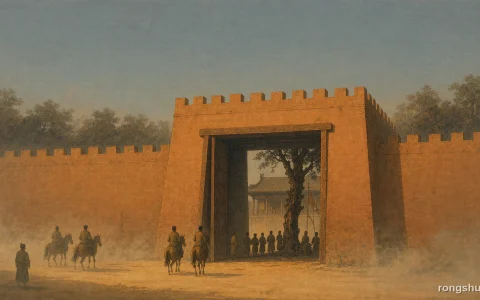
In the spring of 1074, the roads outside the capital filled with people who had nothing left.
The drought had been going for months. The wheat in the fields stood as high as grass. The riverbeds had cracked open wide enough to put a hand into.
More of them arrived every day.
They came toward the city gates carrying straw mats, cracked cooking pots, and children. The clerk on duty at the gate lost count of them. What he remembered afterwards was that some of them sat down on the road and did not get up again.
Inside the gate there was a very junior official named Zheng Xia. His job was the Anshang Gate, and little else.
Every day he watched these people come in and lie down in the streets.
So he did one thing.
He made a drawing.
To understand why a drawing could keep an emperor awake at night, you have to know what the Song empire looked like by then.
On the surface it was a good age to live in. Scholars could become officials. Merchants could become rich. The capital held a million people and the night markets never closed. The river in the famous painted scroll of the city is crowded with boats from morning to night.
The ledgers were less cheerful.
Money for the army, money for the officials, and the annual payments to the Liao and the Tangut state all climbed, year after year. The Northern Song ruled about half the territory the Tang had ruled, and employed several times as many officials. A single sitting of the highest civil examination had once produced twenty or thirty graduates; by this period it produced three or five hundred.
Revenue rose every year. Expenditure rose faster.
In the 1040s a reforming chancellor named Fan Zhongyan had tried to change the system. His programme lasted a little over a year before it was wound up.
In 1067 the throne passed to Emperor Shenzong. He was nineteen years old.
A nineteen-year-old emperor inherited a hundred-year-old machine, and what he saw from the throne was a simple shortage of money.
He began looking for somebody to take the machine apart and put it back together.
The Man Who Refused Promotion
Somebody recommended Wang Anshi, of Linchuan in Jiangxi. He was forty-six.
There was one strange thing about his record: he kept turning promotions down.
He had passed the highest examination at twenty-one, with one of the best marks in his year. For the next two decades he served in the provinces, moving from post to post. Several times the court called him to the capital and offered him a comfortable place at the centre of things. He declined.
It was not affected modesty. He explained it himself. He wanted to work out, at the level of a single county, how a thing ought to be done, before he went and told an emperor how to do it for the whole empire.
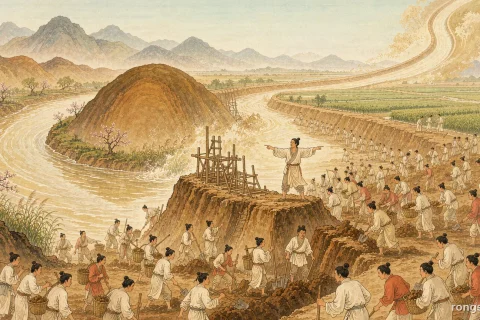
As magistrate of Yin County he had repaired dikes, dredged ponds and opened waterways. And in the hungry weeks before harvest, when the old grain in the state granaries was going stale and the farmers had nothing, he lent them that grain, taking it back after the harvest with a small interest added.
The granaries got fresh grain every year, the farmers were not driven to the moneylenders, and nobody had to sell land to eat. That arrangement stayed with him for twenty years.
In 1058 he came to the capital to report on his work and submitted a long memorial to the emperor, setting out the whole case for reform. The emperor praised his ability and adopted none of it.
Ten years later the chance came.
In 1069 Shenzong appointed Wang Anshi to the office of vice chancellor. The next year he was chancellor. The reform of a dynasty began.
When the Grain Ran Out
What Wang Anshi intended was simple to state. Money in the treasury, and soldiers in the ranks.
He created a new bureau to draft the new laws, and then they came down one after another.
The most important was the Green Sprouts Law.
The rule was this. The lending came twice a year, in the second or third month and again in the fifth or sixth. Those were the lean weeks, when the old grain was gone and prices were at their highest. The county would lend farmers grain or cash out of the state reserve. It was repaid after harvest along with the tax, plus interest of two fen.
He had tried it in Yin County. He believed in it.
By his account it would do three things at once. Farmers would no longer borrow from the moneylenders at ruinous rates. Wealthy households would no longer be able to corner the grain market and drive the price up. And the state would earn a steady income.
The second law abolished unpaid labour service. Under the old system every household owed the government a number of days of work each year, which meant leaving your fields whenever the government called. The new system replaced that with a cash payment graded by household wealth; the state used the money to hire labourers instead.
The third group of laws, on markets and transport, put the government itself into the grain and goods trade, to hold prices down and take a share of the profit that brokers had been keeping.
A fourth set surveyed land and assessed tax by the quality of the soil, which meant the great estates could no longer hide half their acres.
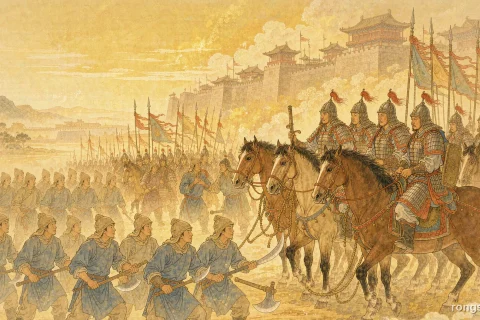
For defence there was the Local Militia Law: villages organised into mutual-responsibility groups, drilling in the slack season, keeping order locally, and available as a reservoir of soldiers. The point was to stop paying for a million men who could not fight.
Read one at a time, each law has a defensible case.
The trouble began after they were issued.
Europe knew this man under other names. In 1774 Turgot became finance minister of France, freed the grain trade, abolished the corvee and proposed to tax the nobility, and was gone inside two years, with most of his work undone. The shape of the story is always the same. A minister with a plan, a treasury that cannot wait, and an administrative machine that converts every instruction into something the author would not recognise.
The Green Sprouts Law said in plain words that lending must be voluntary.
But the officials who had to carry it out were given quotas.
Each county had a figure for how much money it must lend and how many households it must reach. A county that fell short would fail its assessment.
So the word voluntary disappeared. A wealthy household with land and grain did not need to borrow. The clerks assessed it anyway, by wealth band, and the money was pushed through the door. A poor household could not repay, and the rich neighbour who had stood surety had to pay for him.
Nor was the interest two fen. With the additions that appeared at each level, a contemporary calculation put the real figure at four in ten for the year.
The labour law went the same way. Households that had never owed service in their lives, from officials, from temples, from families with no adult man in them, were assessed for a contribution anyway.
The militia law was worse. Men were pulled away for drill in seasons when the fields needed them, carrying their own kit and food, and beaten if they drilled badly. In 1071, men in the capital region deliberately broke their own fingers and crushed their own wrists to get out of it.
The market laws, meant to break the power of the big brokers, ended with government offices selling vegetables, fruit, tea, salt and even paper in shops across the capital. Small traders lost their living, and the household budget of an ordinary townsman went up, not down.
Sima Guang, in one of his letters, did the arithmetic out loud. Who cares whether a household is rich or poor, or willing or unwilling? The money is forced on them, and four in ten a year is collected on it. To call that anything other than a grab for profit, he wrote, is more than I can believe.
Su Shi made a different point. If the government is going to buy and sell these goods itself, it must erect offices, appoint clerks, keep the books and pay salaries, and that cost is already high. It buys at the lowest price and sells at the highest, and where is the gain to the merchant then?
Wang Anshi answered hard. A good manager of the economy, he said, can fill the treasury without raising taxes.
Sima Guang answered harder. There is no such thing. The goods produced by land and labour are either in the hands of the people or in the hands of the government. If you are not raising taxes, you are simply reaching into a pocket by another route.
The two of them argued that point for more than ten years and neither moved.
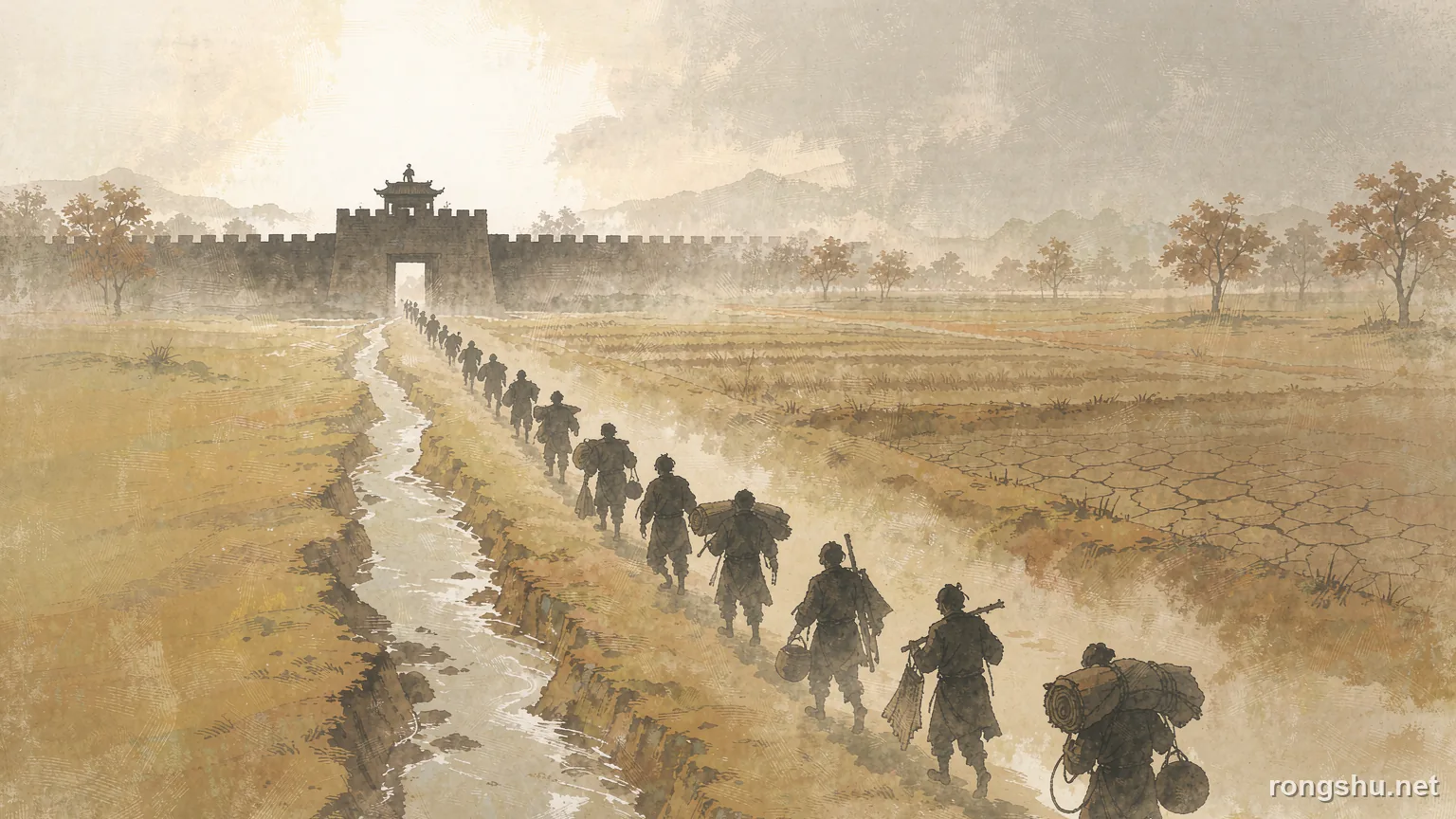
A Drawing of Refugees
The turn came in 1074.
That spring the drought spread until it had taken the whole plain.
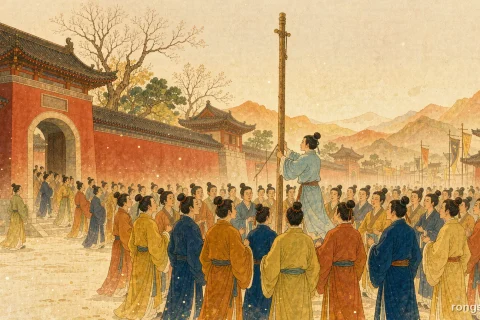
Zheng Xia, the gate clerk, drew what he had watched, and sent the drawing up with a memorial.
His memorial was blunt. The drought, he wrote, was caused by Wang Anshi. Dismiss Wang Anshi and it will rain.
The emperor examined the drawing again and again. The histories say that he sighed deeply several times, put it in his sleeve and took it in with him, and could not sleep that night.
The same season, two dowager empresses of the palace wept in front of him and told him that Wang Anshi was wrecking the empire.
In the fourth month Wang Anshi was removed as chancellor and sent to govern Jiangning.
It was his first dismissal.
His replacement was Lu Huiqing, a man he had promoted himself.
Friends Turned Rivals
Wang Anshi made a great many enemies, and the list is worth reading.
Sima Guang. Han Qi. Fu Bi. Ouyang Xiu. Wen Yanbo. Fan Zhen. Su Shi. Su Zhe. Cheng Hao.
These were not corrupt men and they were not blindly reactionary. Some of them had been his friends for decades.
Sima Guang had been his closest friend at court. When Wang Anshi began to argue that the fault lay in the structures and not in the men, Sima Guang argued the opposite: that the structures were sound and the men were the problem. Each of them, in his own mind, was defending the empire from the other. Neither of them treated the other as a fool, which is why the quarrel lasted as long as it did.
Sima Guang wrote him three long letters, attacking the new laws as an offence against the proper limits of government.
Wang Anshi wrote one back. The reply is still taught in Chinese schools. In it he says that if doing nothing, and keeping to what has always been done, is to be the standard, then he cannot accept it.
He was not short of an answer. He was simply not going to give way.
He also said three things in public that cost him the whole older generation of officials at once. He said that unusual natural events need not be feared, that the precedents of the ancestors need not be followed, and that the opinions of other people need not be consulted.
Half Mountain Garden
In 1075 Emperor Shenzong brought him back and made him chancellor a second time.
By then the situation had changed.
His own group had begun to turn on itself. During his absence Lu Huiqing had moved to take over the party, and had used a legal case to attack the brother of Wang Anshi. Wang Pang, the son, retaliated by impeaching Lu Huiqing.
In 1076 Wang Pang died. He was thirty-three.
In the tenth month of that year Wang Anshi was dismissed a second time. He took a boat out of Kaifeng and went south down the canal to Jiangning.
Outside the eastern gate of the city he bought a piece of land, cut a channel to drain it and built a house. It stood seven li from the gate and seven li from the peak of Zhongshan, which put it exactly halfway, so he called it Half Mountain Garden.
He lived there for ten years, riding a donkey around the hill with one or two servants. Visitors said he looked like a country schoolmaster.
Those years were not a total loss for the empire. In 1073 a general named Wang Shao had marched west and recovered several prefectures from the Tangut, extending Song territory by more than a thousand kilometres, one of the very few clear military victories of the Northern Song.
In the third month of 1085 Emperor Shenzong died, aged thirty-eight. His son was nine, and the grandmother of the boy took the regency.
She had never liked the new laws. She brought Sima Guang back and made him chancellor.
Sima Guang wanted to repeal everything, and there was a doctrinal difficulty: a son does not undo the work of his father within three years of the funeral. He solved it with four characters. The mother, he said, is correcting what the son did. The regent was the mother.
Inside a year the Green Sprouts Law was gone, the market laws were stopped, and the labour law followed. Nearly the whole structure came out by the roots.
Sima Guang died in the ninth month of 1086.
Wang Anshi had died in the fourth month of the same year, at Half Mountain Garden, aged sixty-six.
The funeral of Wang Anshi did not settle anything.
When the Northern Song collapsed and its survivors fled south, the new court needed an explanation for the disaster, and found one in a chancellor who had been dead for forty years. They stripped his posthumous titles, removed him from the temple of Confucius and enrolled him among the traitors.
For the next eight hundred years, the standard verdict on him in Chinese letters was that of a stubborn, self-satisfied man who had wrecked a country out of vanity.
It was not until 1908 that anybody reopened the case in earnest. That year Liang Qichao, writing ten years after the failure of his own attempt to reform the Qing empire, published a study of Wang Anshi. Wang Anshi, he wrote, had a character like water across a thousand acres and a moral spine like a cliff.
Liang Qichao was living through his own failed reform. He was probably writing about himself.
The last entry in the account belongs to a friend.
When Sima Guang moved to abolish the labour law along with everything else, Su Shi stepped in front of him. There were provisions in it, Su Shi said, that were right, and ought to be kept. Sima Guang did not listen.
The labour law was struck down in 1086.
Wang Anshi died in April.
Sima Guang died in September.