The contract was signed on a morning in early June.
The sales office opened at nine. Zheng Hao and Jiang Ran were on the steps outside at half past eight, and neither of them said anything.
The steps were stone and had been in the sun all morning. They were hot to sit on.
In Jiang Ran’s hand was a receipt, the one they had been given half a month earlier when they paid the deposit.
It was a printed form with ruled boxes, filled in by hand. The agent had written carelessly, and the last stroke of the word deposit trailed off thin and long.
Zheng Hao took the paper and held it up to the light, read it once, and handed it back.
The Two Families Meet
Zheng Hao and Jiang Ran met five years ago.
He was doing plumbing and wiring for a renovation company. She worked in a pharmacy. She ate her lunch in the little back room, and he came in for a plaster one day because he had cut his hand.
After that he came often, and stood at the counter talking. About who had wired a socket backwards on site that week. About how many pieces of meat were in the lunch box.
They got together the second year. The third year they moved in together, into a one-bedroom flat they rent.
He is twenty-nine, she is twenty-seven. Neither of them is from this city. Both came out of county towns.
It was Jiang Ran who raised buying. She had done the sums. Rent is two thousand eight a month, and over five years that is more than a hundred thousand gone with nothing to show for it. Let us buy, she said.
With what money, he said.
He did not look up when he said it. In the last two years he has been fitting out flats, and he takes home a little over ten thousand a month in a good month. She takes home a little over five. Three years of saving has come to about a hundred thousand between them.
Here is what a reader outside China should picture. In a Chinese city a wedding usually comes with a flat, and the flat is usually not the couple’s money. It is the savings of two sets of parents plus whatever the two of them have scraped together. People have a phrase for it. The six wallets.
They looked at flats for four months.
The first two were second-hand. One was on the sixth floor with no lift, and the stair light was sound-triggered, so it came on as you stepped and went out behind you. Jiang Ran stopped talking at the fourth floor. On the way down she said, can we look at one with a lift.
After that they looked at new ones. The sales office had a model of the estate with lights on inside the little buildings, floor by floor. An agent gave them two cups of water. Zheng Hao drank his and set the cup down beside the model, and did not touch the small buildings in case he broke one.
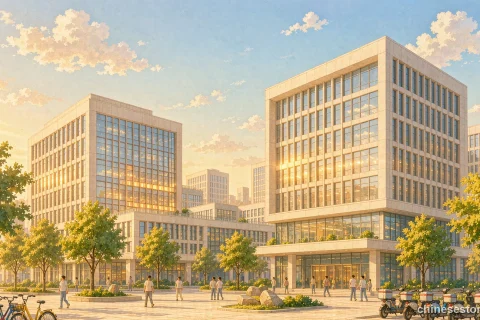
In the end they settled on a new block in the west of the city. A little over eighty square metres, two rooms, facing south. Just over one point three million yuan. The deposit was more than four hundred thousand.
The gap was three hundred thousand, and it had to come from the two families.
The meeting was arranged by Zheng Hao at a home-style restaurant, a table toward the back on the first floor.
Three people came from the Zheng side. His father Zheng Changshun, his mother, and his father’s elder brother. Two came from the Jiang side. Jiang Ran and her mother.
Zheng Changshun drives a truck in the county town and has done for more than twenty years. His hands are black. He rubbed them together as he sat down. Order what you like, he said. I am not particular.
Jiang Ran’s mother works as a carer at the county hospital. She is small and has a loud voice. She put her handbag on her knees and did not let go of it.
At first they talked about ordinary things. Whose child got into which university. Which cousin had got married.
Four dishes came. The glasses were filled.
Zheng Changshun put his glass down. On the flat, he said. Our family can put in three hundred thousand.
The table went quiet.
We can put in eighty thousand, Jiang Ran’s mother said.
Zheng Changshun nodded. That is enough, he said.
Jiang Ran looked down and took food. Zheng Hao poured her water.
The rest of the meal was loud and warm. Zheng Changshun had two drinks and told them that his truck had been bought outright and the insurance had just been renewed. His brother said he knew the contractor on that estate and the building was sound.
Zheng Hao went to pay the bill and his father stopped him.
Where the Three Hundred Thousand Came From
The question of the names came up the next day.
That evening Zheng Hao’s uncle telephoned. Zheng Hao took it on the balcony. Jiang Ran, in the room, heard the uncle’s voice through the glass and it was loud.
He came back in and sat on the sofa and did not speak for a while.
What did he say, Jiang Ran said.
He says the deed should have my name on it, Zheng Hao said.
Why, Jiang Ran said.
He says most of the money is ours, Zheng Hao said. He says it is a Zheng family flat.
Then what is my mother’s eighty thousand, Jiang Ran said.
That is in it too, Zheng Hao said.
In what way, Jiang Ran said.
Zheng Hao said nothing.
After a moment he said, put my name first. We can add yours later.
When is later, Jiang Ran said.
Zheng Hao turned his face away. Jiang Ran, he said. What do you want me to say.
She did not take it up. After a while she said, I am not trying to fight you about this.
Zheng Hao keeps a small notebook in the side pocket of his tool bag. Everything that has to be paid for goes in it. Pipe, wire, cement, the workers’ food money. Folded in the middle is a printout of the mortgage calculator from his phone.
Jiang Ran saw it once. She said nothing.
One night she was downstairs on the phone. She stood under the tree at the entrance to the compound. Mother, she said, do not get worked up. It is not the money I am worked up about, her mother said. It is the principle. Let me think, Jiang Ran said. She hung up and stood under the tree a while before going up.
For several days neither of them was easy. They left in the morning and came back at night and said little at the table.
Jiang Ran’s mother was not easy either. On the third day she telephoned. First she asked whether the flat was settled. Then she asked how many names would be on the paper.
We are still discussing it, Jiang Ran said.
Her mother paused on the line. I did not raise my daughter to end up with a later, she said.
Mother, Jiang Ran said.
I am not picking a fight, her mother said. I am asking.
Two days after that, Zheng Hao went back to the county town. He did not tell anyone. He took the bus.
He went back to find out where the three hundred thousand had come from.
That day his father was under the truck, trousers black with oil. Zheng Hao crouched by the wheel and passed him a spanner. Father, he said. The three hundred thousand. How much is left at home.
What do you want to know that for, Zheng Changshun said.
I want to know, Zheng Hao said.
Zheng Changshun wiped his hands. Thirty thousand left, he said.
Zheng Hao did not answer.
I borrowed eighty thousand from your uncle, Zheng Changshun said. Twenty thousand from your aunt. The rest, when the truck will not pass inspection, it gets sold.
He spoke without looking at his son. His eyes were on the underside of the truck.
Zheng Hao crouched there with the smell of oil in his hands, and it came to him that his father had not had a check-up in two years, saying there was no money for that.
He stayed the night in the county town. When he left in the morning his mother put a bag of salted duck eggs in his hand.
The Passbook Outside the Sales Office
Back in the city, Jiang Ran’s mother came.
She was on the bus for two hours. She brought a cloth bag with six apples in it. The first thing she did when she came in was look round and say the flat was small and faced north.
She sat down on the old sofa. Go and wash an apple for your mother, she said.
Jiang Ran went to the kitchen, washed one, and cut it into quarters. Her mother ate two and turned a bowl upside down over the rest.
Then she took something out of the cloth bag and laid it on her knees.
A bank passbook.
It was an old one, blue cover, the corners curled. Page after page of handwritten entries. A hundred out. Three thousand in. Two hundred out. In front of the closing balance there was a red stamp.
She opened it and pushed it across to her daughter.
Jiang Ran looked at it for a while, then looked up. Mother, she said. How much is this.
A hundred and twenty thousand, her mother said.
You said eighty, Jiang Ran said.
I said eighty so the Zhengs would not think we could do more, her mother said. She paused. And so you would not feel bad.
She said, this money did not fall out of the sky. Your mother has turned people over in their beds and wiped them down and fed them. Night shift after night shift. The corridor lights in the winter were broken for half a year and nobody fixed them.
She said, I saved it for fourteen years.
She said, I meant to keep it to grow old on. But my daughter is buying a flat.
Jiang Ran closed the passbook and pushed it back. Her mother pushed it over again.
Do not tell the Zhengs about the extra forty thousand, her mother said.
Why, Jiang Ran said.
Because then it turns into a debt, her mother said.
Her mother left that afternoon, on the four o’clock bus. She left all six apples behind in a plastic bag on the shoe cabinet by the door.
That evening Jiang Ran took them out and set them along the kitchen windowsill, one by one, each one straight.
He Wrote Down Two Names
Zheng Changshun came for the signing too.
He wore a shirt washed pale, buttoned to the collar, and sat on the row of chairs in the sales office with both hands on his knees.
It was busy that day. A row of people waited to do their paperwork, and a young woman near them was holding a receipt of her own and talking quietly with her mother.
The agent, Xiao Wu, spread the contract out and held out the pen. Have a look, both of you, he said. The signature is here.
On the contract, the line for the buyer was still empty.
Zheng Hao took the pen and did not sign. He turned the contract toward his father.
Father, he said. On this line, I want to write two names.
Zheng Changshun did not move.
Jiang Ran’s mother put in eighty thousand, Zheng Hao said. The fitting out, Jiang Ran says we pay for it, and she is putting in her own money.
Money is money and a name is a name, Zheng Changshun said.
I understand that, Zheng Hao said.
He took a sheet of paper out of his pocket, folded in four, and opened it. It was in his own writing, in pencil, line after line.
The eighty thousand you borrowed from uncle, and the twenty from aunt, I will clear in a year, he said. I will not promise more than that, but those two I will carry.
He said, the mortgage is over six thousand a month. The two of us will pay it. She pays half.
He said, father, do not sell the truck.
Zheng Changshun rubbed his hands on his knees. He looked at the paper for a long time. The writing was small, and he leaned in to see it.
Then he raised his head and looked at Jiang Ran. She was sitting to one side with both hands in her lap and said nothing.
I know what her mother put in, Zheng Changshun said.
This is all our family has, uncle, Jiang Ran said.
Zheng Changshun made a sound in his throat. He turned to the agent. Write two, he said.
Yes, yes, Xiao Wu said. Two names. For the share column we will put fifty and fifty, is that all right.
Zheng Changshun waved his hand. You people decide that, he said.
Zheng Hao took the pen and wrote his own name on the line, and then wrote Jiang Ran. The two names stood next to each other, stroke by stroke.
It was past eleven when they came out. The sun was strong.
Zheng Changshun stood at the roadside and smoked a cigarette, ground the end under his shoe, and said one thing. You carry it yourselves now.
Then he went to catch the bus back to the county town.
A Line Scratched in the Bare Wall
The flat was handed over in October.
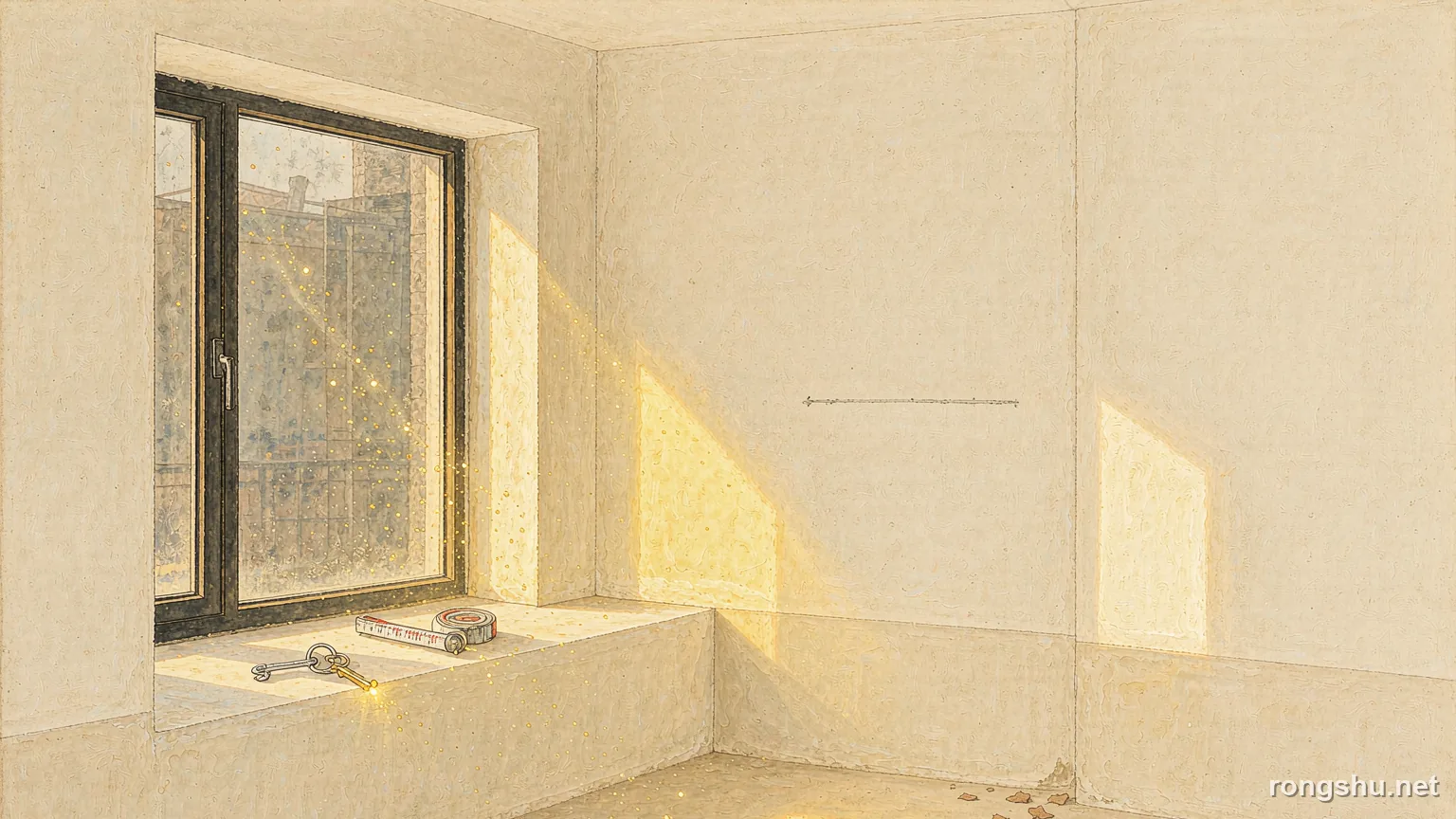
Zheng Hao brought the keys that day, two of them on one ring. Jiang Ran brought a tape measure and a pen.
When the door opened there was a smell of cement in the room. Grey floor, grey walls, nothing in it. Their footsteps came back off the walls.
They went through it room by room. The kitchen was small. The bathroom had a window. The second bedroom faced north, and Jiang Ran said it could be a study.
In the main bedroom she stopped.
The window was large and faced south. There was a film of dust on the glass, and the sun came through it and you could see the dust moving in the light.
She reached out and scratched a line on the wall.
A short white mark appeared on the grey plaster.
The bed goes here, she said.
Mm, Zheng Hao said.
She took the key ring out of his hand and hung it on her finger and turned it once.
The keys rang.
We do not pay rent this month, she said.
Zheng Hao laughed.
The two of them stood in the middle of the empty room and neither of them said anything more. Outside were other blocks, and somebody else had started fitting out, and the sound of a drill came through the glass, buzzing.
This is a work of narrative writing based on real situations in Chinese family life. All names have been changed.