At the gate of almost any primary school in a Chinese city, the same scene repeats at three in the afternoon. A cluster of grandparents waits with bags and bottles and small cartons of milk. The bell rings, children pour out, and most of them run not to a parent but to a grandmother or grandfather.
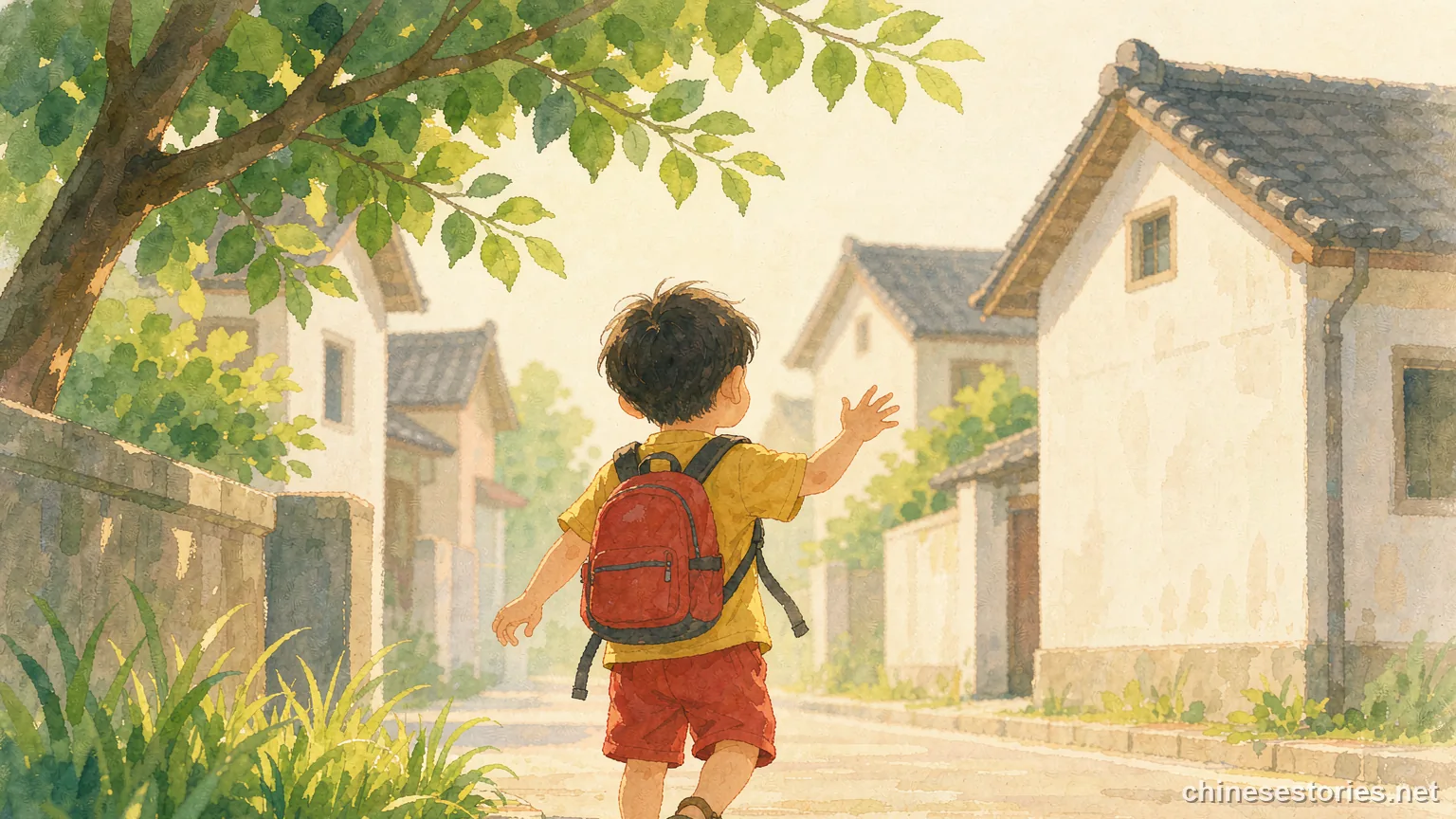
The adults who meet them will walk them home, cook a meal, check the homework, and hand them over later when a mother or father returns from work.
This arrangement is so common that it is easy to miss how unusual it is by global standards. In many countries grandparents are a treat and a weekend visit. In China they are often the daily backbone of childcare, and the reasons reach into money, work and family history.
Understanding who looks after the children is one of the quickest ways to understand how an ordinary Chinese household runs.
Who Actually Cares for the Child
The pattern has a name in Chinese, and it describes a mode of care that runs across generations.
Surveys over the past decade have produced a fairly consistent picture. In urban families, roughly half to seven in ten households with young children rely on grandparents for a large share of daily care. In rural areas the share is higher still, because more parents have moved away for work.
The exact figures shift with the survey, but the direction never does. Grandparents are deeply involved in raising the next generation, and in a large minority of families they are the main carers rather than a helping hand.
One long-running national household study offers a useful detail. When it asked who was the primary carer for children under three, grandparents together kept the largest share year after year, well above mothers alone and far above fathers. Even when both parents are present, the grandmother is often the one holding the spoon.
That last point is worth pausing on. In the same data, fathers were reported as the main daytime carer for a very small fraction of young children, under two percent. The practical weight of early childcare, in most homes, lands on women of two generations.
It is worth naming the second grandmother too. In many families it is the mother’s own mother who becomes the main carer, not the father’s. Young couples often find the arrangement easier with the maternal grandmother, or the two grandmothers share the task. A single word does not capture the quiet negotiations behind it.
The Arithmetic of Two Incomes
The most obvious reason for the arrangement is arithmetic, and it is not unique to China.
In a big city, rent, food and school costs are high, and a family usually needs two incomes to feel secure. If one parent stops working to look after a small child, the household loses a salary at exactly the moment its expenses rise. For many families that trade is simply not affordable.
Childcare that is public and cheap is still limited, and private care is expensive. Against that backdrop, a grandparent who is willing to help is worth more than any subsidy. The family keeps both incomes, the child is cared for by someone who loves them, and the grandmother’s unpaid work becomes the hidden foundation of the budget.
The numbers explain why the choice is so often a grandmother rather than a grandfather. Women retire earlier and are usually the ones with experience in feeding, soothing and managing a small child. Retired grandfathers frequently help with errands, cooking and pickups, but the day-to-day care usually falls to the women.
There is another calculation that families rarely say out loud. Paying for full-time care can swallow a large part of one modest salary, which means working mainly to pay someone else to watch your child. When a grandparent offers to help, the family keeps the income and avoids the cost at once. For a household on a tight budget, that is often the difference between one income and two.
There is a quiet irony here. A system that rests on grandmothers is often described as a childcare solution, when in truth it is a transfer of labour from one generation of women to another, largely unpaid.
Three Generations Under One Roof
Money explains the pressure, but it does not explain why families turn to grandparents rather than to a stranger. For that, you have to look at how Chinese families are organised.
The extended household has deep roots. Traditionally, several generations lived together or close by, and the care of children and elders was a shared duty rather than a private task for one couple. The home was not just the parents and their children. It was the whole chain.
That view of duty runs both ways. Parents are expected to raise their children well, and grown children are expected to care for their parents in old age. Grandparents helping with grandchildren is one strand of that larger bargain, an exchange of time and care across the family line.
It also answers a question many outsiders ask. Why would a grandparent give up a comfortable retirement to chase a toddler around? The common answer is that doing so is part of what it means to be a good parent and a good elder. Many grandparents describe it as their duty and their pleasure at once, a way to stay useful and close.
Modern life has changed the housing but not the instinct. Even when families live apart, the call for help still goes to the grandparents first.
The Ones Who Move to the City
One of the most striking features of the system is how often it moves people.
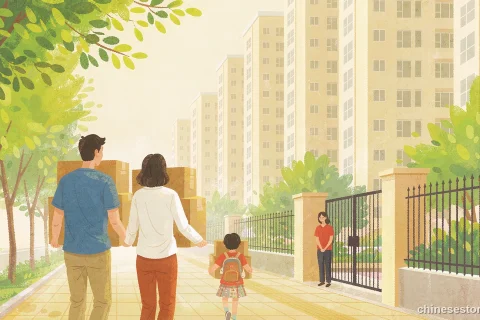
When a young couple works in a big city, their parents may live in another province hundreds of kilometres away. To help with a new baby, a grandmother will often pack a bag and travel to a city she does not know, leaving behind friends, a familiar market and sometimes a husband.
There is a name for these grandparents in everyday speech, and it evokes drifting, people who move to be near the grandchildren. They become part of a household in a high-rise far from home, reshaping their daily life around a school timetable and a supermarket they had to learn to find.
The move is usually framed as temporary. It often lasts for years, from a first baby to the end of primary school, and sometimes longer. The grandmother becomes a fixed point in the child’s day while the parents work, and the grandfather may remain behind, joining only for holidays.
The arrangement makes the family work, but it also asks a lot of the person at the centre of it. She has traded her own social world for someone else’s schedule, and her contribution is often invisible precisely because it is so reliable.
The city itself can be alienating. A grandmother who spent her life in a village or a small town may find the high-rise, the lift, the traffic and the prices all unfamiliar. She may not know a single neighbour. Her day narrows to a school, a supermarket and a kitchen, and her main conversation is with a small child. Families often underestimate how much this move costs the person who makes it.
Some grandparents adapt quickly and build new routines. They join the morning exercise groups in the local park and trade tips with other carers. Others never quite settle, and count the days until the child is old enough to need them less.
When Parents Work Far Away
In rural areas the same logic plays out in a harder form, and it has shaped a whole generation.
When parents leave for jobs in distant cities, the children who stay behind are often raised by grandparents. This is the arrangement behind the widely discussed issue of children separated from their parents for long stretches of the year, a pattern that has touched millions of families.
The grandparents in these households do nearly everything: cooking, school runs, discipline, and the quiet work of keeping a child steady while a parent is a phone call away. They manage on small budgets and often on limited schooling of their own, which makes helping with homework difficult.
The children themselves are the reason the topic draws so much attention. Researchers have studied how growing up with an absent parent affects children, and the findings are mixed and careful. Many children do well, especially when grandparents are warm and stable. Others struggle, and the strain tends to show where parents are missing for the longest.
What is rarely in doubt is the effort involved. In these homes the grandmother is not a helper. She is the parent on the ground.
The Cost of the Helping Hand
It would be dishonest to describe the arrangement as only warm and easy, because it carries real costs for the people who provide it.
Grandparents who take on full childcare often give up their own retirement. The travel, the rest and the hobbies they had planned after their working lives can be postponed indefinitely. Grandparents who move to a new city may lose their friends and their sense of belonging, and some describe loneliness behind the busy days.
Health is another concern. Caring for a young child is physical work at any age, and it can be harder on an older body. Some grandparents quietly carry pain they do not mention, because admitting it would feel like letting the family down.
There is also the question of the parents themselves. When care is so reliable, some couples lean on it heavily, and the grandparents may end up doing more than anyone intended. The helper becomes the default, and the default never gets a day off.
None of this means the arrangement is a mistake. It means it is a bargain, and like every bargain it has two sides. The family gains stability, and someone pays for it in time and energy.
Compared With the West
A reader from Europe or North America will recognise a version of this, and the comparison helps to place it.
Grandparents everywhere help with grandchildren. In many Western countries they babysit, host sleepovers and step in for school holidays. Some provide regular childcare so a parent can work. The idea is not foreign.
The difference is one of depth and default. In much of the West, childcare is expected to be a parent’s responsibility or a paid service, and grandparents help on their own terms. In China, grandparents are more often built into the daily operation of the household, expected by both sides and relied upon for years rather than weeks.
The result is a different kind of family life. The grandparents are not visitors. They are part of the machinery, which brings closeness and friction in the same package. Advice may be offered freely, and the parents may struggle to say no, because the person giving it is also the one holding everything together.
Across both systems, the underlying question is the same. When two adults have to work and a child needs raising, who fills the gap? Different countries answer it differently, and each answer shapes the family around it.
Two Ends of the Same Family
Stand at the school gate again at the end of the day and the picture looks simple. A grandmother holds a grandchild’s hand and a small pink bag, and they walk home slowly together.
Behind that ordinary scene is a whole structure of work. There are two incomes that needed both parents at their jobs. There is a retirement that was put on hold. There is a city, sometimes far away, that one woman learned to navigate for the sake of a child. And there is a tradition of duty that told her this was simply what family does.
The grandchildren at the gate often do not know they are at the centre of a bargain. They know that someone is always there when the bell rings. That steadiness is the gift, and it is built out of the choices of two generations.
For a visitor trying to understand Chinese family life, the grandmother at the gate is a good place to start. She is not a footnote to the story of the household. In many homes she is the hinge on which it turns.
The next time a foreign guest wonders why so much of Chinese life seems to revolve around the family, this is part of the answer. Care is not hired out here so much as handed down. The people who raise the children were once raised the same way, in a chain that keeps reaching forward, one small hand at a time.
This story is based on publicly documented practices and on reporting in the Chinese and international press. The families described are illustrative, and no individual is identified.