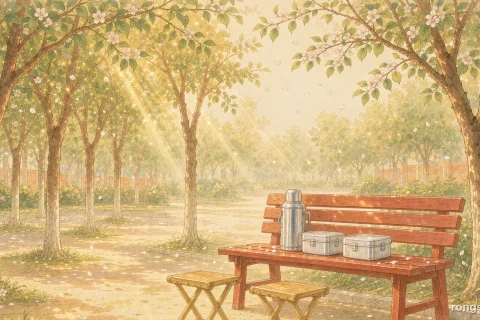
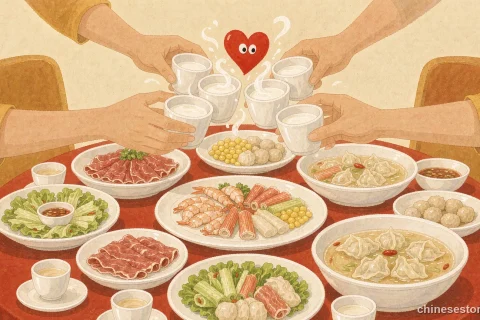
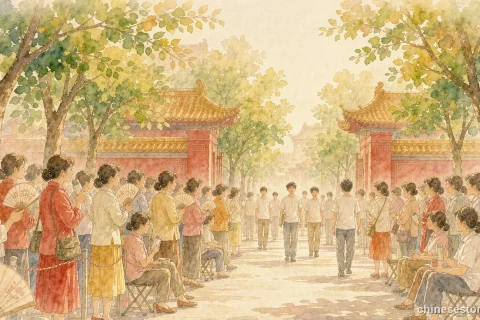
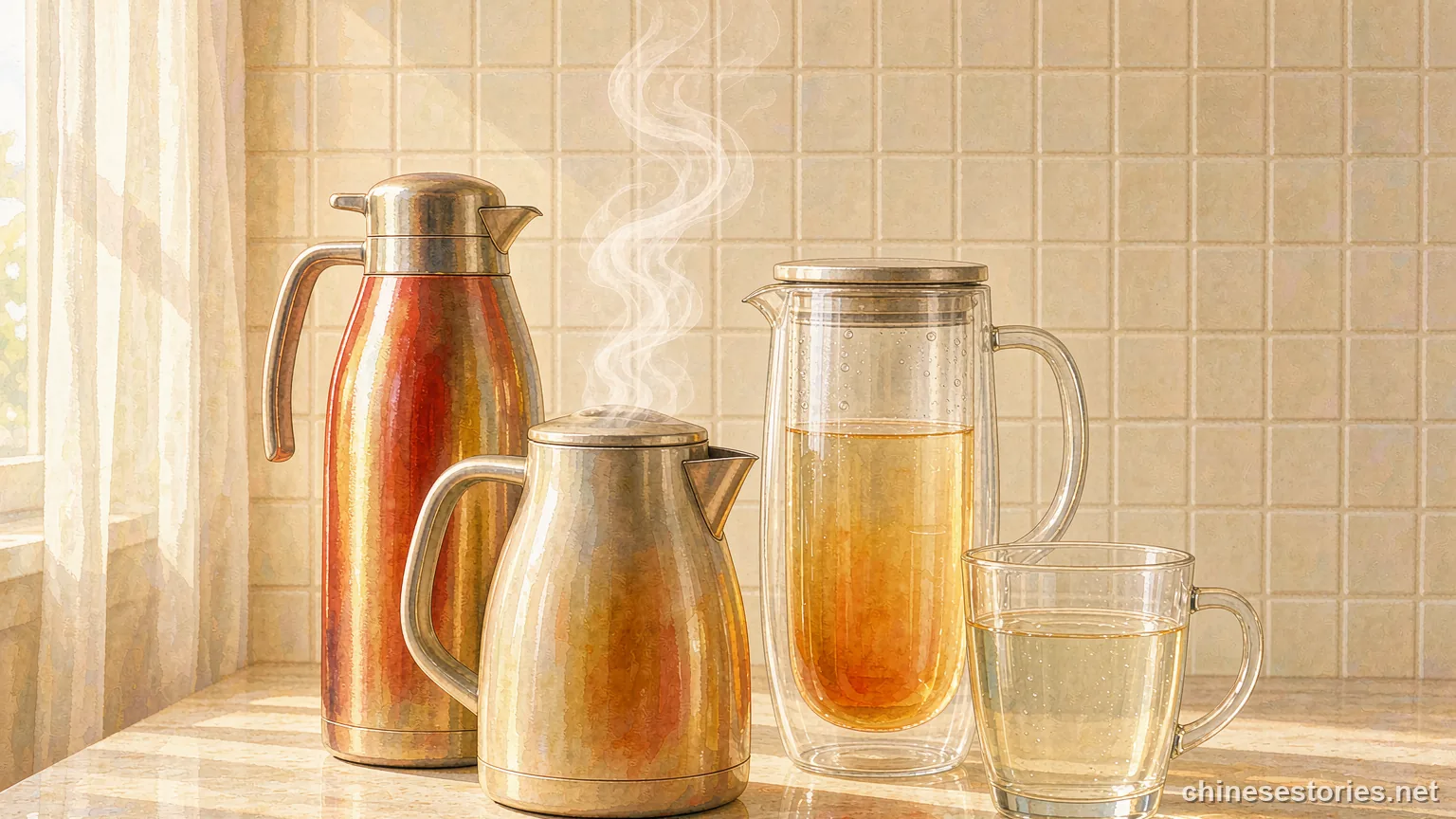
Watch a family kitchen in the evening and a small appliance is often still warm. A kettle has just boiled. A tall thermos stands within reach, and beside it a glass or a mug catches the last of the steam.
Ask for water at a restaurant and the server may bring a pot of it hot, without asking. Visit someone who is unwell and the advice arrives before the medicine. Drink more hot water.
To a visitor from a country where water is served cold and often iced, the habit can seem odd, even a little uncomfortable. Yet it is one of the most ordinary things in China, and behind it lies a long story about fuel, germs and care.
Once you know the story, the steaming cup stops looking like a curiosity and starts looking like a habit with reasons.
A Thermos on Every Desk
The most familiar object in the story is the thermos, and it turns up in surprising places.
In offices a shared water boiler hums in a corner, and workers fill their own bottles through the day. On trains and in hospitals there are hot water taps for the same purpose. In older homes the thermos is a household fixture, a glass-lined flask wrapped in metal or plastic, kept beside the kettle.
There is a social ritual in it too. Offering someone hot water is a small act of care, almost like putting on a coat for them. When a guest arrives, when a colleague coughs, when the weather turns, the same phrase floats up. Drink more hot water.
The phrase is so common that it has become a joke. People tease it as the emptiest comfort a partner can offer, the answer that solves nothing and says everything. Even the teasing shows how deeply the habit sits. You do not joke about something that is not everywhere.
A Habit Older Than Tea
Long before anyone understood bacteria, people in China were boiling water, and the reason was as much about survival as about taste.
Archaeologists have found ancient pottery in China with scorch marks and traces of use that point to heating water as early as the Stone Age. Cooking vessels came first, and hot water came with them.
The habit shows up in the written record too. Warring States texts describe drinking hot broth or liquid in winter and cool water in summer, and the word they used for the warm version is the same word later used for soup. Tea drinking, which spread widely from the Tang and Song dynasties, made boiling water routine, because tea leaves want hot water to open.
For most of that history, though, hot water was a luxury. Fuel was expensive. A poor household might struggle to cook a hot meal, let alone boil water to drink. In the countryside people drew from wells and rivers and drank what they found.
So the old habit lived on two levels. Tea houses and wealthy homes heated water. Everyone else drank cold, unless there was fire to spare.
By the Ming and Qing dynasties, tea culture had woven the habit deep into daily life. A guest was offered tea, and tea meant boiled water. Serving a visitor cold water would have seemed careless, even cold in the other sense of the word. The kettle became a small sign that the house was welcoming.
That hospitality is one reason the habit never faded even when it was not strictly needed. Boiling was practical, but offering a warm cup was social. The two reasons reinforced each other for centuries.
When Germs Changed the Rules
The turning point came with a new idea, and it arrived from outside.
In the late nineteenth century, the discovery that diseases could be carried by tiny organisms reached China, mainly through Western science and through Japan. If invisible germs lived in water, then boiling it made obvious sense.
At first the advice reached only a few. But in the early twentieth century, health officials and city governments began to push it more openly. Police in the capital urged residents to boil water from wells before drinking. In the 1930s, some parts of the military were barred from drinking untreated cold water, and health authorities advised the public against it.
Even so, the change was slow. A survey from that era found that thermos bottles were almost unknown in the countryside, rare enough to count on one hand across a group of villages.
The habit was spreading from the top down, from officials and schools toward ordinary households, carried less by law than by argument.
There was good reason for the caution. Without clean pipes or reliable treatment, a glass of water could carry disease. Cholera and typhoid were real dangers, and they did not care whether the drinker was rich or poor. Boiling was the one defence a household could apply without help from anyone else.
The logic was simple enough to remember. If the water has been boiled, it is safe. That single sentence, repeated across a century, did more to shape the habit than any lecture about microbiology.
The Campaign That Made It Normal
The real shift came after 1949, when boiling water was folded into a broad effort to improve public health.
The new government faced water supplies that were often not safe to drink, and a population with limited access to medicine. Boiling was cheap, simple and effective, so it was promoted everywhere. Villages heard about it through health campaigns. Schools taught it. Cities set up boiling stations where families could collect hot water, sometimes with coupons.
For a while, rural areas ran collective canteens that supplied hot water to large numbers of people, and even after those ended the message stayed. Across a generation, drinking boiled water moved from advice to habit, and from habit to common sense.
The change carried into objects. The thermos became a standard gift, sometimes given as a wedding present, because it promised warmth on demand. Around the same time, household fuel improved, and devices that could boil water cheaply spread. What had once been a privilege of the rich became the default of the ordinary home.
By the 1990s, with rising incomes and growing attention to health, the idea that hot water was good for you had taken root in the culture at large.
What the Body Is Said to Need
Ask why people keep the habit today and the answers often reach for the body rather than for germs.
In traditional Chinese medicine, cold food and drink are thought to unsettle the system, and warm liquid is believed to settle it. A person with a stomach ache, a cold, a cough or menstrual cramps may be told to avoid iced drinks and take something warm. Many families pass this down without ever calling it medicine.
The same logic shapes small daily choices. Parents tell children not to drink cold water after sweating. Friends link warm water to better digestion and clearer skin. The phrasing is practical, not scientific, and it blends a little of both.
It helps to notice what the advice is really doing. When someone says avoid cold drinks, they are not usually making a claim about digestion. They are saying rest, and take care of yourself, in the language of the body. The water is the vehicle. The concern is the cargo.
Younger generations often keep half the habit and drop the other half. They may drink iced milk tea on a summer afternoon and still reach for warm water at the first sign of a cough. The rule bends to the moment, which is how most everyday customs survive.
Modern medicine has a more selective view. It agrees that boiled water is safer where the supply is untreated, and that warm fluids can ease a sore throat or a cough. It is more cautious about the idea that temperature changes health in general.
And it adds one honest warning about the hottest end of the scale. Very hot drinks, above roughly 65 degrees Celsius, have been linked by cancer researchers to a higher risk of oesophageal damage over time. The lesson is not that hot water is harmful. It is that scalding water is not the goal, and the helpful range is warm rather than steaming.
That distinction rarely reaches the everyday phrase. Drink more hot water rolls off the tongue as a single idea, and most people apply it with common sense.
Cold Water and the West
The gap between China and many Western countries comes down to what each grew up trusting.
In much of Europe and North America, safe piped water became normal earlier, and governments built systems that made cold tap water dependable. Once the water is clean, there is no reason to boil it, so serving it cold, even iced, is natural. A glass of cold water at a restaurant is a courtesy, not a challenge.
In China the safe supply arrived later and unevenly, and boiling filled the gap. The habit outlived the need. Even now, when a city tap is perfectly safe, families may keep the kettle warm out of custom.
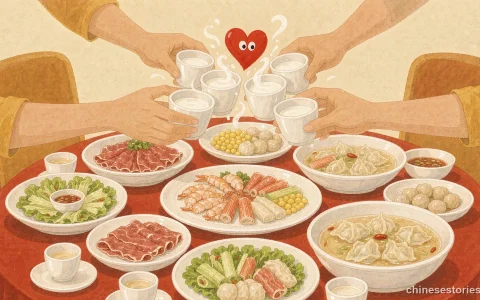
There is a deeper difference too. Western dining tends to prize contrast, a cool drink against rich or spicy food. Chinese meals often lean the other way, pairing warm food with warm drink, on the view that a cold shock interrupts the meal. Neither instinct is right or wrong. Each is a habit dressed as a rule.
You can see the split in something as small as a hotel room. Plenty of Western hotels provide a coffee maker but no kettle, because nobody expects to boil water just to drink it. Chinese hotels often stock a flask or an electric kettle, because the guest will want one. Businesses, in the end, follow the habits of their customers.
For a traveller, the practical note is simple. If you order water in China and it comes warm, no one is testing you. It is simply the water most people here would have chosen.
Not As Hot As You Think
One misunderstanding is worth clearing up, because it trips up a lot of visitors.
The water on offer is usually not boiling. It is warm, sometimes just above room temperature, poured from a flask that was filled hours earlier. The point is warmth, not heat.
The phrase drink more hot water is also more casual than it sounds. It is closer to a generic wish for your wellbeing than a medical instruction. A friend says it the way another friend might say take care. It carries care more than content.
There is even a seasonal rhythm to it. In winter it is comfort, in summer it is balance against the heat, and during illness it is the smallest possible act of help. The same cup plays several roles.
So the habit is less rigid than it looks from outside. Plenty of young people drink iced coffee and cold soda without a second thought. The thermos and the phrase have simply outlasted the conditions that created them, as habits do.
Even the mildness of the temperature is a kind of hint. A scalding drink would be unpleasant, and nobody wants to be told to burn their mouth. What is offered is comfort, at a warmth a person can actually sip. The tradition, whatever its origins, has settled into something gentle.
The Bottle That Means Care
The reason hot water matters in China is not only health, and not only history. It is what the gesture means.
When a mother pours a glass for her child, or a colleague fetches one for a friend with a cough, the water carries a message. It is easier to send than to say. It says, I noticed. It says, I hope you feel better. The warmth is the visible part of the feeling.
A host who warms a cup for a guest is doing the same thing without words. So is a stranger who points a tired traveller toward the hot water tap at a station. The gesture costs almost nothing, which is exactly why it can be offered so freely. Small kindnesses need small vessels.
This is why the habit survives even as the science moves on. Cultures keep the gestures that hold their relationships together, long after the reasons change. A country can reach safe tap water and still fill the kettle, because the kettle is doing other work now.
A visitor who notices the thermos on the desk or the pot on the table has found one of the smallest, most ordinary doors into understanding the place. It is not really about water temperature. It is about how people here say they care.
This story is based on publicly documented practices and on reporting in the Chinese and international press. The families described are illustrative, and no individual is identified.