A few minutes before midnight on November 10, in flats across China, phones are already open.
Carts are full. Wish lists are ready. Somewhere in a living room, a person is holding a phone in one hand and a bank card in the other, watching the seconds count down. At the stroke of twelve, a hundred small discounts switch on at once, and the buying begins.
The next day, delivery vans will line the streets. Warehouses will run through the night. And the country will have spent more money in twenty-four hours than most nations spend on a national holiday.
The day is called Singles’ Day. It happens every year on November 11, and it is the largest shopping event on earth.
For a foreign visitor, the day can look like a puzzle. There is no holiday behind it, no turkey, no gifts for family. It is a date that a few students invented in the 1990s, and it has become the single busiest day of buying in human history.
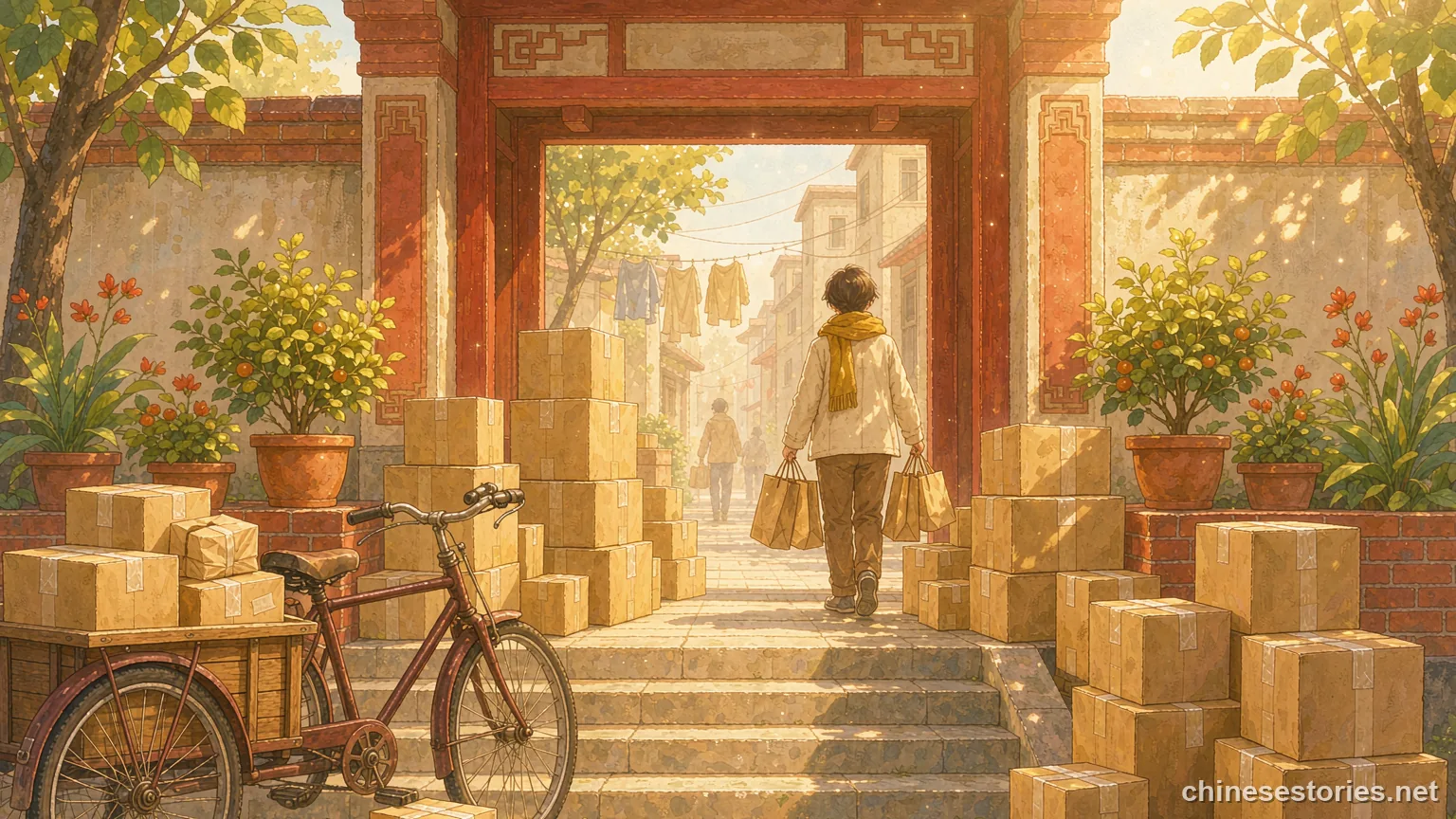
The queue at the delivery station a week later tells its own story. Parcels are stacked to the ceiling, sorted by street and building, and handed out in a steady stream. One day of shopping has created a week of work, and everyone in the chain knows the rhythm.
Where 11/11 Comes From
The date is not random. November 11 is written as 11/11, four ones standing side by side. In Chinese slang, a single person was once described as a bare stick, so four ones in a row came to stand for four singles.
The idea began on a university campus. The most widely told version places it at Nanjing University in 1993, where a group of single male students in one dormitory decided to turn their singleness into an occasion rather than a complaint. They chose 11 November as a day of small events and celebrations for people without partners.
It spread through other campuses in Nanjing, then into the wider society as those students graduated and carried the habit with them. It was a joke that turned into a custom, a light-hearted answer to Valentine’s Day for people who did not have a date.
Some of the phrases from those early years still survive. A single man was called a bare branch, a single woman a lone leaf, and a person who found a partner was said to have left the light. The slang is dated now, but the day it named is bigger than ever.
For its first fifteen years, Singles’ Day was mostly about going out with friends, or treating yourself to something small. Then the internet arrived, and someone did the obvious thing.
The habit had a certain student logic. A person with a partner had Valentine’s Day and other holidays. A person without one had nothing. So the singles made their own occasion, with small parties, dinners with friends, and the ritual of buying yourself a present, since no one else was going to.
Other numbers in the calendar picked up the same joke. January 1 and November 1 were called small and middle Singles’ Days, and November 11, with its four ones, was the big one. It was a private campus joke long before it became a national brand.
What was once a day for the unattached has drifted since. Couples shop on it too, and the marketing long ago stopped asking whether anyone is single. The name survives mostly as branding. The date is what matters, and the date belongs to no one.
The Year Alibaba Joined
In 2009, an executive at the e-commerce company Alibaba looked at the calendar and saw an opportunity.
The company put on a one-day sale on its shopping site, Tmall, aimed at single people who deserved a gift. Twenty-seven merchants took part in that first event. The site recorded sales of a few million dollars, a modest number by later standards.
But the idea worked better than anyone expected, and the format grew fast. Other platforms, including JD.com, launched their own rival events. Within a few years, November 11 had become the busiest online shopping day in the world, beating the combined totals of Black Friday and Cyber Monday.
The name Double 11 is used just as often as Singles’ Day, and it has largely shed the romantic meaning. The day is no longer about being single. It is about the sale.
The growth was steep and steady. More merchants joined every year, and the single day grew into a weeks-long season. Television galas were staged on the night before, with singers and celebrities counting down to the sale. Each year the platform announced a new record with a live tally on a giant screen, updating through the night, and the number was read out like the score in a sports final.
For the platforms, the prize was more than the day’s sales. The event pulled new users onto mobile phones, trained shoppers to pay online, and made a habit of opening an app to check a price. Those habits lasted all year. Singles’ Day was, in part, a very large advertisement that paid for itself.
What Shoppers Actually Do
If you have never taken part, the mechanics can be confusing, because the sale is not a simple one-day discount.
The build-up starts weeks earlier, often in the middle of October. Platforms take small deposits on items, and shoppers who pay a deposit are promised a lower final price. Coupons are handed out, then stacked, and a person can spend an evening working out which combination saves the most on a pair of shoes.
There are games and points to collect, sometimes by visiting partner shops or inviting friends. Some shoppers treat the preparation as a project, keeping notes, comparing prices across apps, and waiting for the number to drop.
On the night itself, many sales open at midnight, and the first minutes are a scramble for limited stock. In recent years, the main sale has often opened earlier, on the first day of November, stretching the event across more than a week.
There is strategy in the way the sale is run. The deposits lock in a shopper’s interest, and the coupons make a person feel that leaving would waste a chance they have already paid for. The countdown creates a deadline. None of it is unique to China, but the scale at which it is applied here is hard to match.
The preparation has its own vocabulary. Friends compare notes in group chats, sharing the codes that unlock an extra discount, and a person with a full cart who is only waiting to press the button is said to be ready to act. For a few weeks in the autumn, shopping becomes a group activity.
Not every category behaves the same way. Electronics, cosmetics, and household goods lead the rush, because a real discount on a phone or a fridge is easy to recognise. Fashion sells heavily too, though returns run higher. The day is at its best for a buyer who already knows the price, and at its worst for one who does not.
There is also a stream of live shows. Sellers and influencers host broadcasts through the evening, showing products and offering codes that work only for viewers. A single popular host can move more goods in an hour than a small shop sells in a year, and the format has since spread from China to shopping apps elsewhere.
Then comes the wait. Delivery riders and couriers carry an enormous wave of parcels in the days that follow. A shopper who ordered at midnight may see the packet at their door the next morning, in the same city, thanks to warehouses that were filled weeks in advance.
The Scale of One Day
The numbers are the reason Singles’ Day is studied far beyond China.
By the early 2020s, Alibaba alone was reporting gross sales on the day of more than 500 billion yuan, roughly 80 billion US dollars, across its platforms. In later years, the company stopped publishing a single headline total, as the event spread to offline shops and to many smaller sites.
Counting all the major platforms together, the total spent around November 11 has been estimated in the range of one trillion yuan and up, which is hundreds of billions of dollars. Analysts compare it to a full year of retail spending in some mid-sized economies.
The day is also a logistics feat. Hundreds of millions of parcels move through the system in a few days. Sorting centres add staff, and airlines add freight capacity. The sale does not end when the clock passes midnight. It ends when the last parcel is delivered, often a week later.
For brands, the day is a test and a showcase. A new product can meet millions of shoppers at once. A weak campaign can be lost in the noise. Some sellers spend months preparing, and some spend more on the day itself than they make.
Behind the figures sits a vast machine. Warehouses are stocked weeks ahead on the strength of forecasts. Delivery companies hire temporary staff and add night shifts. Payment systems are tested in advance for the traffic, because a crash at midnight would itself be a national event.
Compared With Black Friday
An English-speaking reader will immediately want the comparison with Black Friday, and it is worth making carefully.
Black Friday follows a holiday and runs for a single long weekend. It began in shops and moved online, and it is shared across many retailers. Singles’ Day has no holiday behind it and no family dinner. It was built online, on one platform, around a date that meant nothing before.
The scale difference is large. A strong Black Friday in the United States moves tens of billions of dollars across the whole retail sector. On Singles’ Day, the major platforms alone have reported comparable sums in a single day, with total spending across all channels higher still.
There is also a difference in mood. Black Friday is tied to gift-buying for other people, in the run-up to Christmas. Singles’ Day is tied to buying for yourself, or for your home. The marketing has always leaned on that idea, that a person should treat themselves whether or not they have a partner.
The mechanics are now familiar everywhere: countdown timers, limited stock, small deposits, stacked coupons. If the West learned one thing from 11/11, it is how to turn a single day into a season.
Both events also share a problem. Discounts can be exaggerated, and a price may be nudged up before it is cut. Authorities in several countries have tightened the rules on how sales are advertised, requiring sellers to show the earlier price honestly. Buyers, in turn, have learned to check the history and wait, which has made the games a little more careful than they once were.
There is one more difference worth noting. Black Friday has spread around the world, carried by Western brands and global retailers. Singles’ Day has mostly stayed inside China, even though the platforms that run it are giant companies. Its scale is enormous, and its reach beyond the border is still surprisingly small.
The Morning After
By the morning of November 12, the fever is over and the parcels are moving.
In some homes, the buyer has a new phone and a small pang of regret. In others, there is a fridge full of discounted snacks and a family that will not need to shop again for a month. Delivery riders start before dawn, working through a spike that lasts for days.
November 11 also became a popular date for weddings and marriage registrations, because the four ones can be read as two pairs, side by side. So on the same day that millions of people buy things alone, thousands of others choose to stop being single together.
And then the year moves on. The countdown for the next Double 11 begins quietly, months in advance, in the planning rooms of the platforms. On a screen somewhere, a new set of prices is already being loaded.
Not everyone is happy the morning after. Some shoppers wake up with a cart they regret, and a small industry of returns begins. Others spent nothing at all, and treat the day as an annual reminder of how much noise a discount can make.
Whatever a person thinks of it, the day has changed how China shops. It made a habit of buying online, taught a generation to pay by phone, and turned a joke between a few students into a fixed point in the retail year. That is a strange afterlife for four ones on a calendar.
This story is based on publicly documented practices and on reporting in the Chinese and international press. The families described are illustrative, and no individual is identified.