English has a saying for it: strike while the iron is hot. Chinese has a different picture. Chinese shows you a war drum.
The Chinese idiom is 一鼓作气, in pinyin *yī gǔ zuò qì*. It means, word for word, one drum rouses the spirit. A *gu* is a big drum, the kind an army beat to send its soldiers forward. The four characters together mean: put all your force into the first push, and do not let the moment pass.
Like many Chinese fables, this one comes from a real battle. It happened in the spring of the year 684 BC, between two states in the east of ancient China. And the hero is not a king. He is a farmer.
That is the part people like best.
That spring, the army of Qi marched to the border of Lu.
Qi was the stronger state, and the reason for the attack was an old grudge. A few years earlier, Qi had torn itself apart over who should be king. Two brothers, Xiaobai and Jiu, both wanted the throne, and Lu had backed the wrong one. Xiaobai won the race to the capital and became Duke Huan of Qi. He did not forget who had stood against him. The next year, he came to collect.
Lu was outnumbered and everyone in the court knew it. The chariots of Qi rolled forward in a line that seemed to have no end. When the news reached the capital, Duke Zhuang of Lu called his men to fight.
And then a farmer started walking.
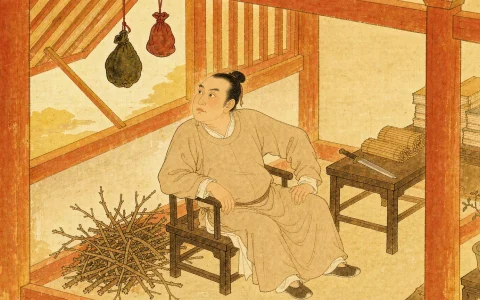
His name was Cao Gui. He was going to see the duke.
His neighbors caught him by the sleeve. War, they said, is the business of the nobles, the men who eat meat. Why should a plowman stick his nose in it?
Cao Gui had an answer ready. Those men who eat meat, he said, think in small circles. When it matters most, someone has to think further ahead.
He went anyway.
Duke Zhuang agreed to see him. Cao Gui wasted no time on politeness. He asked the only question that mattered. On what grounds will you fight this war?
The duke said that he never kept good food or warm clothes to himself, and always shared them.
Cao Gui shook his head. Small kindnesses, he said, never reach every household. The common people will not die for you because of a few gifts.
The duke said that when he made offerings to the gods, he never lied about the animals or the jade. He was honest with heaven.
Cao Gui shook his head again. A little honesty, he said, does not carry that much weight. The gods cannot save you on that alone.
The duke thought for a moment. Then he said a third thing. Every case that came before him, big or small, he tried to judge fairly. He could not always see the truth, but he always tried to do right by the people involved.
Cao Gui nodded at last. That, he said, is something like real service to your people. On that ground, you can fight. And when you fight, let me ride with you.
So a farmer climbed onto the duke’s own chariot.
The two armies drew up at a place called Changshao.
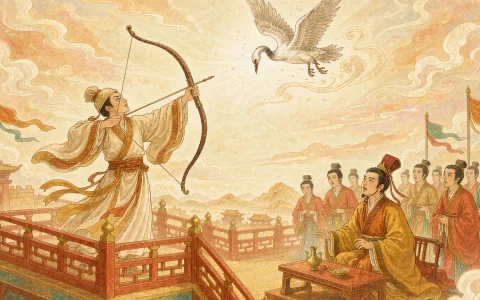
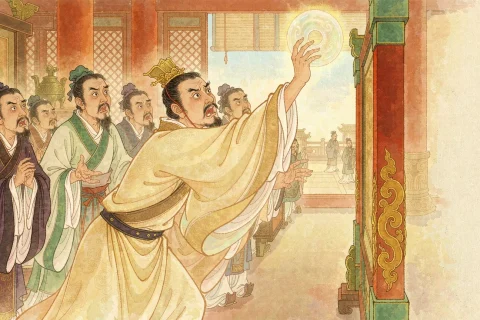
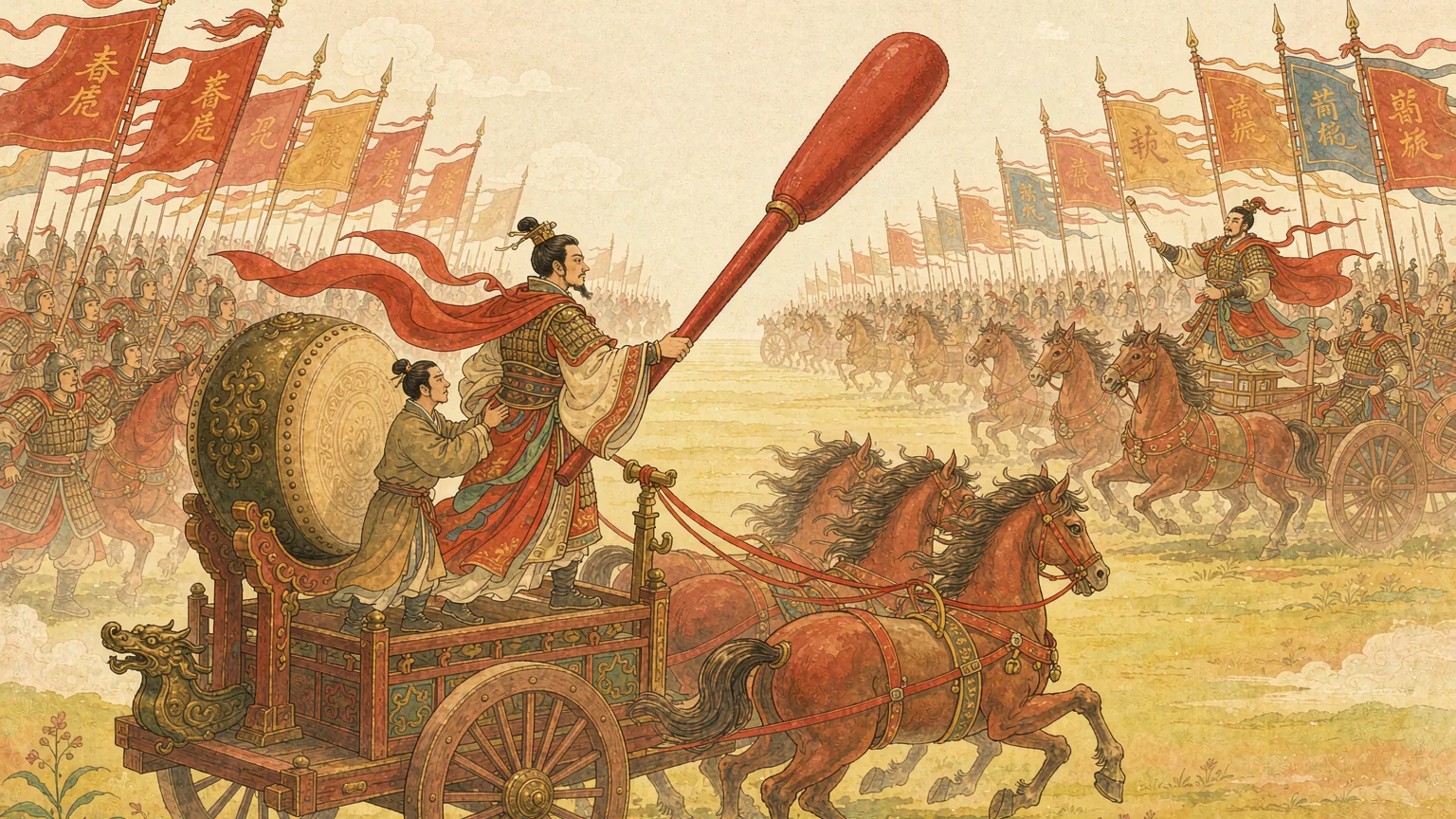
Duke Zhuang stood on the chariot and looked across at the enemy. The banners of Qi ran together in one black line. He raised his hand to give the order to beat the drum.
Cao Gui caught his arm. Not yet.
The duke lowered his hand.
Across the field, Qi beat its drum first. The first beat shook the ground. Shouts rolled through the ranks, and the whole Qi line leaned forward a step.
Lu did not move.
The second beat came.
Lu still did not move. The soldiers’ palms were wet on their spears. Their knuckles had gone white. A young man whispered to the man beside him, are we afraid? The veteran pushed him down. Do not look back. Watch the flag.
In the Lu lines there was no sound at all. Everyone was waiting for one man to speak.
Then the third beat.
The drums of Qi sounded thinner this time, and softer. The shouting had scattered. Men in the front rank looked at each other, and their feet slowed. Some rested their spears on the ground.
That was when Cao Gui said it. Now.
Duke Zhuang struck the drum himself.
When that beat sounded, the army of Lu had been holding still for too long. Three rounds of waiting burst out in a single moment. The soldiers charged with a shout, like a dam giving way.
Qi had not expected it. They had beaten their drum three times, and their strength had leaked away with each beat. Their spears were steady no longer. Under the charge, the front line broke, then the rest broke with it, and the whole army turned and ran.
The duke reached for the reins to chase them.
Cao Gui held him again. Wait.
He climbed down and squinted at the wheel tracks in the dirt. Then he stood up, braced himself on the front rail of the chariot, and looked far across the field.
The tracks were tangled. The banners had fallen. He straightened and said, now you can chase.
The army of Lu chased Qi out of their land. They lost their chariots and their baggage for miles behind them.
The battle was won, but Duke Zhuang still did not understand it. When they came home he asked Cao Gui, why would you not let me beat the drum the first two times? They had beaten theirs three times before you let me answer.
Cao Gui said: war runs on spirit.
The first beat of the drum gathers a soldier’s courage at its fullest. The second beat lets half of it drain away. By the third beat, it is gone. They beat their drum three times, and their spirit came to nothing exactly when ours was at its peak. When the full meets the empty, the full wins.
And then he added one more thing. A great state is dangerous, he said, and I had to watch for a trap. So I looked at their tracks, and I saw them scattered. I looked at their banners, and I saw them down. Only then did I dare to chase.
Duke Zhuang stood there for a long time and said nothing.
For the men of Lu, that day had not been comfortable. Nobody in the army had ever heard of a plowman telling a duke when to beat his own drum. But once the battle was over, the doubt went away. Nobody asked who had held back the duke’s hand. All they remembered was that Lu had held its ground.
The men of Qi went home and thought it over too. They had beaten their drum — three times, in fact. And the more they beat it, the looser their own ranks had become. Their commanders learned something that day. An army is not made braver by being hurried.
Out of that single battle came four characters: 一鼓作气.
This is not only a story about war. It is about the one thing that matters most at the start of any hard task: the spirit you begin with.
The first beat of the drum is when a person is strongest. Beat it too many times and the strength leaks away. How many things never get done, not because they were impossible, but because they were dragged out? Tomorrow, then the day after, and by the third beat the spirit is gone.
Cao Gui’s real skill was not patience. It was knowing the exact moment when patience had to end.
After the second beat, the enemy was not steadier. The enemy was already empty. And he chose to spend his fullest strength on their emptiest moment.
The drums at Changshao stopped long ago. But the Chinese proverb that came out of it is still used today. When a job needs doing, and someone is putting it off, someone else will say the four characters, and everyone already knows what they mean.
Do it now, with everything you have, on the first beat.