Some deals are too good to be true, and everybody in the room knows it.
This Chinese idiom is about a man who walked into exactly that kind of deal — and walked back out again with nothing lost. It is 完璧归赵, in pinyin *wán bì guī zhào*. Word for word: “return the jade to Zhao, whole.”
It comes from a time when China was not one country but seven, all glaring at each other across the map, and one of them was much stronger than the rest. Chinese fables and proverbs are full of clever men outwitting the powerful. This one is different. The man in it is nobody — and he wins anyway.
A *jade disc* was a flat ring of polished stone, about the size of a dinner plate. In ancient China it was not jewellery. It was a treasure on the level of a crown, and kings went to war over them.
The story was written down by Sima Qian, the court historian of the Han dynasty, in his *Records of the Grand Historian*, around 90 BC. The events happened about two hundred years earlier, during the period known as the Warring States.
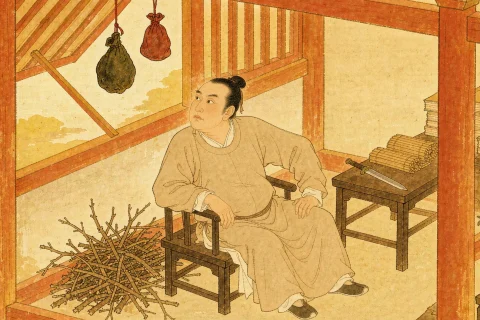
The man’s name was Lin Xiangru. When the story begins, he is a nobody.
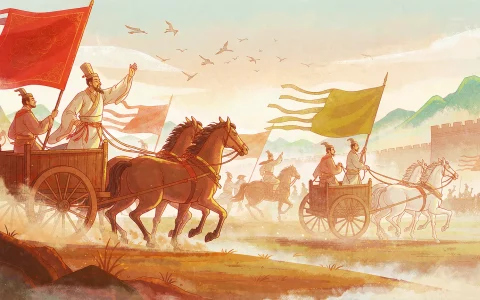
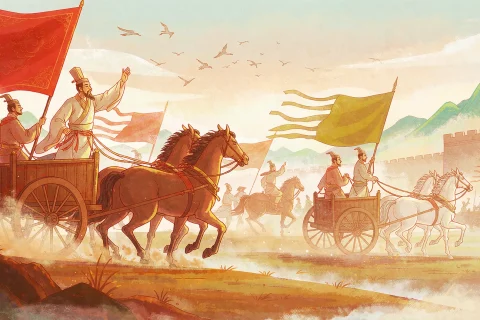
Among the seven states, Qin was the tiger crouched in the west. Everyone was afraid of it. Everyone had reason to be.
The king of Zhao owned something the whole world wanted: the Jade of He — a disc of flawless stone that people said glowed faintly in the dark.
It had a story of its own. Long before, a man from the state of Chu named Bian He found a plain-looking rock in the mountains and insisted there was a priceless jade inside it. He offered it to two kings in a row. Both of them thought he was a liar, and both of them had his feet cut off. Only the third king ordered the rock broken open. Inside was the jade. It has carried its finder’s name ever since.
Now that jade sat in the treasury of Zhao, and word of it had reached the king of Qin.
A letter arrived in Zhao. It was very polite. The king of Qin would like to trade fifteen of his cities for the jade.
The king of Zhao read the letter twice. His hands were sweating.
Fifteen cities. It sounded like a fortune. Everyone in the hall understood the same thing, and it was not a fortune. Qin’s promises were written on water. Give up the jade and you would never see a single city. Refuse, and Qin’s armies would come.
Give it, and lose the jade. Keep it, and lose everything.
The king looked down the row of ministers. Nobody spoke. One by one, they lowered their heads.
Then an official named Miao Xian stepped forward. He said he had a retainer in his household, a man named Lin Xiangru, who was braver and cleverer than he looked.
Lin Xiangru was brought in. The king asked him the plain question: give the jade, or not?
Lin Xiangru thought about it. Then he said: Qin is strong and Zhao is weak. If we refuse, we are the ones in the wrong.
So we hand it over?
If we hand it over and Qin does not give the cities, then *Qin* is in the wrong. Let me carry the jade. If the cities enter Zhao’s territory, the jade stays in Qin. If they do not — I will bring the jade home, whole.
The king looked at him. Rough cloth, no rank, no swagger. He nodded.
And so Lin Xiangru rode west, into the tiger’s own country, with the Jade of He in his arms.
Act one takes place in a palace hall — but not the main one.
The king of Qin received him not in the great throne room but in a pleasure pavilion called Zhangtai, a place for entertaining guests and watching music. A small slight, if you were the kind of person who noticed such things.
Lin Xiangru climbed the steps, lifted the jade high, and presented it.
The king took it in both hands. His eyes lit up. He turned it over, and over, and then passed it to his favourite consorts and his courtiers, so that everyone could hold it and admire it. The hall filled with laughter and admiration.
Lin Xiangru stood below the steps and watched the whole room glowing.
And went cold.
Because not once, in all that admiration, had the king mentioned the fifteen cities. Not one word.
The jade was in the king’s hands. Lin Xiangru was alone in the king’s hall. A few paces behind him stood a thick wooden pillar.
He spoke up, calmly. Your Majesty, there is a small flaw in this jade. Let me point it out to you.
The king believed him. He handed the jade back.
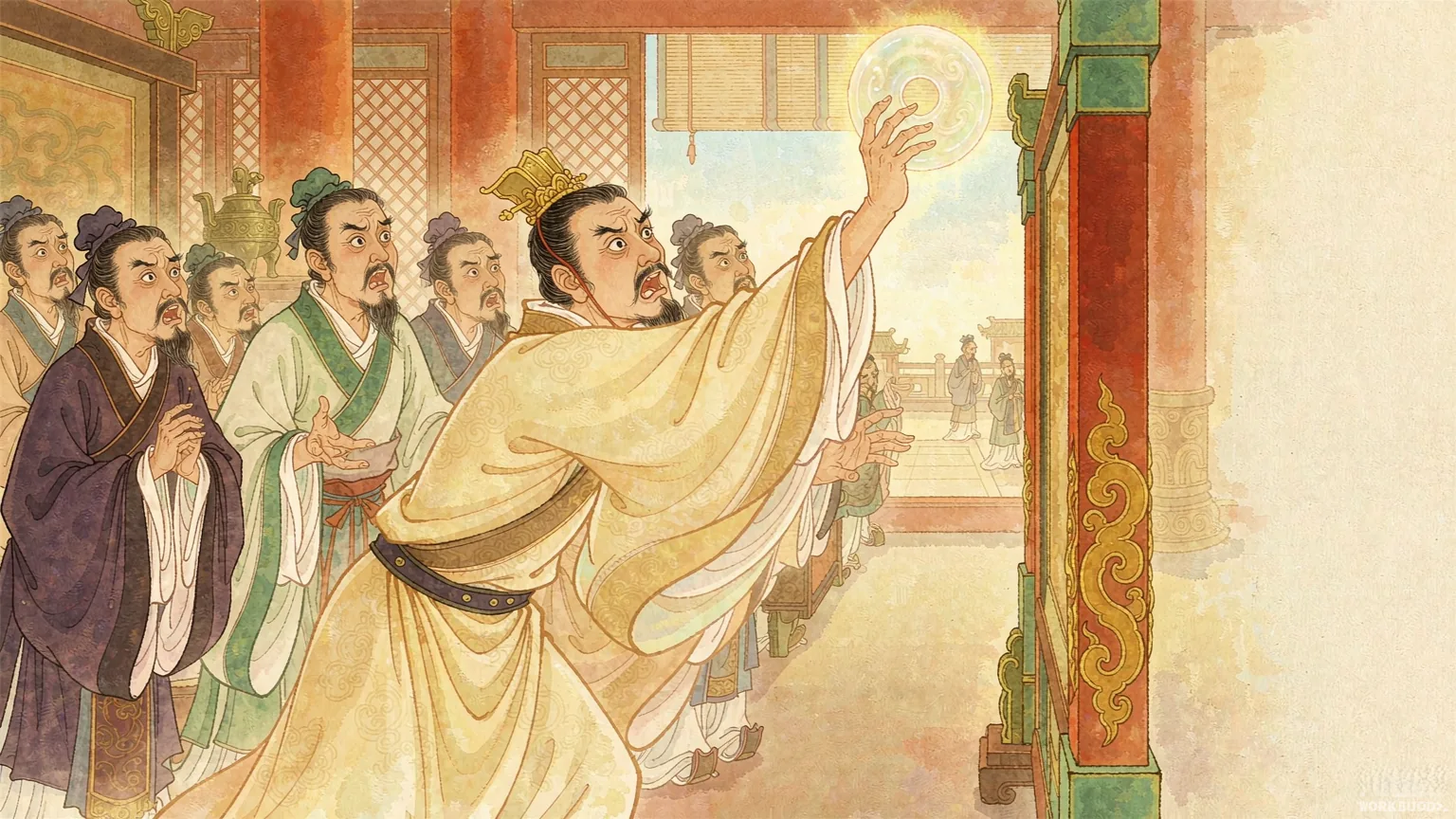
Lin Xiangru caught it, stepped back hard, and put his back against the pillar. His hair stood up. His eyes went red. He shouted so the whole hall could hear.
Your Majesty sent for this jade. The king of Zhao gathered his ministers, and every one of them said Qin is greedy and will never pay. I told them: between ordinary men, a promise is a promise. How much more between great states?
Then he raised the jade above his head and aimed it at the pillar.
The king of Zhao fasted for five days before he let this jade leave the country. And how does Your Majesty receive it? In this pavilion, with no ceremony. And then you hand it to your women to play with, as if it were a toy. You have no intention of giving up any cities. So I have taken the jade back. If you force me, my head and this jade will break together against this pillar.
He lifted it higher and tilted his eyes toward the wood.
The king panicked. Not for the man — for the jade. He apologised, quickly and repeatedly. He called for a map and began drawing with his finger, marking out city after city. Here, and here, and here — fifteen in all, to Zhao.
Lin Xiangru knew perfectly well that he was watching a finger move over a map.
He kept his voice level. The jade is the most famous treasure in the world. The king of Zhao fasted five days before sending it. If Your Majesty is sincere, then fast for five days, and hold the full ceremony of the Nine Guests, and I will present it to you.
The Nine Guests was the highest courtesy an ancient Chinese court could offer a visiting ruler — nine ranks of officials lined up, bells and drums, the whole weight of ceremony. The king thought about it. The jade was still in the other man’s arms. Force it, and the jade breaks. He agreed.
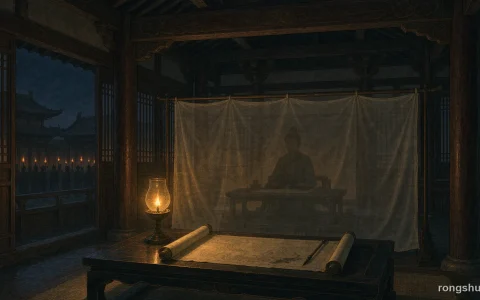
Act two happens at night, in a guest house.
That evening, Lin Xiangru called in his attendant, wrapped the jade in cloth, and hid it against the man’s chest. He sent him out by the back roads, in the dark, all the way back to Zhao.
Once the jade was gone, Lin Xiangru went to bed and slept better than anyone in the building.
Five days later, the king of Qin, having fasted and purified himself, sat in his great hall. Bells and drums. Nine ranks of officials in place. The ceremony was ready.
Lin Xiangru walked in with both hands empty.
He stopped, faced the king, and said it slowly.
Since the time of Duke Mu, Qin has had more than twenty rulers, and not one of them has been a man of his word. I was afraid of being cheated, and of failing my own king. So I have already sent the jade home to Zhao. Zhao is weak and Qin is strong. Zhao would never dare offend Qin. If Your Majesty truly wants the jade, give the fifteen cities to Zhao first — and would Zhao dare keep the jade then, and insult you? I have deceived Your Majesty. I deserve death. There is the boiling cauldron. I am ready.
The hall went silent.
The king of Qin had a *cauldron* for exactly this purpose: a huge iron pot, big enough to hold a man, used for the execution of traitors. Everyone in the room knew what Lin Xiangru had just offered them.
Courtiers laughed out loud. Others went red with anger and called for guards to drag him out.
The king of Qin did not move.
He stared at Lin Xiangru for a long moment. Then he waved his hand.
Let him go. Killing him will not bring the jade back. And it would only ruin the friendship between Qin and Zhao.
He received Lin Xiangru with courtesy, and sent him home.
Act three is short.
Lin Xiangru returned to Zhao. The jade was already sitting safe in the royal treasury, without a single scratch on it.
The king of Zhao was delighted, and made him a high official.
The fifteen cities were never given. The jade was never handed over. Nobody won, and nobody lost, and one unarmed man had walked into the greatest court in China and walked back out with his life and his honour.
That is where the idiom 完璧归赵 comes from.
It is not really about a jade. It is about a man with no rank, standing in a room full of armed men, who understood one thing better than anyone else there: the king of Qin could kill him, but the king of Qin could not afford to be known as a cheat. Faced with a choice between the jade and his own reputation, the powerful man chose his reputation.
Many years later, Lin Xiangru would make a general named Lian Po come to his house to apologise, carrying thorns on his back. That is a different Chinese proverb, and a warmer one.
But on that day, when he pushed open the palace door and walked out into the winter wind, his arms were empty.
And in the treasury of Zhao, the jade had not a single crack.