The cot was rented, thirty yuan a night.
Su Xiao set it up for the first time at twenty minutes to midnight. Steel frame, plastic sheeting, and every time she shifted her weight it creaked under her.
She spread her coat over her legs and stared at the lamp at the end of the corridor, one of its two tubes dead.
Her phone buzzed near her head. A message from her mother, one line only: Your father is asleep. You sleep too.
Two Hundred Kilometers
Su Xiao is thirty-four. She works as an accountant at a company in the provincial capital.
She lives forty minutes by subway from her office, in one room with two pothos plants on the balcony that a coworker gave her three years ago and that have not died yet.
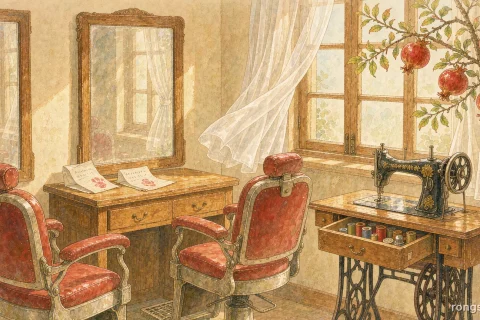
Her father is Su Changgen, sixty-six, retired from the grain depot in the county town, where he weighed trucks on a scale. Her mother is Li Huizhen, sixty-three, who ran a sewing stall at the mouth of the lane when she was young. If your quilt cover had a tear, you brought it to her.
Su Xiao is the only child.
In China that is a common family shape. From the early 1980s until 2015, most urban couples were allowed a single child. Those children are now in their thirties and forties, and the arithmetic is simple and heavy: two young people, four aging parents, and one child of their own. People call it four-two-one.
Her parents live two hundred kilometers away. A high-speed train takes an hour and twenty minutes, and then a minibus from the station, forty minutes more. She has walked that route for ten years.
On most Sunday evenings she calls home. Her mother answers, and the small things come in order. The pomegranates downstairs have ripened. Aunt Zhang next door has moved away. Your father left his medicine on the table again. At the end there is always the same sentence. Everything here is fine. Go and do your work.
She goes back three or four times a year: the spring grave sweeping, the autumn festival, the new year, and once more squeezed in between.
Every time she goes, she presses money into her mother drawer, two thousand, sometimes three. Her mother refuses it, and Su Xiao says, take it, I cannot spend it all in the city. So her mother takes it and says, I will save it for you. Save what, Su Xiao says. Spend it on yourselves. Her mother laughs, and says nothing.
When Su Xiao was in school, her parents never let her go without. When she was accepted at a university, her father sold the television the family had used for over a decade, to cover her tuition.
After she started working, every time she sent money her mother said no, and every time she offered to take them for a checkup her father said it was a waste. Doctors, he said, will find an illness even in a healthy man.
Her parents, all their lives, could only give. They never learned how to take.
One winter she called, and it rang a long time before anyone picked up.
Her mother sounded short of breath. Su Xiao asked what she was doing. Just came upstairs, her mother said, with the groceries in her arms.
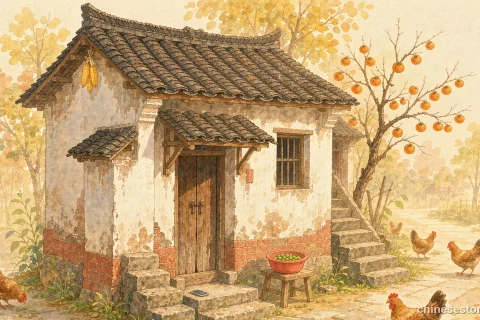
The old building has six floors and no elevator.
After that, every call began with the same question. How many times did you stop on the stairs. Once, her mother always said. Just once.
Then Su Xiao went home and found, on the windowsill at the corner of the third floor, an empty plastic bag. Her mother had stood there to rest, and set something down beside her.
The Three Times I Asked
Last autumn, her father went into the hospital.
That morning he got up and felt the floor tilt. He put a hand on the wall and slid sideways. Her mother took him to the county hospital. The doctor said the problem was in the vessels of his brain, and he should stay for observation.
Su Xiao arrived at noon the next day. She asked for leave and told her director there was trouble at home. Her director said to hand over her work first.
There were three beds in the ward. Her father lay by the window, a needle taped to the back of his hand. Her mother sat on a low stool by the bed, peeling an orange. She had peeled half of it in one long strip that had not broken.
The first thing her father said when he saw her was: what did you come home for. This is nothing.
The first three days passed quietly. He could still speak clearly. Only his right side would not obey him, and the doctor said he should lie still.
The man in the next bed was over seventy, with a broken hip. He had three sons and a daughter. One came in the day, one came at night. There was always fruit on his bedside cabinet, and always someone to turn him, so that he would not get sores.
Her mother watched all of it.
One evening she said to Su Xiao, look at that family. How good they are.
Su Xiao said, I came back, did I not.
Her mother said, for how many days. You still have your job.
Su Xiao did not answer. She sat in the corridor and watched that family come and go, and she thought of her two pothos plants, unwatered for days, and whether they had wilted.
On the fourth evening, Su Xiao drew her mother out into the corridor and told her what she had been thinking.
She said, Mom, come and live with me in the provincial capital. You and Dad both.
Her mother stopped peeling.
She said, we would not get used to it.
Su Xiao said, how would you not get used to it. My place is small, but you take the bedroom and I will sleep in the living room.
Her mother said, your office is far from there. If we came, you would have to look after us.
Su Xiao said, I would not have to look after you. You would stay at home by yourselves. There is a market downstairs.
Her mother said nothing for a moment. Then she said, your father has never left the county town in his life.
Su Xiao said, then treat it as a trip.
Her mother gave a small laugh. A trip to what, she said. We would not know a single face there.
The second time, Su Xiao tried her father.
He shook his head as if it were on a spring. No, no, he said. When you are old, you die in your own house.
Su Xiao said, then let us hire a helper, someone to watch you during the day after you come home.
Her father said, what helper. Two hundred yuan a day. Is your money burning a hole in your pocket.
Su Xiao said, I will pay.
Her father turned his face to the window and said nothing. After a long while he said, this is my own business. I can manage my own business.
The third time, she made the case with numbers. A helper, six thousand a month, seventy-two thousand a year. Moving them to the city, rent and living costs, the same again. She showed the list to her mother.
Her mother glanced at it and did not take it.
She said, Xiao Xiao, listen to me once. We are not staying away for any other reason. We do not want to be a burden on you.
Su Xiao said, what burden. You raised me this far. Looking after you is the least I owe you.
Her mother gathered the orange peel and dropped it in the bin. You have a hard enough time in the city yourself, she said.
That was where the conversation stopped.
Su Xiao sat outside the ward until it got dark. The corridor lights ran on a sensor, and when she sat still they went out. She could see that her mother was not unwilling. She was afraid.
The Tin Box on the Wardrobe
The day her father came home from the hospital, the weather was good. The sun lay bright across the window glass.
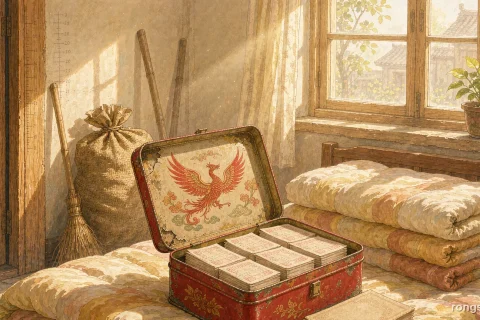
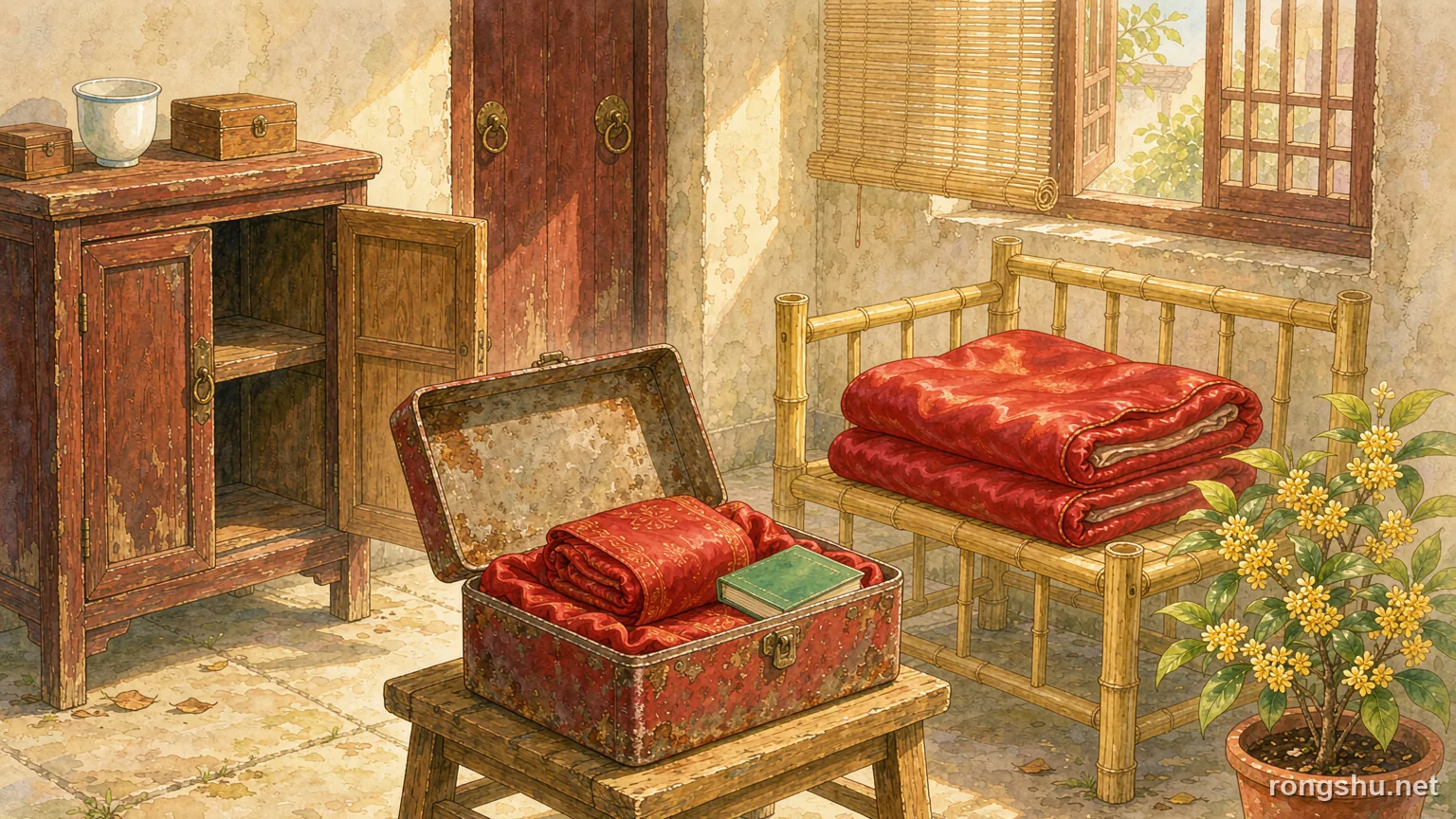
Su Xiao helped her mother tidy the small room where the family kept things that had nowhere else to go. She was looking for her father reading glasses. On top of the wardrobe stood a tin box, thick with dust, and heavy.
She lifted it down and opened it.
On top was a bundle wrapped in red cloth. Inside were her primary school certificates, from first grade to sixth, corners curled but pressed flat again under clear plastic. There was a red scarf, washed almost white. There was a slip of paper she had written at eight, in crooked characters. When I grow up, it said, I will buy Mom and Dad a big house.
Underneath, pressed flat, was a bank passbook.
She opened it. The balance was two hundred and thirty-six thousand yuan.
Entry after entry, all from recent years. The two thousand she sent home every month sat almost untouched. Her parents pensions had gone in the same way, line by line. Between the pages was a piece of paper in her mother handwriting, four words only.
For Xiao Xiao. Just in case.
Su Xiao held the paper, and her hand shook a little.
At the very bottom of the box was a small plastic bag with blister packs of pills. She read the label. One was for blood pressure. Another she could not make out, so she looked it up on her phone. It was for the heart.
It was not her father medicine.
She took the pills and went to ask her mother. Her mother was in the yard, taking in the bedding. She saw what was in Su Xiao hand and paused, just for a second, and then said, oh, that. That is mine. An old trouble. Nothing serious.
Su Xiao asked, since when.
Her mother thought about it. Three years, she said.
Three years. Su Xiao had never known.
She asked, why did you not tell me.
Her mother folded the quilt and patted it flat. If I had told you, she said, you would have had to run back here. Then she said, your father pension is enough for the two of us. Keep your money for yourself.
Su Xiao stood in the yard and could not find a word.
Then she understood. Her parents were not refusing to move to the city because they could not get used to it. They were afraid of spending money, afraid of being a nuisance, afraid of growing old and useless and becoming a weight tied to their daughter.
Of that two hundred and thirty-six thousand, two thousand was what she had sent this very month. Her mother had not touched a single yuan of it.
I Came Back to Stay
That winter, Su Xiao made a decision.
She quit her job in the provincial capital. She had been there eight years, from junior clerk to supervisor, twelve thousand yuan a month. When she told her director, he asked her to think again. Two more years, he said, and you would be promoted. She said, I have thought about it.
She did not tell her parents that she had quit. She told them she had been transferred back, that the company had an office here now. Her mother believed her, and asked how long the transfer would last.
She went home to the county town and took bookkeeping work at a building materials shop by the gate of her compound. The owner was the older brother of a high school classmate, and he paid her five thousand five hundred a month. She kept the books for two small companies from home in the evening. Together it was enough.
For the first weeks back, she had to get used to it herself. A coworker from the city messaged to ask why she had walked away from a job like that. Her old position was filled within the month, and an intern she had trained was now a supervisor. At a class reunion someone joked that she must have failed in the city and come home. She heard it, and did not explain.
She did the math once. That year she earned sixty thousand yuan less than she would have in the city. But she never did the other sum. She ate dinner with her parents almost every night. That year, she ate more than three hundred of those dinners with them.
She gave up the apartment in the provincial capital. On the day she moved out she left the two pothos plants behind, and gave them to the woman downstairs.
When she moved back, her mother stewed pork ribs. Her father sat at the table and asked, so you have really been transferred back. Yes, she said. I am not going anywhere now. Her father said mm, and bent to his soup. After a moment he said, well then. That is good.
It was the first time Su Xiao could remember her father saying that anything was good.
Dinner at the Same Table
Now Su Xiao finishes work at half past five.
On the way home she turns into the market and buys two dishes. By the time she gets in, her mother has already cooked the rice. Her father sits on a low stool beside her, sorting vegetables. His right hand still does not quite obey him, so he sorts slowly.
Three people at one table, plain food. Her mother grumbles that the vegetables have gone up in price, and her father argues back. So what if they have. We can still afford to live.
Su Xiao listens and does not join in.
Sometimes she thinks: if she had never opened that tin box, would she still be in the provincial capital, calling home every Sunday, coming back three or four times a year, believing herself a dutiful daughter.
Her father goes downstairs every afternoon now with his cane and walks two laps of the compound. He walks slowly, and when he comes back one side of his face is red. Her mother waits for him at the bottom of the stairs with half a bottle of water in her hand. One day Su Xiao came home from the market and saw them from a distance, one ahead and one behind, saying nothing, just walking slowly.
After dinner she sits on the bamboo chair in the yard and watches the lights come on, one by one, in the building across the way. In the corner of the yard the osmanthus her mother planted is in bloom. When the wind moves, the scent drifts over.
Her mother message is still on her phone. Your father is asleep. You sleep too. She has never deleted it.
This is a work of narrative writing based on real situations in Chinese family life. All names have been changed.