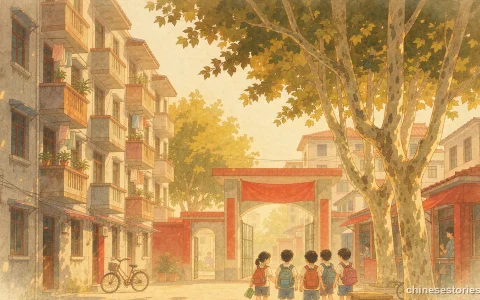
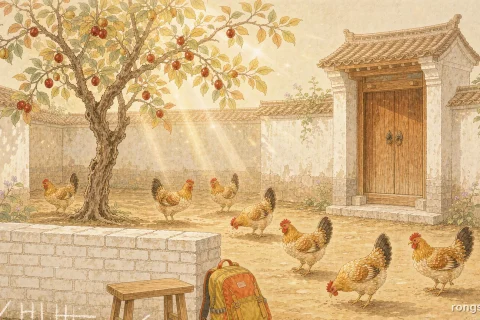
The lane in the village is quiet at four in the afternoon. A grandmother in a dark blue jacket sits on a low stool by her door, shelling peas into a plastic basin. A boy of about nine sits on the step beside her, doing his homework on a board across his knees. A phone lies face up on the concrete between them, and every so often its screen lights up.

The boy’s mother and father are more than a thousand kilometres away, working in a factory in a coastal city. They left when he was three. He sees them in person once a year, at the Lunar New Year. The rest of the year, they are voices on that phone.
He is one of the children China calls liushou ertong, left-behind children. The phrase names a simple and painful fact. A child stays in the hometown, and one or both parents go away to work.
What Left-Behind Means
The term covers a situation rather than a single kind of family. A child is counted as left behind if one or both parents have moved away for work and the child remains in the home area, usually for more than half the year.
In practice the label hides wide differences. One child may have a mother at home and a father far away. Another may have no parent nearby at all and be raised entirely by grandparents, an aunt, or, in the hardest cases, an older sibling.
Most of these children live in the countryside, but not all of them do. Some stay behind inside the cities themselves, in the villages and old districts swallowed by expanding urban areas, while a parent works in another province.
The scale is large enough to shape whole regions, and the official figures help to make it concrete.
The 2020 national census counted around 67 million children under eighteen living apart from at least one parent, with roughly 42 million of them in rural areas. In some rural counties, close to four out of every ten children are in this situation.
Those numbers have risen and fallen with the economy over the years. During periods of fast urban growth, more parents left and the count climbed. When wages in the home region improved, or when some workers returned to open small businesses, it eased again. What has never happened is a return to the era before large-scale migration, when families and work sat in the same place.
The wider picture matters too. The same census found roughly 71 million children who had moved with their parents to the cities, slightly more than those left behind. The two groups are two sides of one story. When a family migrates, some children go along and some stay, and which child ends up in which group often depends on practical limits rather than on preference.
The definitions themselves matter when the numbers are compared. A wider official count includes children with one parent away, which gives a larger figure, while a narrower one counts only those with both parents away, which gives a smaller one. Both describe the same reality from different angles. The fair way to read them is as a range rather than as a single total.
Why Parents Leave
The reason parents leave is almost always money, and the arithmetic is hard to argue with.
Farming income in many inland provinces is low and seasonal. A job in a factory, a restaurant or a construction site in a coastal or provincial city can pay several times what the same person can earn at home. For a household with school fees, medical costs and the dream of a house, the gap is the difference between getting by and moving up.
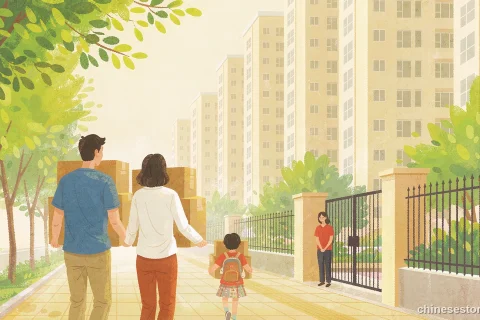
There is a second, quieter reason that keeps children in the village. When parents move to a city, bringing a child along is not always simple. School places, especially in the largest cities, are tied to local registration and to documents that a migrant worker may not have. Adding a child means extra rent, extra cost and extra risk. Many families conclude that leaving the child with grandparents, in a familiar house and a familiar school, is the safer choice for everyone.
So a pattern sets in. The young adults go, the grandparents stay, and the children are raised by people one generation removed. The family earns more and lives apart, and both of those facts are true at the same time.
In some provinces the result is a village that is mostly grandparents and children. Shops close, fields are worked by older hands, and the only young adults around are home for a few days a year. Local schools have responded with boarding places, after-school rooms and volunteer tutors, and teachers often keep a closer watch on the pupils whose parents are far away.
A Childhood Raised by Grandparents
In a left-behind household, the day has a steady shape, and the grandparents are at the centre of it.
A grandmother cooks, washes, walks the child to school and back, and keeps the small routines that a child needs. A grandfather may manage money, deal with officials, or take on farm work that the parents once did. The house is quieter than it should be, and the adults in it are older than the parents a child might expect.
The relationship has real warmth. Grandparents often dote on the child, and the child leans on them in the way other children lean on a mother or father. On a village afternoon it can look like an ordinary, close family scene.
It also has real gaps. An elderly carer may struggle with schoolwork in subjects they never studied, or with a teenager’s problems that need a different kind of attention. The emotional support that a parent gives in small daily doses has to be delivered another way, or not at all. Many of these children grow up capable and independent earlier than their peers, and many carry a quiet distance from parents they barely know.
One mark of these households is an early role reversal. A child may help an ageing grandparent fill in forms, work a phone, or carry things home from the market. Independence comes early, and so does a certain seriousness. Teachers often describe left-behind children as self-reliant but quiet, used to managing things on their own.
The Phone on the Table
For the modern left-behind family, the phone is the link that holds the parent-child relationship together.
Video calls have changed the texture of the separation. A mother can watch a child read a page aloud, see a new haircut, check that homework is done. Calls are often short and routine, fitted around shift work, and many families keep them as fixed rituals, at the same hour on the same days.
The calls also reveal what is missing. A screen cannot hug a child, sit through a parent evening, or step in when something goes wrong in the middle of the night. Parents describe a strange feeling of being present and absent at once, close enough to see, far enough to be useless.
The older the child, the harder the distance can become. Young children accept the arrangement and the phone as a fact of life. Teenagers begin to ask why, to resent the years of absence, or to protect themselves by growing cool. The calls that once felt like a lifeline can turn into a monthly obligation on both sides.
Some families try to close the gap with small rituals. A parent may call every night at eight, send a voice message before a child sleeps, or leave a recorded good night for the mornings. These gestures carry the relationship across the distance, and they also make the absence more visible, because a ritual that exists only to bridge a gap reminds everyone that the gap is there.
The Journey Home
Twice a year, the biggest of them at the Lunar New Year, the distance collapses.
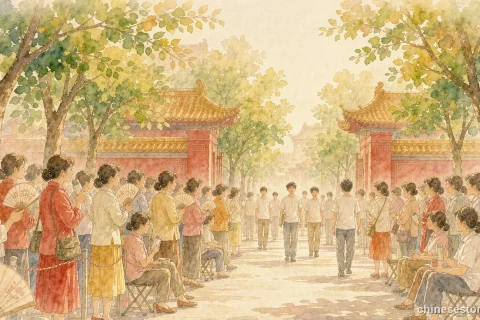
Tens of millions of workers travel home for the holiday, in what is often described as the largest annual movement of people on earth. Trains sell out weeks in advance, and buses and motorcycles stream along the highways toward inland provinces. For a few days, the village fills with returning parents, and the same lane that was quiet in October is crowded with people and new clothes and gifts.
The days are intense and short. Parents try to compress a year of parenting into a week. They cook, they take photographs, they buy things, and they notice how much the child has changed. Then the holiday ends, and the parting is often harder than the leaving last time, because everyone now knows what is coming.
Some parents time the trip to avoid the worst goodbye for the child, slipping away before dawn while the child sleeps. It is a small mercy that many children remember anyway.
The reunion also carries a quiet pressure. Parents arrive with gifts bought in the city, and children compare what each cousin received. The few days together are watched by relatives, and small frictions that build up all year can surface in a crowded kitchen. The holiday that everyone waits for is, for some families, the hardest week of the year.
What the Money Buys
The wages sent home do real things, and it is important not to lose sight of that.
The money pays for school, books and school clothes. It helps build or repair a house, so that the family has something solid to return to. It covers medicine for ageing grandparents and, in time, the cost of a wedding or a first car for the child. In many families, the years of separation are remembered not only with sadness but as the price of a better life.
That deal is the heart of the story, and it cuts both ways. The parents accept years of absence to give their children options they themselves did not have, and the children grow up in relative material comfort with an emotional gap that money cannot close. Neither side chose the trade freely. Both sides live with it.
Some families now refuse the trade. A growing number of workers have returned home to take lower-paid jobs nearby, or to run small businesses, so that they can be present for their children. The trend is uneven, but it points to a change in how families weigh money against time.
Compared With the West
A Western reader may recognise parts of this, because migration for work is not unique to China.
Workers in other countries also leave small towns for cities, or cross borders for jobs, and leave children with relatives. Filipino parents work overseas and raise families by video call. Mexican and Central American workers move north and send money home. The pattern of separation for economic reasons is global.
The Chinese version is distinctive in its scale and in its structure. The movement is internal, within one country, and it involves tens of millions of people at once. It also happens against a background of a registration system and school rules that can make it hard to bring a child along, which pushes more families toward the leave-the-child-home choice.
The emotional core, though, is the same everywhere. A parent chooses between being present and being able to provide, and knows that the choice will be felt for a lifetime.
There is one more difference worth naming. Much of the migration in other countries crosses borders, which makes it hard and often permanent. China’s migration is internal, so a return trip is possible, and many families live for years with the hope of an eventual reunion in the same province. That hope is what keeps the arrangement bearable, and for a growing number of families it is also what has finally brought them back to the same house.
A Chair at the Door
Evening comes to the lane, and the light turns the colour of weak tea. The grandmother carries the empty basin inside and calls the boy to come and eat. He picks up the phone, checks it one more time, and follows her in.
On the wall by the door hangs a calendar, and one date near the end of the year is circled in red. That is when the train will bring his parents home, and for a week the quiet house will be full of noise and people and the smell of cooking.
Between now and then there is only the lane, and the homework, and the grandmother, and the phone that keeps a family together across a thousand kilometres. For millions of children in China, this is simply what an ordinary childhood looks like. The parents are not gone. They are just working, far away, for the day the red circle comes.
This story is based on publicly documented practices and on reporting in the Chinese and international press. The families described are illustrative, and no individual is identified.