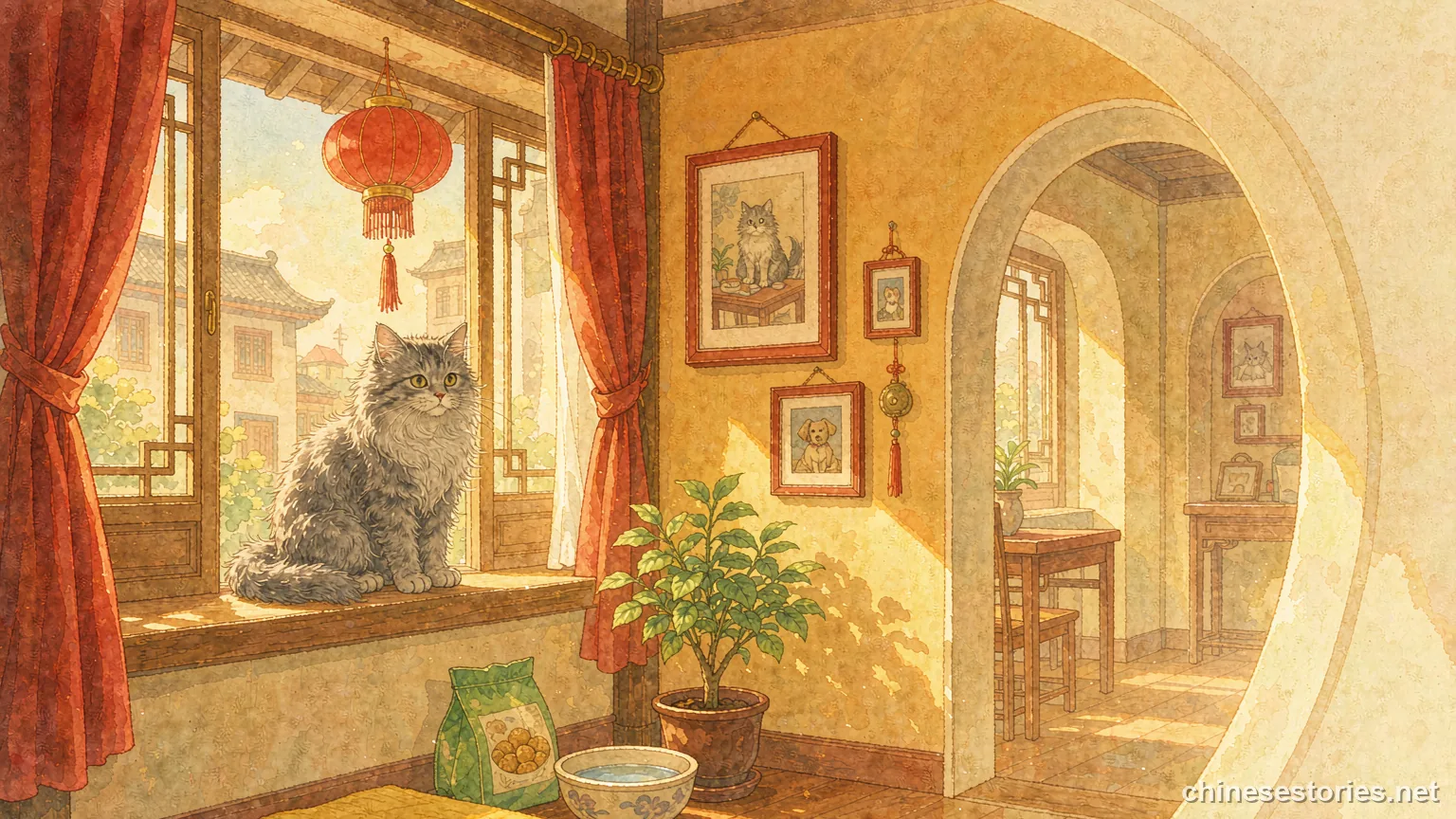
In a small one-bedroom flat on the edge of a Chinese city, a young woman comes home after nine at night and a grey cat is waiting at the door. She drops her bag, picks the cat up, and asks about its day. On the wall above the sofa there is a framed photograph of the same cat, and on a shelf a small bag of freeze-dried treats kept for good behaviour.
The flat is rented, the lease bans children, and the woman lives alone. The cat is not quite a child and not quite a possession. In the language people now use, it is a fur kid, a member of the family with a name, a diet and a birthday.
Ten years ago this scene would have been unusual. Today it is ordinary in almost every Chinese city. Cats and dogs have moved from the yard and the doorway into the centre of family life, and the change has created a market worth hundreds of billions of yuan.
What the Pet Boom Looks Like
The boom shows up first in numbers, and then in streets.
Industry surveys report that more than a hundred and twenty million cats and dogs now live in Chinese urban households, and that the money spent on them passed three hundred billion yuan a year by 2024, growing year on year. Cat keeping is growing faster than dog keeping, and in some recent counts the number of pet cats has overtaken the number of pet dogs.
On the ground, the change is easy to see. There are pet shops in neighbourhood shopping streets, grooming salons with appointment books, clinics with specialist vets, and delivery riders carrying bags of cat food. There are pet photographers, pet insurance sellers and, at the top of the market, pet hotels for the holidays that cost more per night than a decent human one.
The language has changed with it. People speak of their pets as baobei, a term of endearment for a treasured child. They call themselves the pet’s parents. A dog is walked in a small coat in winter, and a cat is given a hat on its birthday.
The boom also has social rituals of its own. Dog owners greet each other by breed and by name, and a group chat for one apartment compound can fill overnight with advice about a sick cat. On social media, many pets have accounts of their own, and a single funny clip can bring an animal more followers than most people gather in a lifetime.
Why So Many Households Want a Pet
The reasons behind the boom are mostly about how Chinese families have changed.
Homes have grown smaller and households have grown thinner. Millions of young adults live alone in cities far from their parents, in flats too small for a family and too quiet after work. A pet fills the space and the quiet at the same time. It gives a reason to come home, and someone to come home to.
The generation born under the one-child policy is now having children of its own, or choosing not to. Many grew up as the only child in a household of adults, with the weight of expectation on them and no sibling to share it. For some of them a pet brings a different kind of company, one that asks for affection and gives it back without any of the pressure that comes with family.
There is also the matter of cost and commitment. A child is expensive, time-consuming and permanent. A pet is cheaper, needs less, and fits around a demanding job. For couples who are unsure about children, or who are postponing them, a cat or a dog offers many of the same daily comforts without the same lifetime stake.
Older people add another strand. In households where grown children have moved away, a pet keeps a retired parent company and gives the day a shape and a routine. Some families give a pet to an elderly relative precisely so that they will not be alone.
The emotional pull is real, and owners often describe it in a single word. They say their pet heals them. The phrase captures the relief of coming home to something that is glad to see you and asks for nothing more than food and company. In a competitive city, that simple welcome is a rare thing, and people will rearrange a budget to keep it.
From Working Animal to Family Member
The shift in feeling is as important as the shift in numbers, and it reverses something old.
For most of Chinese history, cats and dogs had jobs. A dog guarded a house or a field, and a cat kept mice out of the grain. They were useful, they were fed, and they were not usually thought of as family. In many rural homes that older attitude still survives. A dog lives outside, and a cat earns its keep.
In the cities, the relationship has been rebuilt. A pet is now chosen for its looks and its company, not for a task. It sleeps indoors, often on the bed. It eats food designed for its age and its health. It is taken to a doctor, vaccinated and photographed. When it dies, some owners hold a funeral, and a small industry has grown to serve that moment.
This is what people mean by pet humanisation, and it has spread across the world. What is striking in China is how quickly it happened, compressing a change that took decades elsewhere into a few years.
Even the smallest details have changed. Pets have names chosen with care, sometimes borrowed from film or literature. Some owners sign the animal’s name on a birthday card, and a few travel with a pet rather than leave it behind. Treats are kept in the kitchen beside human snacks, and a sick pet is watched as closely as a sick relative.
The Money Behind the Love
The affection has a large price tag, and it is paid in steady amounts.
Food is the biggest item, and the market for pet food has grown fast. Owners now choose by ingredient and by brand, and a bag of imported cat food sits beside boxes of tea in the kitchen. Medical care comes second, and it is the fastest-growing part of the spending. A modern pet clinic offers blood tests, imaging and surgery, and an owner with a sick animal may pay more for one operation than they earn in a month.
Around food and medicine sits a ring of smaller businesses. Grooming, boarding, training, walking, clothes, toys, and even photography and funeral services all now have their own shops and their own loyal customers. On shopping festivals and livestream channels, pet products sell in enormous volumes, and the biggest brands have become familiar names to anyone who keeps an animal.
The pet economy has also drawn investors. Public companies that make pet food or supplies have become some of the better performers on the stock market in recent years, and analysts talk about the sector as one of the more reliable forms of consumer growth.
Retail has learned to ride the trend. Pet products now take up whole floors of online shopping festivals, and livestream sellers who once sold clothes or snacks have moved into cat food and toys. Buyers stock up in bulk during promotions, and a well-known host can move the sort of volume once reserved for electronics.
Pet-Friendly Cities
As pets have moved into the household, cities have slowly started to make room for them.
In the biggest urban centres, pet-friendly places are becoming more common. There are cafes where a cat or a dog sits beside the tables, parks with fenced areas where dogs can run safely, and some shopping malls that allow small pets and provide a resting corner. A few cities have even run pet-friendly bus routes, where a small animal may ride beside its owner.
The change is uneven and, in places, contested. Many apartment buildings still ban larger dogs, shops still post a no-animals sign, and quiet neighbourhoods debate how much barking or mess is fair. Rules about leashes, muzzles, registration and vaccination vary from city to city, and they are tightened whenever a serious incident draws attention. Between the growing affection for pets and the pressures of dense city life, the balance is still being worked out street by street.
Adoption is growing alongside buying. Rescue groups post animals online, and more owners now choose a mixed-breed dog or a rescued cat rather than a pedigree. The idea of adopting rather than shopping, once uncommon here, is slowly taking hold, especially among younger owners who care about how an animal was raised.
In some housing compounds, residents now agree among themselves on where dogs may run and when they must be carried. Small rules like these, made building by building, are how a dense city slowly learns to live with its animals.
The Tensions That Come With It
Every boom has its shadow, and this one has several.
The supply side is one of them. A market worth hundreds of billions attracts breeders and sellers, and not all of them are careful. Puppy farms, unhealthy animals sold as purebred, and abandoned pets all exist, and animal welfare groups spend much of their time on rescue work. Some owners who buy on impulse later find that a pet is a decade-long commitment, and surrender their animal when life changes.
Public safety is another sensitive issue, especially around large dogs. Dog bites are rare but memorable, and a single serious case can lead to stricter local rules and to harder attitudes toward all dogs. Owners who keep their animals well often feel caught in the middle, penalised for the behaviour of the careless.
There is a quieter tension too, about the meaning of all this spending. Some see the pet boom as a sign of a warmer, more caring society. Others see people lavishing money on animals while their parents live alone in the old home. The debate touches the same nerve as the question of children, duty and who each generation is responsible for, and it is not easily settled.
Compared With the West
A reader from Europe or North America will find much of this familiar, because pet humanisation is a global trend.
Western households have long treated dogs and cats as members of the family. There are birthday parties, pet insurance, holiday boarding and dog-friendly pubs. The idea of a fur baby did not start in China, and much of the language of the boom has been borrowed from abroad.
Two differences stand out. The first is speed. The change that took shape over decades in many Western countries has happened in China within a few years, carried by a huge young urban population and a phone-based market that spreads new habits quickly. The second is the size of the stage. The number of pets, and the number of people buying for them, is on a scale that reshapes global pet food and animal medicine, not just the shops on one street.
There is also a question of space. Western pet ownership grew up around houses and gardens, where a large dog could run. Chinese pets mostly live in apartments, in dense cities, and that constraint shapes the boom itself. Small breeds and cats fit the home, the lift and the twenty-floor life, and the twenty-floor life is exactly where the boom is strongest.
The market has also begun to travel. Chinese pet food and pet-tech companies now sell abroad, and factories that once made goods for other brands build their own. In a small way, the same animal that changed a Chinese household is now part of a global trade in clippers, cameras and cat food.
A Cat by the Window
Later in the evening, the woman sits by the window and the grey cat lies along the sill, watching the lights of the city. A bowl of water is set on the floor, and a small mat is folded in the corner. The flat is one room and the street below is loud, and the cat sleeps through all of it.
For millions of young people in China, a pet is the answer to a simple problem. A city can be large and busy and lonely at once, and a small animal makes a home feel less like a place to sleep and more like a life shared with someone. That quiet need, repeated in flat after flat, is what turned a yard animal into a family member and a habit into an economy. The cat on the windowsill, unbothered and at ease, does not know it is at the centre of any of this. It simply waits for dinner.
This story is based on publicly documented practices and on reporting in the Chinese and international press. The families described are illustrative, and no individual is identified.