Chen Meifeng counted the leftovers when she took them out of the fridge.
A dish of greens from yesterday noon. Half a bowl of tofu from the day before. A pot of porridge cooked three days ago, with a skin on top.
She eats alone. Three days, and it is still not finished.
A Meal for One
Chen Meifeng is sixty-seven. She lives in an old residential compound in the east of the city.
Her husband died four years ago. Before that he lay in bed for half a year, and she nursed him alone, feeding him and turning him and wiping him down, sleeping in scraps. She had no time to think about anything else. Then he was gone, and the apartment went quiet, and she found out that quiet can frighten a person.
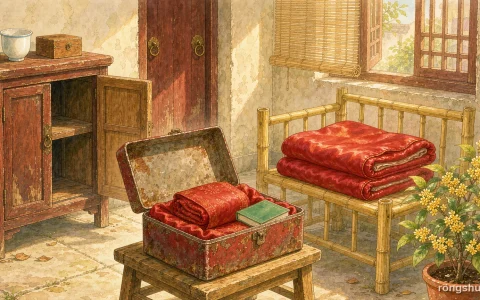
His slippers are still by the door. The cotton pair for winter, the plastic pair for summer. She has never thrown them out.
Sometimes she cooks and, without thinking, makes an extra portion of what he liked. She sets it on the table, and only then remembers there is nobody across from her.
She does not talk about any of it. To her son, who is in the provincial capital, she says nothing, because even if she said it he might not understand. To her old friends she says nothing, because they have lives of their own. She keeps it inside.
Her days are long. She wakes at half past five, cannot sleep again, and gets up. She wipes the apartment down, table and cabinet and windowsill, a whole hour of it. Then she goes to the morning market and picks over the vegetables for half an hour more. She comes home, cooks lunch, eats alone. In the afternoon she dozes, then watches television. When it gets dark she cooks again, and eats alone again. After she clears up she sits on the sofa and waits to be sleepy.
She counted once. In a whole day, the only words she speaks are at the vegetable stall. How much is this. Can you go a little lower. Give me two more.
She and her husband were introduced by a matchmaker. They had little to say to each other, and it was settled after three meetings. They lived a whole life together without once quarreling. A few days before he died he took her hand and said, from now on, do not keep everything locked inside yourself. At the time she did not understand him.
She always cooks too much. After decades the habit of two portions does not change. What is left goes into the fridge, and she eats it day by day. It is not that she cannot bear to waste it. It is just that throwing food away feels wrong.
Sometimes she sits with her bowl in front of the television. The news ends. The weather ends. The drama series ends. Her bowl is still not empty.
The East Gate of the Park
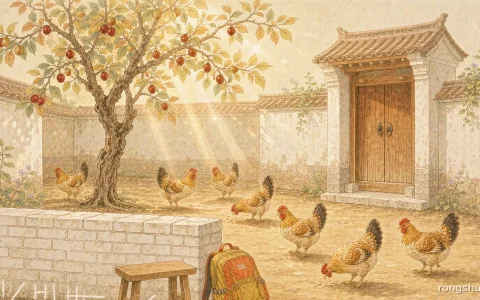
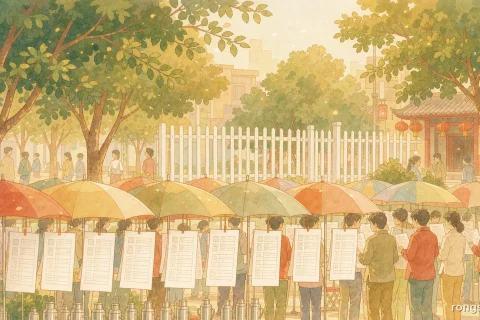
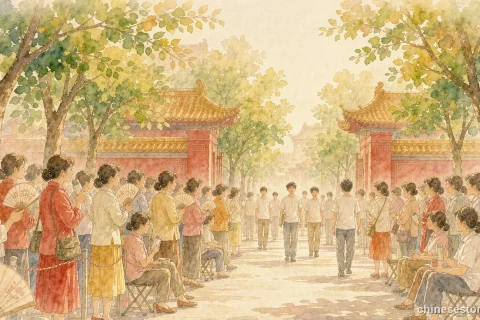
At the city park, by the east gate, there is a row of trees. Every weekend the ground under the trees and the benches along it are full of people.
They are all elderly. Each holds a sheet of paper with writing on it: age, height, job, apartment, car, and one line asking for a fated match. They are there on behalf of their children. The children are at work and have no time, so the parents come. The corner has a name. It is called the matchmaking corner.
In China this is a familiar weekend sight. Parents lay their unmarried children out like small advertisements and compare them with one another, because in many families a parent feels it is a duty to see a child married. The words on the paper are plain and practical. Some add a photograph under a sheet of clear plastic, the corners curling.
Chen Meifeng started going two years ago. She carries a sheet of paper with her son’s details written on it. She wrote it herself, twice, in case she made a mistake.
She knows her son does not like it. He says, Mom, stop worrying about it. She goes anyway.
Most of the people at the matchmaking corner are the same. Once they have finished talking about their children there is nothing left to say, so they stand and read the papers in other people’s hands. When the wind lifts the loose sheets off the ground, everyone bends down to gather them.
That is where she met Zhou Dehai.
Zhou Dehai is seventy, not tall, with reading glasses. The first thing he ever said to her was a question. That paper of yours, he asked, is it for a son or a daughter.
A son, she said.
Mine is a daughter, he said.
And they began to talk. About their children, their children’s work, their children’s ages, and then, drifting, about other things entirely.
Once it rained and the two of them sheltered under the same tree. What are your son’s prospects, Zhou Dehai asked. He works in construction, Chen Meifeng said. He is honest, he is just not good at talking. That is good, Zhou Dehai said. Honest is good. And yours, she asked. What is your daughter like. Zhou Dehai thought about it. My daughter, he said, is fine.
Then he laughed at himself. Those few lines on my paper, he said. I cannot even remember them myself.
They did not meet every week, and neither of them arranged it. On weekends they went to the park, and if the other was there, they sat together for a while.
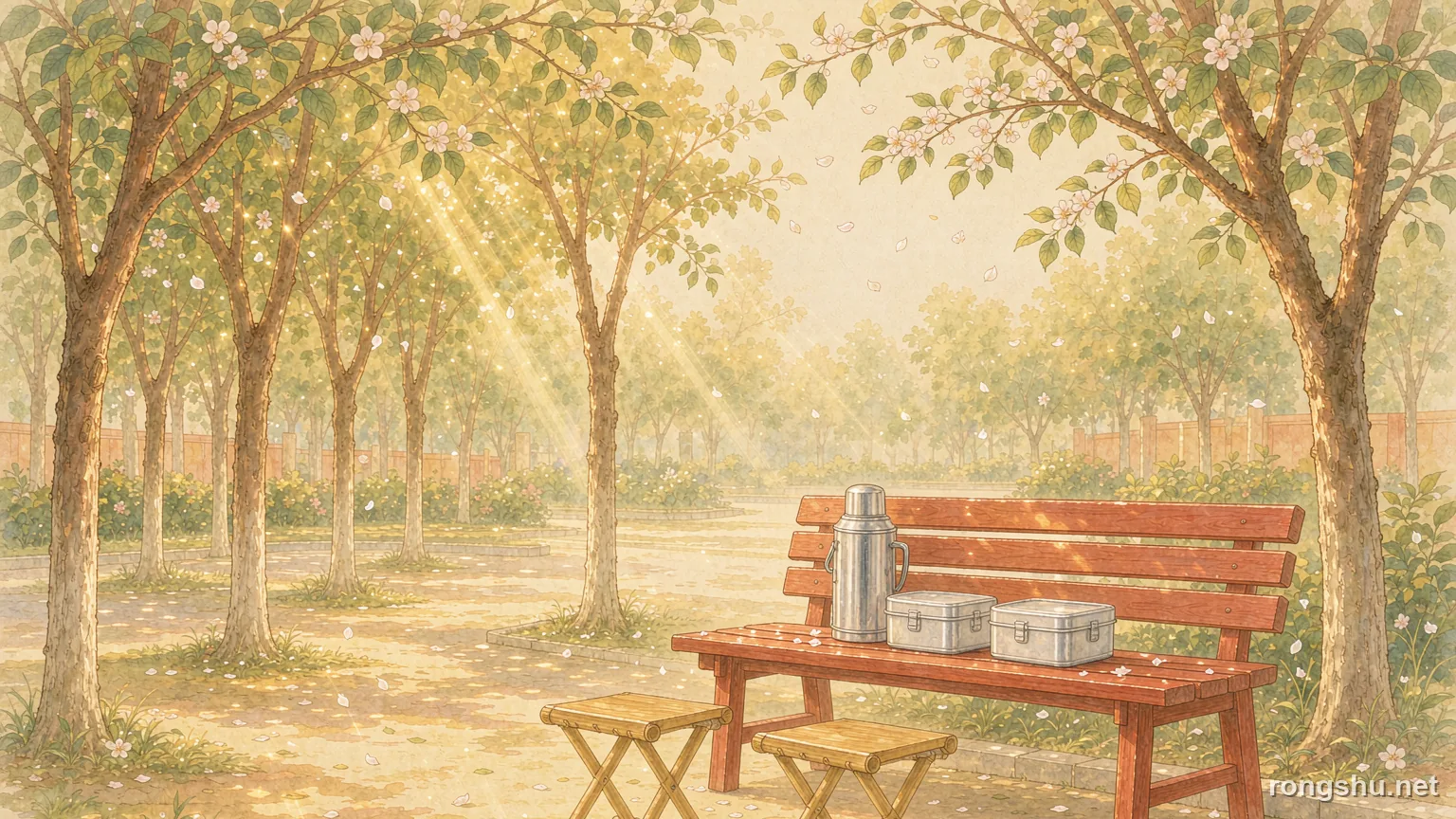
Zhou Dehai always came early and took the corner of the bench under the tree. He brought a thermos and a folding stool, and the stool was for Chen Meifeng. The bench is hard, he said. Your knees are bad. Sit on this.
How do you know I am coming, she said.
If you do not come, he said, I will sit on it myself.
They talked about the price of vegetables, and which supermarket had cheap eggs. They talked about the weather, and when the osmanthus would bloom this year. They talked about their health. He said his blood sugar was high and he could not eat much sweet food. She said her knees were bad and she could not crouch down.
What do you eat at noon, she asked him once, on your own.
I boil noodles, he said. Sometimes I boil too many and eat them again at night.
Me too, she said.
They both laughed. And then, laughing, they both stopped talking.
One day Chen Meifeng came out of the market and saw Zhou Dehai standing at the gate of her compound with two bags of vegetables. She asked who he was looking for. I worked out this is when you come back, he said.
The Piece of Paper
One day Chen Meifeng asked him one question too many.
Has your daughter found anyone, she asked.
Zhou Dehai was screwing the lid back onto his thermos. He paused. My daughter married long ago, he said.
Then why do you still come, she asked.
My grandson is already in primary school, he said.
The wind was strong that day, and the leaves were coming down. Zhou Dehai folded his piece of paper and pushed it into his pocket. My daughter does not live in this city, he said. She married far away. Since my wife died it is just me at home. On a weekend I can sit there all day and never say a single word out loud.
I come here, he said, because I want to talk to somebody.
Chen Meifeng said nothing.
She thought about herself. She told people she came to the matchmaking corner to find someone for her son, but she knew in her heart that her son was not the whole reason. She wanted somewhere to go. She wanted someone to ask her what she had eaten today.
She asked him later why he did not simply stay home and watch television.
The people on television do not talk to you, he said.
She remembered that sentence for a long time.
Later Zhou Dehai invited her to his home.
His apartment was very tidy. On the table stood a photograph of a woman with graying hair, smiling. In front of the photograph was a glass of water.
She liked sweet things, he said. She died in the winter. I change the water for her every morning. It has become a habit.
Chen Meifeng looked at that glass of water for a long while.
She did not think he was strange. She only understood, suddenly, that this was how a person keeps hold of another person who is gone.
On the way home she kept thinking about the water. She thought: who reaches this age with a few photographs they cannot put down. The only difference is that some people set them out, and some people put them away.
From that day on she stopped calling him that old man. She called him by his surname. Old Zhou.
Mom, Stay Away From Those People
Her son found out last winter.
He called home, and somewhere in the middle of the conversation he said, Mom, Auntie Wang downstairs tells me you have been spending time with some old man in the park.
We just sit and talk, Chen Meifeng said.
Mom, listen to me, he said. The matchmaking corner is full of all kinds of people. You are on your own, do not go around with strangers. If you need money, tell me.
I do not need your money, she said.
Then stay home and do not wander off, he said. If anything happens, call me.
The call ended. Chen Meifeng sat on the sofa for half the night.
For those few days she felt stopped up inside. It was not that she was afraid of gossip. It was that she felt wronged. She had lived an honest life for most of a lifetime, and now, at her age, even talking to someone had to be measured against other people’s faces.
One evening she went to the park again. The trees by the east gate were nearly empty. She sat on the bench for an hour, and Zhou Dehai did not come. Only then did she understand that she had been waiting for him.
Two days later her old friend Li Guiying came to see her. Meifeng, Li Guiying said, think this through. What do you actually know about that old man. If you two carry on like this, people will talk behind your back.
Talk about what, Chen Meifeng asked.
You are an old woman, Li Guiying said, and you are that close to him. What does that look like.
Chen Meifeng did not answer. She poured Li Guiying a glass of water and said, I have been home alone four days. I have not said one sentence. Do you understand.
Li Guiying froze, the glass in her hand, and did not drink.
In China this kind of talk has a name. People call it mianzi, which is usually translated as face, though it is not exactly vanity. It is a person standing in a neighborhood where everyone knows everyone, and knowing where they stand. For a woman of Chen Meifeng’s age, a friendship with a man who is not her husband can dent that standing, whatever the two of them intend.
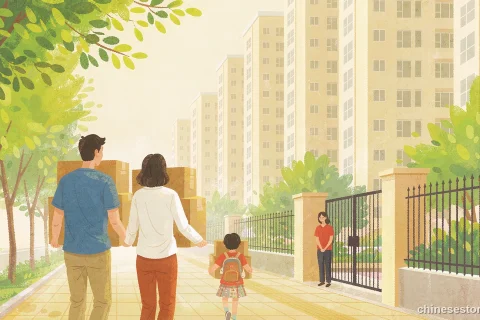
When spring came her son visited. This time he was serious. Mom, he said, I have looked at an apartment for you, in my own compound, one bedroom and one living room, facing south. Move in and I can see you every day.
I am not going, Chen Meifeng said.
Why will you not listen to reason, he said.
I would not know a single person there, she said.
I can keep you company, he said.
Chen Meifeng gave a small laugh. You work all day and you work overtime at night, she said. How many minutes of company is that.
Her son said nothing.
It is not that I do not want to live near you, she said. It is that I want a life of my own. I am sixty-seven. How many more years have I got. I want to have somebody who eats a meal with me and says a word to me every day. Is that asking for so much.
It was the heaviest thing she had ever said to her son.
Some weeks later her son called again. This time he did not mention the matchmaking corner. He only asked, Mom, how have you been eating lately.
Fine, she said. I have an appetite.
Her son said mm, and said nothing more.
Two Folding Stools
Now Chen Meifeng still goes to the park every weekend.
When Zhou Dehai comes he is still carrying the thermos and the folding stool. If she is there he opens the stool for her. If she is not, he sits on it himself.
They have never talked about registering a marriage. He asked her once whether they should, so that it would be proper and above board. Chen Meifeng thought about it and said no. Once there is a certificate, she said, it becomes two families settling accounts, the apartment and the savings and the children’s faces, all laid out on the table. She did not want to trade her remaining peace for a piece of paper that only says what she already knows.
Then we will not register, Zhou Dehai said.
One day her knee hurt badly and she did not go to the park. In the afternoon Zhou Dehai stood downstairs with a packet of medicated plasters. He did not say much. He handed them to her and said, put them on, they work. Then he turned and walked away.
Chen Meifeng stood at the entrance of the building holding the plasters, and watched him walk slowly off.
One day she brought food. Two lunch boxes, one of pork with greens, one of the radish she had pickled herself. They sat on the bench, one box each, and ate in the shade of the tree.
Zhou Dehai tasted the radish. Too salty, he said.
Then do not eat it, she said.
He took another piece. Salty or not, he said, it goes well with rice.
At noon the park was full of people coming and going. Someone pushing a stroller. Someone walking a dog. Someone circling the matchmaking corner with a sheet of paper in hand. The wind shook the last of the blossoms from the tree, and they fell by the edge of their lunch boxes.
Chen Meifeng finished her portion and scraped the bottom of the box clean. In two years, this was the first time she had eaten a meal and left nothing behind.
This is a work of narrative writing based on real situations in Chinese family life. All names have been changed.