Chen Yulan keeps a deposit slip in the drawer of her sewing machine.
Eighteen thousand two hundred, in yuan. She saved it one month at a time in her early twenties, standing on a production line in an electronics factory in the south.
The slip matured on a Tuesday. She did not go to the bank.
The money was already gone by then. She had lent it to her brother for a flat. Eighteen thousand even, and she had dipped into her own pocket to round it up to a tidy number.
Her husband, Wu Jianping, drives a long-haul truck. He is home fewer than five days a month. He knows nothing about it.
Or rather, that is what Chen Yulan believes.
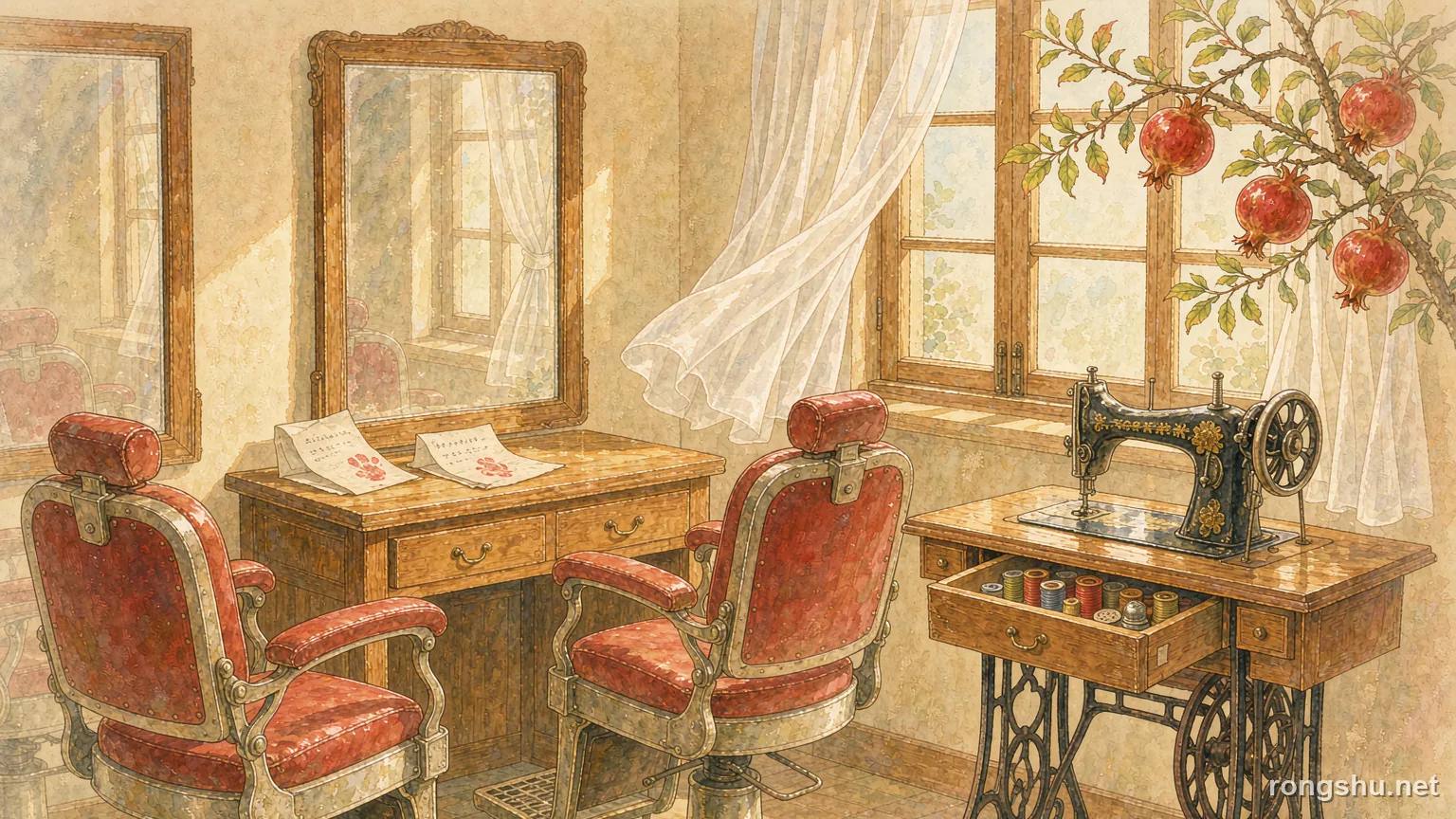
Two Chairs in a Hair Salon
Chen Yulan is thirty-nine. She runs a hair salon in a small town.
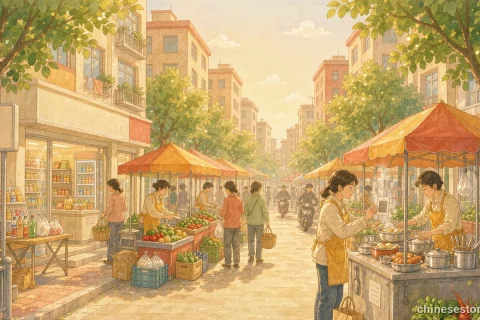
One shopfront, two chairs, one sink. Fifteen yuan for a cut, a hundred and twenty for a perm. Her customers are the neighbours, and when the haircut is done they do not leave. They sit and talk, from the price of fertiliser to whose child got into which school.
She opens at eight and closes at seven. At noon she goes home and cooks for her son.
Her husband Wu Jianping is forty-two. He hauls building materials, sometimes vegetables. They bought the truck on a loan two years ago, with one year left to pay.
Her son, Wu Bo, is fourteen, in the second year of middle school, shooting up so fast that a pair of shoes lasts three months.
Her younger brother, Chen Yudong, is thirty-one and works in the provincial capital, laying tile. He comes home two or three times a year.
Their mother is sixty-eight and lives alone in the village. Their father died early, and for all these years the old woman has kept the vegetable patch behind the house in perfect rows.
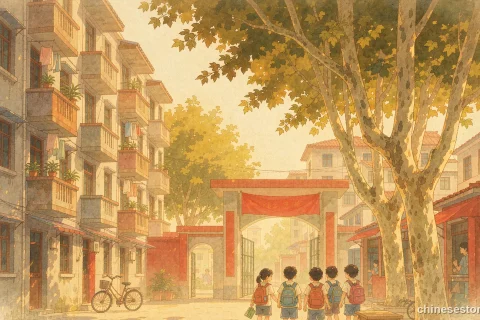
Chen Yulan and Wu Jianping have been married fifteen years. The house is self-built in the town, two floors, a small yard, one pomegranate tree.
The money she lent her brother was her own. Before marriage she spent six years in the south, on the line, eleven hours on her feet a day. Back then she earned a bit over two thousand a month, sent half home, and saved the rest.
Her mother had told her, keep this for yourself. A woman should have something under her own hand.
She never touched it. A fixed-term deposit, rolled over each year, the same slip, a whole decade.
The salon is ten years old. It started in a sheet-metal shed in the old market, and when the market was torn down she rented this shopfront on the main street, paid by the year. In the first years, the salon paid off the debt from building the house.
She knows most people in town. Whose son has a factory, whose old mother is bedridden. She hears it all, a piece at a time, over a head of hair.
She does not talk about herself. When people ask, she says the family is the same as ever. Old Wu drives. The boy is at school.
Only about her brother does she add a word. She says, my brother is in the provincial capital. Tiles. He has good hands.
People say, the provincial capital, that is good.
She says, it is good.
Her mother grows cucumber, beans, chives, tomatoes. Every time Chen Yulan goes home, the old woman fills a sack with vegetables and does not stop until the mouth of it will not close.
The mirror in the salon is old, the silvering gone at the corners. She wipes it twice a day, and when she does she can see the street through the glass.
The Money My Brother Asked For
It was March last year. Her mother called.
There were no customers that afternoon. Chen Yulan held the phone between her shoulder and her ear while she wiped her scissors.
Yulan, her mother said. Your brother has decided on the flat.
Good, she said.
Right where he works, the mother said. A good area. The down payment is over four hundred thousand. He has scraped together two hundred and something thousand. What is short is, well. A hundred and eighty thousand.
Her hand stopped on the scissors.
I am asking you to think about it, her mother said. If you can spare it, help him. He is thirty-one, and the girl family is looking at exactly this. Your father is gone. You are his sister.
Chen Yulan said nothing. There was wind on the line. Her mother was probably in the yard.
After a while her mother added, I know it is not a small number.
I know, mother, she said. Let me think.
She sat in front of the mirror for a long time after the call. In the glass there was the empty chair, and a comb left to dry on the counter.
That night she took out the deposit slip. Then she took out the household passbook and looked at it, though she knew the number by heart.
The next morning she went to the bank. At the window the clerk asked whether she wanted to keep some back. All of it, she said.
She did not go straight back to the salon. She rode her scooter out to the village.
Her mother was sorting vegetables in the yard. Chen Yulan put the brown paper envelope on the table. The money is here, mother, she said.
The old woman wiped her hands on her apron and did not touch it. Yulan, she said, I am not forcing you to give this.
I know, Chen Yulan said.
When your brother was small you took him to school, her mother said. You walked in front and he followed behind, all the way to the mouth of the lane.
Mother, she said. Do not.
Her mother put the envelope away in the very back of the cupboard.
On the ride back it was getting dark. The corn stood taller than a person on both sides of the road. She rode slowly and did not think about anything in particular.
Two days later her brother came back to town. He called her sister at the door and set a carton of milk on the counter.
He took a piece of paper from his bag. A loan note, printed, with the amount and the date filled in. The handwriting was his wife’s, neat and even.
He read it aloud, then pressed a red thumbprint on the line for his signature.
In Chinese families, money passed between relatives is part of a long account of favours, and writing it down is unusual, especially between a brother and a sister.
Sister, he said. Two years. I will pay it back.
Get your life started first, she said.
He pushed the note across to her. She folded it without reading it closely.
At the door she stopped him. One thing, she said. Do not mention this to your brother-in-law.
Her brother blinked. Understood, he said.
That afternoon she cut the hair of an old neighbour. Halfway through, the woman said, hey, the left side is long. Chen Yulan looked down and trimmed twice more.
Over the next two years the money went out in a steady stream.
Her son needed tuition for the extra classes, a thousand four hundred for one term. The truck needed two new tyres. Her father-in-law had a small stroke and lay in hospital for nine days. Moving fertiliser, she hoisted two sacks herself, and her arm ached for a fortnight.
Every time she meant to raise it, the words came to her lips and went back down. She told herself, wait a little longer.
Her son wanted a pair of sneakers, three hundred and eighty. She stood in front of the counter a long while and bought him a pair for a hundred and twenty. He said nothing. The next morning he wore them.
Once she scrolled and came across a post from her sister-in-law, the balcony of the new flat, a row of washing in the sun. Many likes underneath. She liked it too, then backed out. On second thought, she did not take the like back.
At the new year her brother came home with his family, two cartons of milk and a box of apples. His wife said the flat was handed over and described how they had pinched every fen out of the decoration. At the table Wu Jianping poured the brother a drink and said, a good flat. It is good to have a home.
Chen Yulan kept her eyes on her bowl. Her phone buzzed in her pocket, her sister-in-law posting photographs of the new flat to the relatives group, one after another.
She opened them and looked, and closed them again.
In the first month of the year her mother came and stayed two nights. Has Yudong mentioned the money, the old woman asked.
No, she said.
Her mother sighed and let it go.
That night the old woman slept in her room. Chen Yulan listened to her snoring and turned over and over, and slept badly.
The Ledger Under the Bunk
This June, Wu Jianping finished a long run and came home for three days.
On the second afternoon she went out to the truck to fetch his laundry. The cab was stuffy and smelled of diesel. She lifted the bedding off the bunk and her hand found a plastic bag underneath.
Inside was a notebook, its cover worn pale, an account book.
She had only meant to look at the fuel figures. She keeps track of every household expense, and she wanted to know the number.
Page after page. Fuel today, tolls, loading fees, and sometimes a note about the weather, rain, running slow.
Halfway through the book the handwriting changed.
One line read: not smoking this month, three hundred saved.
Another: ate nothing on the road, instant noodles, sixty saved.
Further on: took a night run, four hundred and fifty extra.
Something dropped in her chest. She had assumed he smoked heavily and ate carelessly on the road because the work was hard. So he had been counting too.
She remembered how thin he had looked when he came home in the spring, and how she had asked whether his stomach was troubling him. No, he had said. Just tired from the road.
She remembered how, a month ago, he had called to ask whether the household was short of money. No, she had said.
Good, he had said.
At the time she had thought it was an idle question.
On the last page there was a single line, in his own hand.
Yulan, that sum. Next year I can cover it.
Her hand stopped in the air with the notebook open.
Outside someone was unloading. Sheet metal struck sheet metal, with a bang.
She sat in the driver seat for a while. It was hot and the plastic smell was strong. One thing she could not work out. When had he found out.
The Truth Over a Bowl of Noodles
That evening the boy was at a classmate’s. She boiled two bowls of noodles.
They sat facing each other. She ate slowly and waited for him to speak first.
He ate noisily, slurping.
Jianping, she said.
Mm, he said.
I saw the notebook, she said.
His chopsticks paused, then moved again. He finished the noodles and pushed the bowl away.
Last new year, at your mothers, he said. Yudong had had too much. He raised his glass and told me, brother-in-law, I will pay back the money I owe my sister.
She said nothing.
I did not answer him, he said.
Why not, she said.
What would it have changed, he said. The money was already gone. Say it or not, you were still going to lend it.
Are you unhappy about it, she said.
A little, he said. Not about the money. Keeping it from me, that is what stuck.
I was afraid you would think I put my own family first, she said.
He picked up the bowl, drank two mouthfuls of soup, and set it down.
Half of this house is yours, he said. That money was yours, you earned it. Your brother wanted to buy a flat. You are his sister. How could you say no.
Then why did you not ask me, she said.
If I asked, would you have told me the truth, he said.
She had no answer for that.
After a while she said, I should have told you from the start.
It would have been the same, he said.
It would not, she said.
He did not take that up. He finished the last of the soup in his bowl.
After a while she said, I will tear up the loan note.
Do not, he said. Keep it. Keep it. You feel steadier with it, and so do I.
She carried the bowls to the sink and turned the water on hard. She stood with her back to him for a moment. Her shoulders moved once, and then did not.
Two Things in the Drawer
In the autumn her brother called.
Sister, he said. The first payment tomorrow. Thirty thousand.
No rush, she said.
Two years, he said. That was the deal.
Your child is small, she said. Look after the child first. The rest can come slowly.
Whatever you say, sister, he said.
She stood in the shop for a moment after the call. A vegetable cart went past on the street, its loudspeaker repeating one sentence over and over.
She took the loan note out of the sewing machine drawer.
In the bottom right corner was the red thumbprint, pressed firmly, the ink bled a little at the edge.
She looked at it a long time and did not tear it.
She went upstairs and slipped the note into the ledger, between the pages with that one line. The two things lay together. She put them back in the plastic bag.
He left early the next morning. She stood at the door and watched the truck go down the lane, the tail lights turning at the corner and gone.
She went back inside and opened the shop and set the two chairs straight and put the kettle on.
While the water was heating, a neighbour put her head in at the door. How much for a cut.
Fifteen, she said.
This is a work of narrative writing based on real situations in Chinese family life. All names have been changed.