Lin Wei dates the whole month from the clay pot.
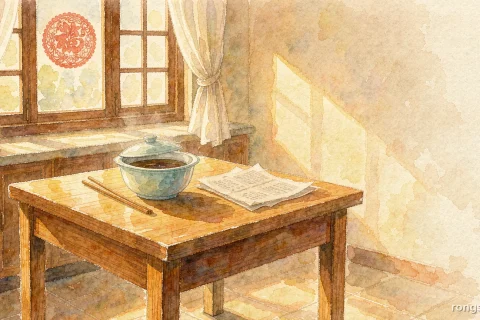
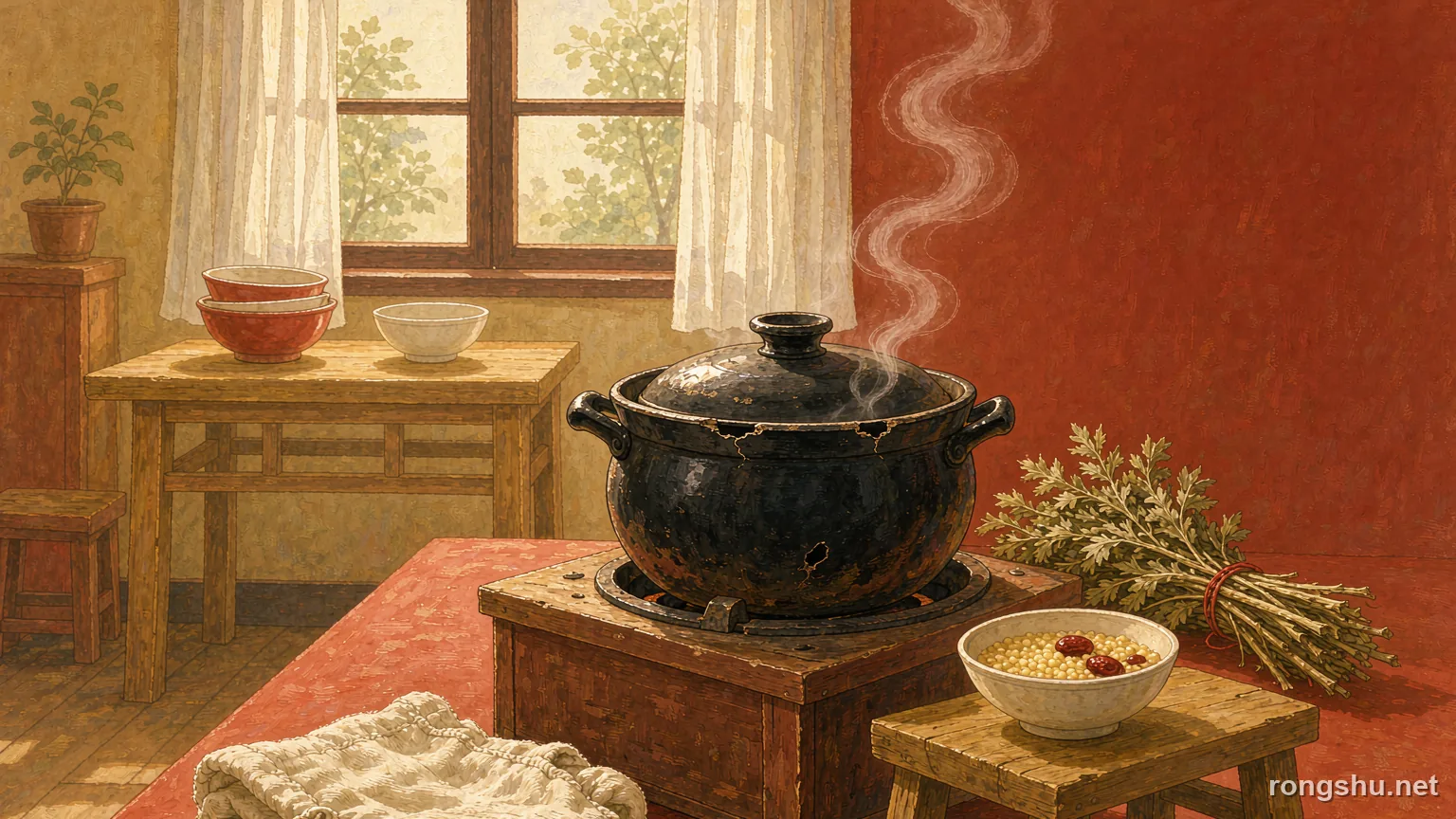
Her mother-in-law arrived on the third day after the baby was born. She came up the stairs with a grain sack over one shoulder and a black clay pot in her hand, its rim chipped down to the dark. She did not even change her shoes. She set the pot on the stove first and said, This one is good. Nothing stews like it.
The Pot She Carried In
Lin Wei is thirty and works at a pharmacy in a county town. Her husband, Zhou Yang, is two years older. He sells building materials and is on the road most of the year. They rent a two-bedroom flat in the town, no mortgage, eighteen hundred a month.
They married three years ago. The baby took her time coming. The first months of the pregnancy she was sick every day, and they did not dare tell the families until she was five months along.
The baby came out a little over six jin. Zhou Yang gave her the milk name Xiao Man, after the solar term when the wheat begins to fill, the one that means there is something to hope for.
The mother-in-law is Zhao Guiying, sixty, from a village three hours away by bus. She brought only two things: the clay pot, used for twenty years or more, and half a grain sack of dried vegetables, mugwort, and dried ginger from her own yard.
Zhou Yang met her at the bus station. At the door she put the sack down and went straight to the cradle. She rubbed her hands on her jacket twice before she dared touch the baby’s face.
Lin Wei, in bed, called out, Ma.
Her mother-in-law turned and looked at her. Stay down, she said. Do not get up.
For that whole month, the kitchen belonged to her.
At six in the morning the clay pot sat on the stove with millet porridge. At ten it was crucian carp soup. At three in the afternoon, pig trotter soup. In the evening, chicken soup. Four times a day, always under that same lid.
A layer of oil floated on top, thick enough to hold your reflection. Skim it and you have wasted the stew, her mother-in-law said. Drink it down and the milk will come.
Lin Wei did not have much milk, and the baby cried at night. So she drank it, bowl after bowl. It sat heavy in her stomach and kept her awake.
Her mother-in-law kept a longer day than she did. She was up before light to put the pot on the stove, then washed the cloth diapers and boiled brown sugar water. When the baby cried at night she was up faster than Lin Wei, walking the room with the baby against her shoulder, humming an old tune Lin Wei could not follow. Once, at midnight, Lin Wei woke and saw her asleep sitting up in the chair, the baby still in her arms, her head nodding.
The room was sealed tight as well. On the first day her mother-in-law shut the bedroom window and stuffed the gap. Wind in the month after birth, she said, and you will have headaches for the rest of your life.
Ma, the doctor said a little air is good, Lin Wei said.
What does a doctor know, her mother-in-law said. They have never done a confinement month.
Neither of them said another word. That window became the splinter under the skin of the whole month.
The Window That Would Not Stay Shut
Lin Wei is not the type to talk back.
Still, some things she could not bear.
The first was washing her hair. On the tenth day she waited until her mother-in-law went down to the market, boiled a kettle, and washed it fast in the bathroom. Her hair was not dry when the older woman came back.
Her mother-in-law stood in the doorway and looked at her and said nothing at all. Then she went to the kitchen, poured out half the sack of mugwort, and boiled a large pot of water. She carried it to the bed.
While it is hot, she said. Wipe yourself down.
The water was scalding. Lin Wei dipped the towel and the back of her hand went red at once. She wrung the towel, laid it on her neck, and the tears came.
Her mother-in-law thought she was feeling wronged. I am doing this for your own good, she said.
That night Zhou Yang came home and Lin Wei told him. He sat on the edge of the bed pulling off his socks. Ma means well, he said. Just go along with her.
Lin Wei did not speak to him for the rest of the night.
The second thing was the baby clothing.
It was April and already warm, and her mother-in-law still wrapped Xiao Man up like a festival dumpling, layer over layer. Lin Wei took one off; her mother-in-law quietly put it back. Once Lin Wei lost her patience. Ma, the baby is sweating, she said. Her mother-in-law felt the back of the baby neck and paused. Sweat is good, she said. Sweat it out and she will not take sick.
Lin Wei stopped arguing. In front of her mother-in-law she undid one button. Her mother-in-law saw it and said nothing and went to sort the vegetables.
The real quarrel came over the third thing.
A week before the month was up, her mother-in-law brought the third bowl of pig trotter soup to the bed. Lin Wei smelled it and ran to the bathroom and threw up.
Her mother-in-law stood in the doorway holding the bowl, her face changed. Young people these days, she said. No stomach for good fortune.
Lin Wei came out wiping her mouth. Ma, I really cannot drink any more, she said.
If you do not drink it, what will the child eat, her mother-in-law said.
Ma, my milk is low because I am worn out, not because I am lazy, Lin Wei said. Both of us are worn out.
Her mother-in-law set the bowl on the table and shut herself in her room.
For three days after that they barely spoke. The cooking went on. The soup still appeared on the table. But at meals her mother-in-law no longer looked at her. The clay pot simmered on the stove, and the flat was quiet except for the bubbling.
On the third night, Lin Wei heard her mother-in-law on the phone in the kitchen.
She was calling an aunt back home. Her voice was low. Lin Wei caught only a few words.
She was saying, Her stitch looks better than mine did, but the milk will not come and it worries me. And then, I have not told her. My hands swell up whenever the weather turns.
Lin Wei lay in bed with her eyes open and did not move.
Hands Under the Lamp
That was the night the clay pot finally became something Lin Wei could see.
The next night the baby woke twice. After the second feeding Lin Wei got up for water and saw the kitchen light still on.
Her mother-in-law was sitting on the low stool with a bowl of mugwort water in front of her, wringing out a towel. Her head was down and both hands were soaking in the steam.
Lin Wei stood in the doorway and watched. For the first time she saw the hands clearly.
The veins rose in ridges across the back of them. The knuckles were swollen round like five or six small steamed buns, and when they bent there was a click. A strip of old cloth was wound around the left wrist, washed pale by years.
Her mother-in-law looked up and saw her and pulled her hands back into her sleeves. Did I wake you, she said. Go back to bed. I will bring the water.
Lin Wei walked over and took the bowl from her. Ma, what happened to your hands, she said.
Old trouble, her mother-in-law said. Nothing.
She paused, and then she said, The year I had your husband, it was the wheat harvest.
Lin Wei crouched down and listened.
Everyone was out in the fields, her mother-in-law said. I was alone. Three days after the birth, the wheat was stacked in the yard and it looked like rain, so I got up and went out to turn it. I was young then. I thought I could carry it. Later I learned I could not.
She held out her hands for Lin Wei to see. Knees, wrists, and the small of her back, she said. A whole life of it.
I was afraid you would end up the same, she said.
The kitchen light was a warm yellow. It fell on the bowl of water as it cooled. Lin Wei did not say anything. She laid her own hand over her mother-in-law’s. Inside her palm, that hand was rough and hard, like old sandpaper worn smooth.
That night Lin Wei slept more deeply than she had in weeks.
A Crack of Air
After that, the window had a third way.
Lin Wei asked an older colleague at the pharmacy who had raised children of her own. Then she spent an evening reading on her phone. The next day she set the air conditioning to twenty-six degrees and left the window open by the width of two fingers, with a towel laid over the gap to break the draft.
Ma, just this much, she said. No cross breeze. Feel it. It is not cold.
Her mother-in-law reached out and tested the gap and said nothing, which meant yes.
The hair washing became once every three days, straight into hot air from the dryer, with her mother-in-law standing watch. The mugwort water was no longer scalding. It was warm, and Lin Wei wiped herself.
The soup kept coming, except that now her mother-in-law skimmed off half the oil before she carried the bowl in. Doctors in the city, she muttered, so particular. Lin Wei did not answer. She drank the soup.
Zhou Yang still said, Ma means well.
This time Lin Wei did not get angry. When the baby was asleep she took him out to the balcony. Save that line for yourself, she said. And take your mother to have her hands looked at.
Zhou Yang blinked. What is wrong with her hands, he said.
Ask her yourself, Lin Wei said.
The next day he went with his mother to the hospital. When they came back she did not mention it, and at dinner there was one extra dish. Downstairs, Zhou Yang told Lin Wei that the doctor had said it was an old problem in the wrist, and fluid on the knees, and that she needed rest, and a small operation if possible.
Are you going to do it, Lin Wei asked.
She says she will wait until the baby is a little older, Zhou Yang said.
Lin Wei did not answer. She went upstairs and found her mother-in-law walking the baby back and forth across the room. The baby’s face was buried against her shoulder. Every second step, the left hand patted the baby’s back.
That hand, over the padded jacket, hardly looked swollen at all.
One evening Lin Wei ordered a wrist brace online, with two boxes of medicated patches.
When they arrived her mother-in-law said, What did you spend money on that for, it will be fine in a day or two. She waved the words away, and held out her hand.
Lin Wei pressed the patch on and took the hand in both of hers and rubbed it in slow circles. Her mother-in-law shut her eyes and leaned back in the chair. Gently, gently, she said. You are more patient than your husband.
After a while she stopped talking.
Lin Wei looked down. Her mother-in-law was asleep. The hand was still lying in Lin Wei’s palm.
The Pot Turned Upside Down
Her mother-in-law left on the ninth day after the month ended.
The call came from the village. They were bringing in the crops, and the aunt could not manage alone.
The night before she left, she washed the clay pot until it shone and turned it upside down on the stove, with a cloth underneath to catch the water. She split the last of the mugwort into two bundles and tied each with red thread.
In the morning Zhou Yang drove her to the station. Lin Wei carried the baby down to see her off.
Her mother-in-law took a red paper packet from her pocket and tucked it into the baby’s jacket. For a silver lock, she said.
Then she drew Lin Wei aside. Less pig trotter in the soup, she said. Your phone can look these things up. Look them up. She paused. And when Xiao Man cries, pick her up and walk. Do not argue with her. She takes after your husband. You will not win.
Ma, take your medicine, Lin Wei said. The stuff for your hands.
Her mother-in-law waved her off. Yes, yes.
Then she picked up the empty grain sack and got on the bus.
As the bus pulled away, Lin Wei saw her sitting by the window with her left hand wrapped around her knee.
Back upstairs, Lin Wei heated water for tea. She lifted the clay pot to put the cloth away.
Under it lay a piece of paper.
It was a form from the village clinic, folded neatly, the corners worn soft. It carried her mother-in-law’s name. The date was last month, before she came to help with the new baby.
Beside it was a bundle of dried mugwort, tied with that same red thread.
Lin Wei stood at the stove a long time with the form in her hand. Outside, it was light. The breakfast stand had opened downstairs and someone called out, one bowl of soy milk, two buns.
She folded the form and put it in the drawer, with the housing papers and the baby’s birth certificate.
Then she turned the clay pot over, wiped it clean, and set it back on the stove.
At noon she made soup for the first time on her own. Millet, red dates, a half handful of the mugwort her mother-in-law had left behind.
When the lid began to rattle, the baby stirred in the other room. She answered her. Coming.
This is a work of narrative writing based on real situations in Chinese family life. All names have been changed.