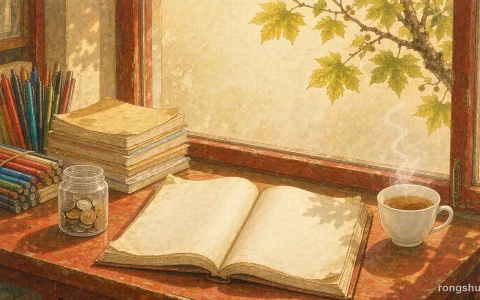
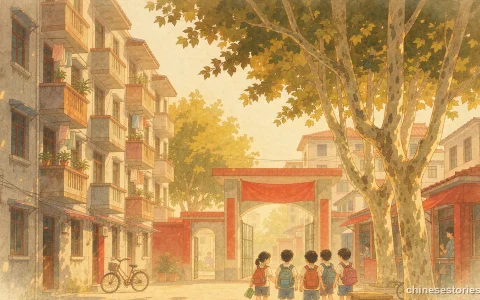
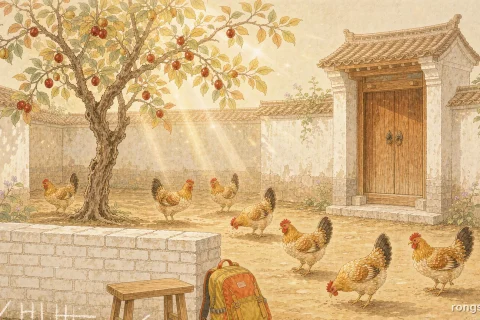
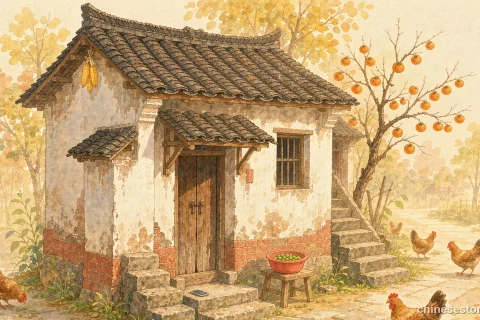
On the first morning of the Lunar New Year, a grandmother in a northern Chinese city pours tea, opens a drawer, and takes out a small stack of red paper packets. Each one holds a crisp new banknote. Before the children are fully awake, the envelopes are slipped under their pillows or pressed into their hands with a quiet wish about growing up well.
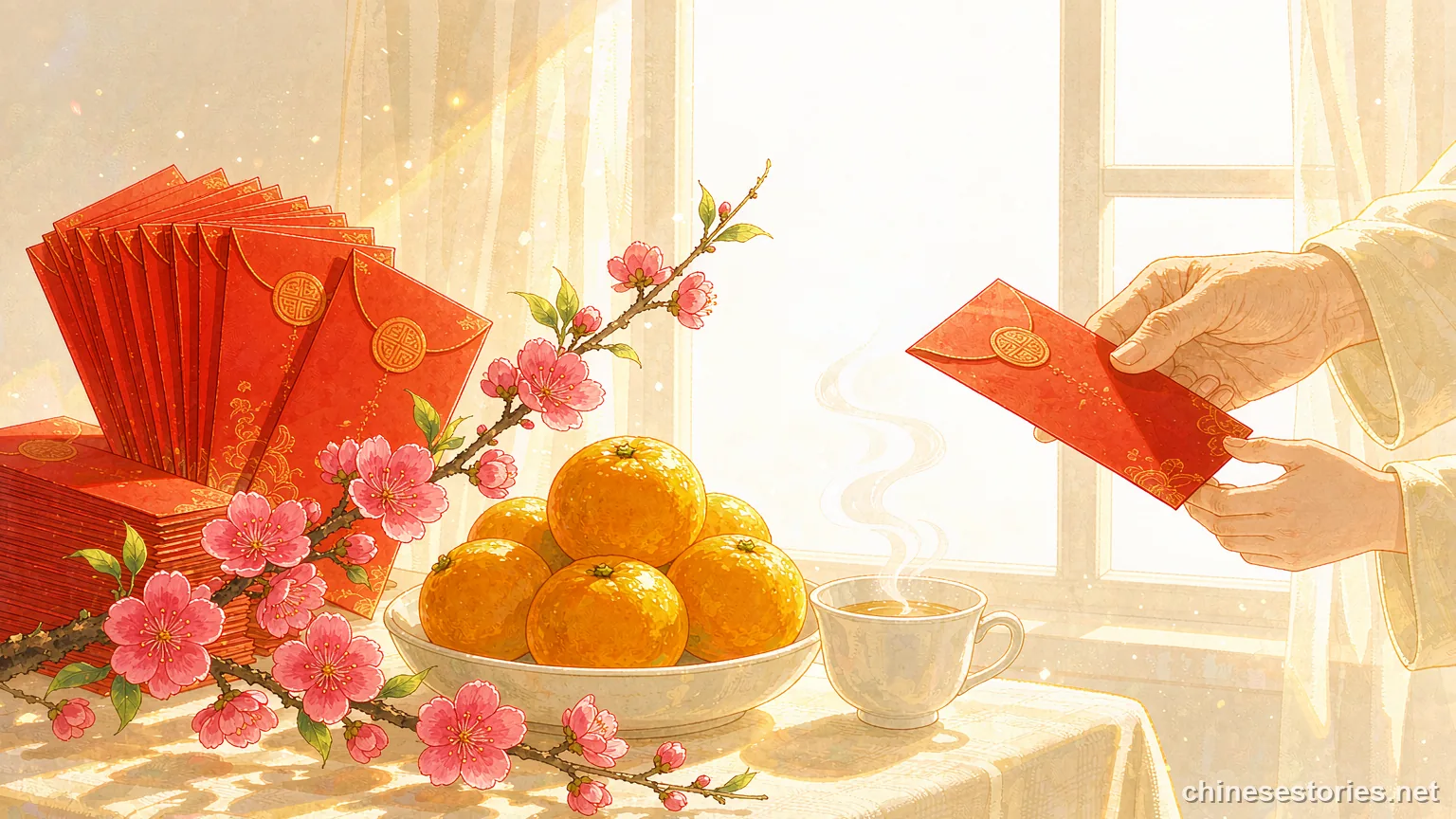
The packet has a name in Mandarin. It is called a hongbao, and it is one of the most recognisable objects in Chinese daily life. It appears at New Year, at weddings, at the birth of a baby, at a birthday, and now on a phone screen. Money inside a red envelope is never just money. It carries a wish, a relationship, and a set of rules that almost everyone learns without being taught.
For a visitor, the red envelope is a small puzzle. Why cash, and why red? Why do people refuse it politely two or three times before accepting? Why is one number lucky and another one quietly avoided? The answers open a door into how Chinese families handle money, respect and good fortune.
What the Red Envelope Actually Is
A hongbao is a paper envelope, almost always red, used to hold money given as a gift. The word joins hong, meaning red, with bao, meaning packet or parcel. The same object is known as lai see in Cantonese-speaking communities.
The best-known version is the New Year envelope, called yasuiqian, or lucky money. Older relatives give it to children and to younger members of the family. The custom is old, and its logic is simple. The money is a blessing for the year ahead, not a payment for anything or a reward for good behaviour.
The oldest versions of the custom did not use paper at all. Coins were threaded on a red cord and hung near a child’s bed or hidden under a pillow, and the word for the New Year gift carries an old idea of pressing down or holding back harm. Red paper later replaced the cord, but the purpose stayed the same. The point was to place a small shield of good fortune around the young.
The name also changes across the country. In Mandarin the New Year gift is yasuiqian, in Cantonese-speaking areas it is lai see, and in some southern regions it is ang pao. The words differ, but the object and the etiquette travel almost unchanged, which is one reason the custom feels shared across a large and varied country.
There is a second, quieter rule that shapes the whole scene. The envelope is handed over, not announced. People do not usually say the amount out loud, and no one is expected to thank a giver by naming the sum. In a culture that prefers understatement about money between relatives, the red paper is a way to give generously without making a display of it.
That is why the envelope matters as much as the contents. A folded note passed across a table would feel abrupt. Wrapped in red, with a short blessing, the same note becomes a gesture of care.
What Goes Inside the Packet
The amount inside a hongbao follows rules that are informal but widely respected. The first rule is about numbers.
Even amounts are preferred, because a pair suggests a couple and a balanced life. The number eight is the most welcome of all, since it sounds like the word for wealth or prosperity. The number six is also good, because it echoes a phrase meaning smooth and untroubled. A stack of small notes adding to 88, 168 or 888 reads as a warm wish in itself.
The number four is carefully avoided. In Mandarin it sounds almost identical to the word for death, so 40, 44 and 400 are seen as unlucky. A careful giver will adjust an amount by a few units just to keep the four out.
How much goes inside depends on closeness as much as on luck. A parent or grandparent may give far more than an aunt, and a close friend more than a colleague. There is no printed table, but there is a rough expectation, and most people carry a private sense of the right range for each person on their list. Hitting that range is part of the skill of the custom.
The second rule is about the money itself. New, crisp notes are strongly preferred. A gift of good fortune should look brand new, so families often visit a bank before the holiday to exchange worn bills for fresh ones. During the New Year rush, banks set aside extra bundles of new notes for exactly this purpose.
The third rule is about the paper. Envelopes should be clean and unmarked, and for festive occasions they are usually left open at the top rather than sealed. For a wedding, leaving the flap open helps the family at the gift table count the money and record the names. For the New Year, an open flap is said to keep the flow of good fortune going, while a sealed one suggests the giving has ended.
The Rules of Giving and Receiving
The etiquette around the handover is as considered as the amount inside.
A hongbao is offered and accepted with both hands, a small sign of respect. The giver usually adds a short spoken wish. A receiver, especially a young adult, may protest gently before taking it, a polite way of saying the gift was not expected. Refusing once or twice and then accepting is normal, and nobody treats it as a real refusal.
Children are taught to hand their New Year envelopes to a parent for safekeeping. In many households the money is quietly pooled, saved for school, or used to buy something the family needs. By the time a child is old enough to keep their own lucky money, they often discover that the envelopes a parent gives to other people cost more than the ones received.
There is also a neat circularity that keeps the custom alive. Adults give to children, and grown children give to their parents and grandparents. The flow of red paper runs up and down the family line at the same time, so almost everyone is both a giver and a receiver within the same holiday.
When the Envelope Comes Out
The red envelope is not only for the New Year, and its meaning shifts with each occasion.
At a wedding, the hongbao is the gift. Guests hand their envelope to relatives seated at a sign-in table, who write down the name and the amount in a ledger. The sum is expected to at least cover the cost of the guest’s seat at the banquet, with a little extra as a blessing, and the couple later returns the favour when those guests marry in turn. The running ledger is what keeps the exchange fair over years and even decades.
For a new baby, envelopes are given at the one-month celebration. For a birthday, they mark another year and often another milestone. At the Lunar New Year, the same envelope does a different job, moving good fortune from the older generation to the younger one.
Givers are also expected to keep the amounts roughly equal between children of the same family, so that cousins do not compare and feel slighted. That small piece of arithmetic is one reason relatives often hand out their envelopes together, in the same room, at the same moment.
For families, the exchange is remembered over years. An envelope given at one wedding may be returned later at another, and the ledger of names and sums becomes a quiet record of who owes whom a courtesy. The custom is less a one-off act of generosity than a long-running account between households, kept roughly in balance by small gifts at the right moments.
The timing has its own logic too. Some families hand out the New Year envelopes on the eve of the holiday, some on the first morning, and some keep a few back for a child to find under a pillow. In the phone era a third moment has appeared, when group chats fill with digital packets at the stroke of midnight and adults scattered across the map still reach for the same small ritual at the same hour.
From Paper to Phone
The oldest form of the custom is paper. The newest form is a tap on a phone screen, and it arrived very recently.
In January 2014, just days before the Lunar New Year, a Chinese messaging app released a feature that let users send money to friends inside a chat. The digital packet looked like the paper one, with a red cover and a message. To claim the money inside, a receiver had to tap the envelope. The feature was an instant hit. Within a single holiday season, it had been used hundreds of millions of times, and a year later more than a billion packets were opened in a day.
The digital envelope added its own flavour. Because the sum is hidden until it is opened, groups compete to tap first, a game known as grabbing red packets. Friends drop small amounts into a group chat, and everyone races to claim a share that can be a handful of coins or a surprise of a hundred. The competition is part of the fun, and the smallest prize is often celebrated more loudly than the largest.
The phone version did something else. It made the custom instant and distance-free. A student abroad, a worker in another province, a grandparent in a village, all can send and receive a hongbao in the same second. During the New Year holiday, phone screens across the country light up with the same red rectangles, and the paper envelope and the digital one now sit side by side at the same table.
The digital envelope also brought its own small stresses. Because sending is effortless, a person can be drawn into dozens of groups, and a polite holiday can turn into a steady stream of small transfers. Some users switch the feature off for a day, and others set a limit, a small sign that even a custom built on giving has a budget behind it.
Why the Colour Is Red
Red carries a very specific weight in Chinese life, and the envelope borrows all of it.
In Western colour codes red often signals danger or a warning. In Chinese tradition the meaning is the opposite. Red stands for luck, joy, warmth and life. It is the colour of festival lanterns, wedding decorations, spring couplets and new clothes. A red packet is therefore not decorated by accident. The colour is doing part of the work, wrapping the money in good fortune before it is even opened.
White and black carry the opposite meaning. They belong to mourning, so a gift of money in a white envelope would be a serious mistake. A guest who arrives with the wrong colour has broken the mood before a word is spoken.
The number rules and the colour rule come from the same instinct. In this tradition, some details are neutral and some carry luck, and a gracious giver is simply someone who has learned the difference. The red envelope is a small daily lesson in that skill.
Compared With the West
A reader from Europe or North America may recognise part of this, because giving money as a gift is not unique to China.
Western families give cash in cards, especially to teenagers and graduates, and gift cards have made a plain envelope an ordinary way to say a useful gift. The wrapping and the note carry the feeling, and the note inside a birthday card often matters more than the bill.
The difference is in the shape of the ritual. In the West, money is usually one option among many, chosen when the giver is unsure of taste or size. In China, the red envelope is a fixed piece of the calendar, expected at particular occasions, with stated rules about the amount. It is closer to a shared social language than a personal choice.
The two systems also treat the number differently. A Western giver who rounds a cash gift to a tidy figure is being neat. A Chinese giver who rounds to an eight is sending a message. The same gesture of money, wrapped in two different sets of meaning, ends up saying two different things.
The comparison also shows what the envelope does that a card cannot. A card is chosen for one person and can carry a long, personal message. A red envelope is almost uniform, and its short wish repeats words that everyone already knows. That sameness is the point. Because the form barely changes, millions of people can share the custom without needing to agree on anything else.
A Small Rectangle of Paper
Stand at a table on New Year’s Eve and the picture is ordinary. A grandmother smooths a fresh note and slips it into a red packet. A child’s name is written on the front in someone’s neatest handwriting. The envelope changes hands, and a short wish is spoken over it.
Inside is only money, and yet the money is not the point. The red paper holds a wish for the year, a memory of the giver, and a place in a long chain of giving that runs from grandparents to grandchildren and back again.
For someone trying to understand Chinese family life, the hongbao is a good place to start. It is small, cheap and everywhere, and it quietly carries the whole idea that good fortune is something people pass to each other, one red packet at a time.
This story is based on publicly documented practices and on reporting in the Chinese and international press. The families described are illustrative, and no individual is identified.