The soup was still steaming when Zhou Guifang pushed the paper across the table.
It was a page torn out of an account book, the ruled lines still visible. On it, in blue ballpoint, she had written one number: 188000.
One hundred and eighty-eight thousand yuan.
In Chinese, the digits are read in pairs, so people say it as eighteen-eight. To a family in a small county town, that number was a house. It was more than ten years of a nurse salary.
“One hundred and eighty-eight thousand,” Zhou Guifang said. “Not one yuan less.”
That was the eighth day of the twelfth lunar month. The next day, the two families were going to meet at a teahouse on the old street and settle the marriage.
Lin Xiaoman stopped her chopsticks in midair.
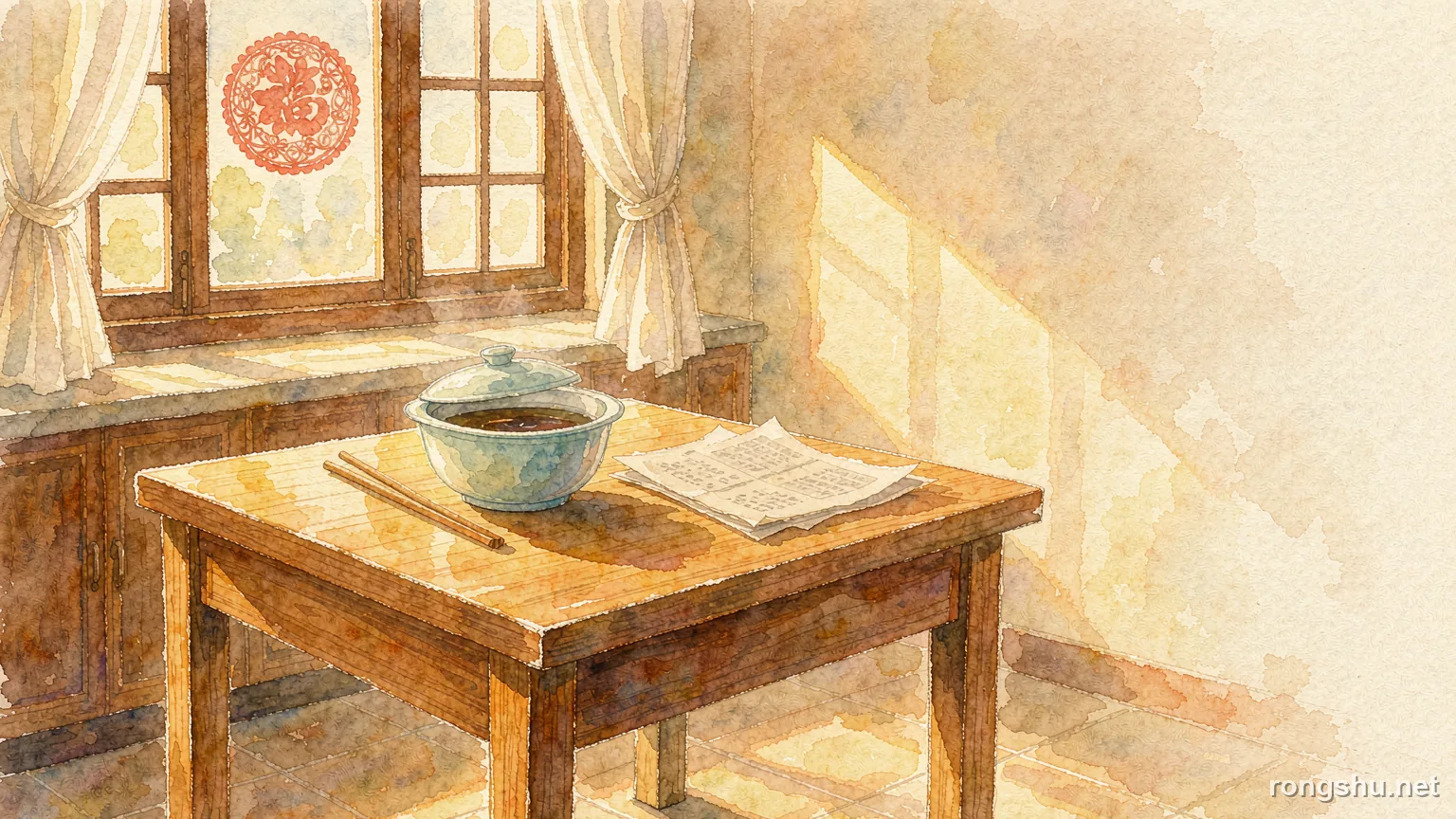
A Page Torn From an Account Book
Lin Xiaoman is twenty-seven. She is a nurse in the emergency department of the county hospital.
Her shifts rotate in threes: day, night, and the day after a night. On that last one she sleeps until two in the afternoon, and the first thing she does when she wakes up is check her phone. Zhang Lei usually writes before seven, with a photo of the workshop behind him and tires stacked along the wall.
Zhang Lei is twenty-nine. He repairs cars in the provincial capital. Six years there, from apprentice to head technician, and the black under his fingernails never comes out. Between the two of them there is a high-speed train ride of one hour and twenty minutes.
They have been together for four years.
They met at the wedding of her cousin. He was a friend of the groom, sat in a corner, and said almost nothing the whole evening. When the banquet ended, he helped carry tables downstairs, two folding ones at once. Xiaoman watched from the doorway and thought: this one is solid.
Over those four years they learned that train line by heart. After a night shift she would catch the seven in the morning, and he would be waiting outside the station exit with a bag of steamed buns. On Sunday night she took the last train back.
In the emergency corridor, Xiaoman has seen a great deal. Old people brought in after midnight. Families signing consent forms with tears on their faces. Electric scooters bent into shapes that no longer look like scooters. She is used to speed: move fast, decide fast, do not stand still. So when it came to her own marriage, she was in no hurry at all.
Her mother was in a hurry.
Zhou Guifang is fifty. Before she retired she worked the looms in a textile mill, and her pension is two thousand eight hundred yuan a month. She gets up at half past five, goes to the park to practice tai chi, and comes home to cook breakfast for the family. She had been raising the subject of marriage for a full year.
Wait any longer and a good girl turns into an old girl, she said.
Xiaoman had heard it until her ears went numb.
The serious talk started last autumn.
In China the money has a name. It is called caili, usually translated as bride price. It is not a dowry. A dowry is what the bride family gives to the young couple. The caili travels the other way, from the groom family to the bride family. It began as a way of thanking a family for raising a daughter and helping the couple start out. In recent years, in parts of the country, it has grown far past that, and the government has started telling people to keep it reasonable.
The Third Dinner
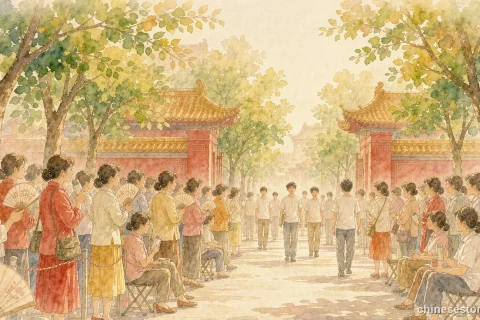
The first meeting was at a restaurant in the county town called Hongyun Lou, the Hall of Good Fortune.
Zhang Lei’s parents came in by minibus from the village, carrying two baskets of oranges from their own yard. His father, Zhang Shoutian, is fifty-nine and farms eight mu of land, a little over an acre, and keeps two hundred chickens on the side. His mother, Wang Xiuyun, does not say much. She spent the meal smiling and refilling everyone’s tea.
That dinner went well. Everyone was polite. Zhou Guifang asked about the family fields, about Zhang Lei’s wages, about his younger sister, who is in her second year of teacher training college. On the question of the bride price she only cleared her throat. You people should ask around about the going rate in our area, she said. She did not name a number.
The second meeting was at the Zhang family home, a return invitation.
The sun was strong that day, and the plastic sheeting over the yard held the moisture in the air. Wang Xiuyun killed a chicken and stewed it in a big pot, and the family set a round table in the yard. She ladled soup for Xiaoman, spoon after spoon, piling the drumsticks in her bowl. Xiaoman said she could not eat any more, and Wang Xiuyun laughed and told her young people should eat more.
Xiaoman only learned later that the two hundred chickens meant getting up at half past four every morning. Zhang Lei’s sister pays six thousand eight hundred yuan a year in tuition, and the eggs paid for it.
After the meal, Zhang Shoutian drew Xiaoman aside. From his pocket he took a small red cloth bundle, and inside it was twenty thousand yuan.
This is the deposit, he said. We will put the rest together back home.
Xiaoman held the bundle and did not know what to say.
The third meeting was at the teahouse on the old street.
Zhou Guifang brought the paper.
Zhang Shoutian looked at the number for a long time. Then he said, slowly, that the family could put together one hundred and fifty thousand, counting what they could borrow from relatives. The gold jewelry would be bought separately.
Zhou Guifang said: one hundred and eighty-eight thousand, not one yuan less.
The waiter came to refill the teapot twice. Zhang Lei sat beside Xiaoman and said nothing, his hand clenched under the table.
When they came out of the teahouse it was dark. The street lamps along the old street were coming on, one by one. Zhang Lei stopped walking.
I cannot put that together, he said.
His voice was very low, as if he were afraid someone might hear it.
Xiaoman thought they would simply talk it over again. What she did not know was that from that sentence onward, the air between the two families changed. Zhang Lei still called, but he said less. He still sent messages, but they were pictures with nothing behind them. A visit to relatives that had been agreed for the first month of the year was postponed until spring, and then not mentioned again.
News travels fast in a county town. Someone told Xiaoman’s mother that the Zhang boy was decent but his family was thin. Someone else told Zhang Lei’s mother that girls these days all come at that price, and if you truly cannot manage it, do not hold the young people back.
How My Mother Came Into This Family
On the twenty-fourth day of the twelfth month, Xiaoman went back to her parents’ home for the New Year preparations.
Two strips of cured pork hung on the balcony. A row of frozen dumplings sat on the windowsill. Her mother was in the inner room, sewing. Xiaoman lifted the curtain and saw her kneeling on the bed, stitching the edge of a red satin quilt.
It was her dowry quilt.
Xiaoman sat on the edge of the bed and helped hold the thread. Neither of them mentioned the bride price. One word and they would have started arguing.
Her mother has always been careful with money. She buys vegetables in the late afternoon, when they are cheap, and walks past two stalls to compare the price of greens. Xiaoman has never seen her buy herself a proper coat. Yet the quilt she was making for her daughter used the best red satin in the shop, over eight hundred yuan for the fabric alone.
Halfway through, Zhou Guifang stood up to reach something on top of the wardrobe. She brought down an old wooden box, heavy, covered in dust. The lid was open. Inside were old clothes, old photographs, and a much older account book.
Xiaoman leafed through it. The photographs had gone yellow. On top was a black and white one: a thin girl standing in front of a mud wall, in a red jacket washed almost white, her head down, her face unclear.
Is this you, Xiaoman asked.
Her mother glanced at it, said nothing, took it back and pressed it to the bottom of the box.
Underneath was a piece of cloth, old blue calico, worn through at the corners. Xiaoman lifted it out. It was a quilt cover. Her mother said it was the quilt she had brought with her when she married, the only thing she had brought, and it could no longer be used for sleeping. She takes it out every summer to air in the sun, then folds it and puts it back.
That night Xiaoman got up and heard her mother sitting alone in the living room. The television was off. The light was off.
She went and sat down beside her.
Her mother began to talk. She said she came to this family at twenty. Her own family was poor. Her father had died young, her mother was often ill, and there were two younger brothers below her. A bride price? There was none. What she brought into the marriage was one old quilt, sewn the night before the wedding by her sisters-in-law.
On the wedding day her mother-in-law, Xiaoman’s grandmother, said one thing in front of half the village, with all the guests at their tables.
This daughter-in-law of ours cost us nothing.
Zhou Guifang said she remembers every sound from that day. The crackle of firewood in the stove. Children running through the yard. And that sentence.
I was holding my chopsticks, she said. I did not know whether to stand or sit.
Thirty years. She had never told anyone. Not even Xiaoman’s father.
Your father is a good man, she said. He does not know. I did not want him to.
I am not asking for his money, she said. I am asking you not to end up like me.
Xiaoman did not sleep that night.
Eighteen Thousand Eight Hundred
The next morning she called Zhang Lei.
She told him not to worry about the money.
He was quiet for a long time, and then asked what she meant.
She said she had her own. Six years of work, one hundred and twenty thousand yuan saved. He had sixty-eight thousand of his own. Together, exactly the number her mother had written down. The money would pass through her account and be placed on the table at the engagement dinner in front of both families, as if it had come from his side. After the ceremony, the money would still belong to the two of them, untouched.
Do you want the money, he asked, or do you want the performance?
Neither, Xiaoman said. I want my mother to breathe.
Zhang Lei did not answer at once. When he spoke again his voice was tight.
What do I tell my parents?
Tell them the truth, she said. The money is mine. Do not hide it from them and do not be ashamed of it. Your parents raised you and put your sister through school. That counts for more than one hundred and eighty-eight thousand.
He said mm. Then he said mm again.
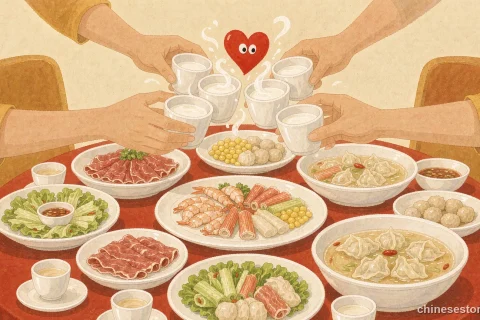
The engagement dinner was held on the twenty-eighth day of the twelfth month. Snow fell that day. Two tables were set in a private room on the second floor of Hongyun Lou, with red paper pasted by the door. Zhang Shoutian and his wife came in from the village early, carrying a basket of eggs, two bottles of liquor, and salted duck eggs cured at home.
Zhang Lei wore a new dark jacket and had his hair cut short. He stood at the door greeting the guests. Xiaoman noticed that his mother kept rubbing her hands, until they were red, and still did not stop.
Zhou Guifang counted the money note by note, very slowly. When she finished she looked up, her eyes a little red, raised her cup, and said two things. One was that this daughter of mine has never caused me worry. The other was that the two of you should live well together.
Everyone at the table was smiling. They said what a good match the two families made.
Sitting there, Xiaoman suddenly felt that her mother had grown old.
The Name on the Deposit Slip
The wedding was set for May of the following year.
On the evening of the thirtieth of April, Zhou Guifang called Xiaoman into the inner room. From under her pillow she took a deposit slip and pressed it into her daughter’s hand.
The number on the slip was one hundred and eighty-eight thousand.
The account had been opened on the twenty-ninth day of the twelfth month, the day after the engagement dinner.
She had not touched a single note of it, she said. She had put it into a three-year term the same day. The interest she added herself, to round it out.
Xiaoman began to cry.
Mom, she said, why did you not tell me?
The quilt was finished by then. Two lotus flowers were embroidered on the red satin, the stitches close and even. Her mother said she had left a small pocket in one corner and sewn eight red dates inside it, an old custom from her village, for children early in the marriage. Xiaoman wanted to laugh, and then could not.
Zhou Guifang sat on the edge of the bed and smoothed her hand over the quilt. She spoke slowly and evenly.
I never wanted the money, she said. I was afraid you would walk the road I walked.
It took me thirty years to stand upright in that house.
Outside, someone was setting off fireworks, flashing and flashing. The moon that night was very bright, and it fell across the yard, and across the new electric scooter parked there.
Xiaoman held the slip in her hand for a long time.
This is a work of narrative writing based on real situations in Chinese family life. All names have been changed.