On a Saturday afternoon in a city in the south, a small counter with a red awning has twelve people in line and three more waiting on scooters. The menu is short. A tall cup of lemon tea costs about as much as a ride on the bus, and the girl at the till is working through orders at a pace that looks rehearsed. Two minutes later a paper bag comes out of the hatch, the straw already in the cup.
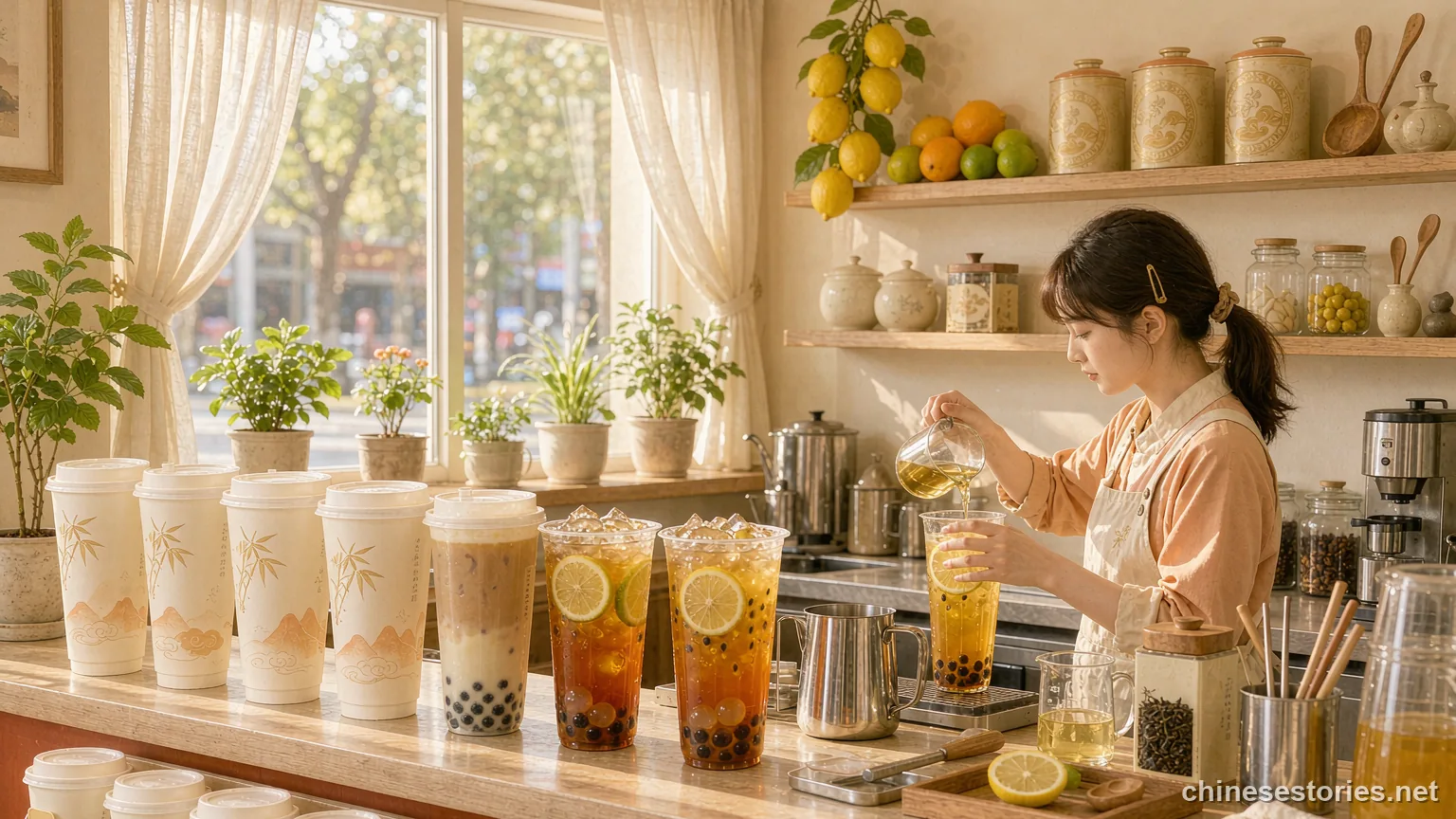
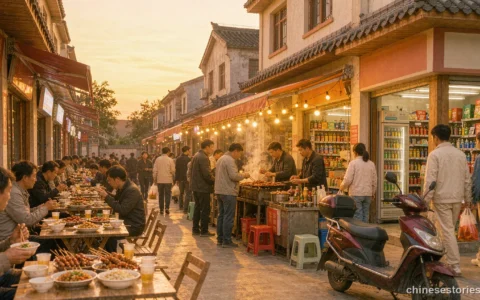
Walk another three hundred metres and there is another shop, then another. On one commercial street in a provincial capital, a count of tea counters runs into double figures within a single block, and each of them has a queue at some hour of the day.
Milk tea is not a drink in China so much as a daily habit with its own calendar, its own brands and its own etiquette. Understanding it is one of the fastest ways to understand how young people here spend, socialise and signal who they are.
A Shop on Every Corner
The density is the first surprise for a visitor.
Industry counts put the number of fresh tea shops in China at roughly four hundred and fifty thousand at the end of 2025, a figure that grew slowly that year after a decade of furious expansion. Between them they sold something in the region of 187 billion yuan worth of drinks in a year, a market several times the size of the coffee shop business in the country.
The biggest brand is a chain most Western readers have never heard of. It sells a lemonade for about four yuan, and by the middle of 2026 it ran more than forty-four thousand shops, more than twice the number of the largest global coffee chain in China. Its mascot, a round snowman, is printed on cups, bags, umbrellas and key rings, and its jingle is one that almost everyone under thirty can hum.
The layers below it are just as busy. A second tier of brands with seven thousand to fifteen thousand shops sells fresh fruit tea at fifteen to twenty yuan. A smaller group sits higher still, with brighter interiors and prices near thirty, chasing customers who want somewhere to sit. And in a few cities there are famous independents that refuse to franchise at all, staying scarce on purpose and drawing queues whenever they open somewhere new.
What Goes Into the Cup
The drink has changed a great deal, and the change is the story of the market.
The earliest versions were made from powder and creamer, cheap, sweet and slightly artificial. Those drinks still exist at the bottom of the market, but the mainstream product is now built from fresh milk, real brewed tea and fruit cut on the premises. Shops hang their tea leaves on the wall and print the origin on the cup. Some list the type of milk, the kind of sugar and the altitude of the plantation.
Ordering has become a small ceremony. Customers choose the size, then the sugar level from a scale that runs from no sugar to full, then the ice level from no ice to extra, then the toppings, which may include tapioca pearls, jelly, red bean, coconut, pudding or a layer of cream. A single shop can offer thousands of combinations, and regular customers have their order saved in the app so that it takes one tap.
Seasonality drives the menu. In summer the shelves fill with lemon and grape, in winter with red bean and warm brown sugar. New flavours arrive every few weeks, often built on something that went viral online the month before, and shops that miss the trend lose customers to the one across the street.
The cup itself is designed for walking. A flat lid is sealed onto the rim by a machine, so the drink survives a scooter ride and a bus. The straw is wide enough for pearls. The sleeve is printed with the brand, and the cup is built to look good in a photograph taken on the way out.
Tea bases have become a subject of genuine interest. Shops name the leaf, the region and the roast, and a jasmine base is discussed the way a single origin coffee is discussed elsewhere. Some brands blend several teas for one signature drink. Customers who once asked only for sweet now argue about bitterness and aroma.
There is also a health conversation running underneath, and it has changed the drink. Low sugar and no sugar options were once a courtesy and are now a standard choice. Shops label calories. Fruit teas outsell the old cream-heavy drinks, and younger customers talk about what is in a cup in much the way their parents talked about what was on a plate.
Why the Queue Keeps Forming
Price is only part of the answer. A four yuan drink fits any budget, which is exactly why it spread from big cities into county towns and villages, but affordability alone does not explain a habit.
The drink is a social object. Colleagues order together in the afternoon and one person carries back a tray. Students meet at a tea shop because it is cheap, bright and easy to leave. Couples buy two cups and photograph them. The cup has become what a café table is elsewhere: a small rent-free place to be with someone.
It has also become a form of language. On the first day of autumn, a phrase about the first cup of milk tea of the season reliably floods social media, and people send one to a friend, a partner or their mother as a way of saying something they would not say out loud. The drink carries the message so the sender does not have to.
Brands have learned to work the culture rather than fight it. Limited edition cups with a designer print sell out in hours. A cup with a famous character on it can be kept and photographed long after the tea is gone. Shops hand out stickers that customers trade, and a bag from a popular brand becomes a small social signal in a school corridor.
Ordering is also a gift economy. It is normal to buy a round for the office, to send a cup to a friend through an app, or to bring one home for a family member. A drink that costs less than a meal turns out to be the perfect unit of small kindness, which is one reason the habit survives even when money is tight.
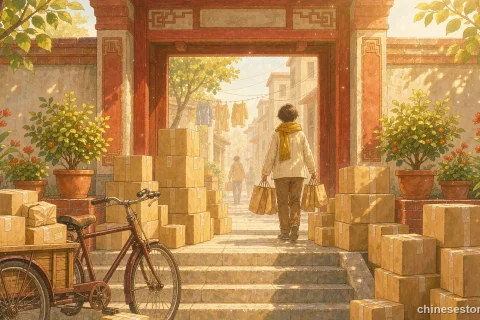
Most orders never reach the counter. Customers order on a phone, pay inside the app and collect from a shelf by the door where numbered cups wait in a row. The queue at the till is only the visible half of the traffic. The rest is riders outside, checking order numbers and lifting bags from a rail.
This is why a shop that looks quiet can still be busy. A row of cups on a shelf means the day is going well. An empty shelf means someone has miscalculated, and the staff will hear about it.
The Price of a Cup
The boom has a harder edge, and the last two years have shown it.
With hundreds of thousands of shops competing for the same streets, the industry has moved into a price contest. Chains announce promotional weeks in which drinks drop to a couple of yuan, and customers switch brands for a discount of one yuan. Growth in the number of shops slowed to a few percent, and in some cities the count is now falling as weak operators close.
Opening a franchised shop became a popular route into business for people with modest savings, and many of them have since learned that a shop on the right street is not the same as a profit. Rent, staff, milk and electricity are fixed, while the price of a drink is set by a war among nationally known brands. Franchisees describe long hours and thin margins, and the ones who survive are often those who found a location before everyone else did.
The war also reaches the top. Even the largest chains now compete on cost per cup rather than on novelty, and their answer has been to build their own supply chains, their own dairies and their own orchards so that a lemon costs them a fraction of what it costs everyone else.
What has not happened is the collapse that some predicted. The habit is too deeply woven into ordinary life, and the drink is too cheap to be given up in a hard month. What has happened is consolidation. The street still has four tea shops, but they increasingly belong to two or three chains, and the independent with the hand-written menu is the one most likely to disappear.
Who Works Behind the Counter
The shop looks simple from outside. Inside it is a small factory with three people and a window to the street.
Shifts are short on paper and long in practice. A busy counter serves a cup every twenty or thirty seconds at peak hours, which means hours of standing, sealing, shaking and calling out order numbers. Staff are usually young, often students working around classes, and turnover is high because the pay is modest and the work is loud.
Training is quick. New staff learn a fixed set of recipes, a sequence for assembling them and the small tricks that make a drink look right in the cup. Cream must sit on top of the ice. Fruit must be arranged so it appears in the window of the lid. The photograph matters, and the drink is built partly for the camera.
Above the counter sits the franchise owner, who is often the person who took the largest risk in the room. Many are former employees of a chain, or couples who pooled savings, or someone who left an office job to run something of their own. They pay a joining fee, buy equipment and ingredients from the brand, and accept that the price of the drink is not theirs to set. Some run three shops and do well. Others run one and spend two years finding out that a busy street can still be a losing one.
For the customers, this labour is mostly invisible. What they see is a cup arriving quickly and cheaply, made to a specification they chose on a screen. The speed is the point, and the speed is what the people behind the counter have to produce, hour after hour, in a room that is always warm and always loud.
Compared With the West
A Western reader knows this market, but from the other end.
Bubble tea, which spread abroad from Taiwan, China, became a familiar drink in Western cities long before the current boom, and the format of sweet tea with toppings and customised sugar levels is not new outside the country. What is different is the position it holds at home.
In Europe and North America, tea with milk is a treat, a stop on a shopping trip or an occasional indulgence, and coffee holds the daily slot. In China, the fresh tea shop has taken that daily slot for a very large share of young people, and it is priced to match. Where a Western city has a coffee shop on each corner, a Chinese city has several tea counters, and the customers are often the same people who would be holding a paper cup elsewhere.
The two cultures of the drink also differ in how the product is judged. Coffee traditions argue about roast, origin and extraction. Milk tea traditions argue about tea base, fruit and toppings, and the conversation happens less in a shop than on a phone, where a photograph of a new cup travels faster than any menu.
One feature is common to both. The best-selling drink is rarely the most sophisticated. It is the one that is cheap enough to be bought without thinking, familiar enough to be ordered by habit and fashionable enough to be photographed once.
The Last Cup of the Night
At ten in the evening the counter is lit up and the queue has thinned to four. A delivery rider collects a bag with three orders, the shop assistant wipes the hatch, and someone at the back of the queue takes a picture of the cup they are holding.
Tomorrow the queue will form again, at the same shop, at roughly the same hour. For a few yuan, a young worker gets a small cup of sugar, a place to stand with a friend, and a thing to hold while walking home. That is a lot to fit in a paper cup, and it explains why the street keeps finding room for one more tea counter.
This story is based on publicly documented practices and on reporting in the Chinese and international press. The families described are illustrative, and no individual is identified.