Admin
-
Wu Zetian: The Concubine Who Became Emperor of China
In 637 a girl of fourteen was brought into the Tang palace as a low-ranking concubine. In 690, at sixty-seven, she abolished the dynasty she had served and put herself on the throne. She is the only woman in two thousand years to rule China in her own right. This is her story, from a convent courtyard to the blank stone in front of her tomb.
-
The Man Who Would Not Write: A Chinese History Story
On 13 June 1402 the Prince of Yan took Nanjing. The court record of the reign gives the fate of Fang Xiaoru one line. The story everyone knows gives him a brush thrown on the floor, a question he asked the new emperor, and ten degrees of kinship put to death. This is what the histories actually say, and how the legend grew around it.
-
The New Laws of Wang Anshi: A Chinese History Story
In 1069 Wang Anshi began the most ambitious reform in Chinese history: state loans for farmers, paid labour instead of conscripted labour, government trading to break the brokers, a militia instead of a million useless soldiers. He filled the treasury. He also broke the countryside and lost every friend he had. This is the story of the New Laws, and of the drawing of refugees that ended them.
-
The Gate at Xuanwu: A Chinese History Story
Before daylight on 4 June 626, ten men waited inside the northern gate of the palace at Chang-an with a bow. By the time the sun was up, the heir to the throne and his brother were dead in the road, and the empire had changed hands. This is the morning that made the Tang dynasty, and the emperor the world remembers as Taizong.
-
The Grand Canal: A Chinese History Story
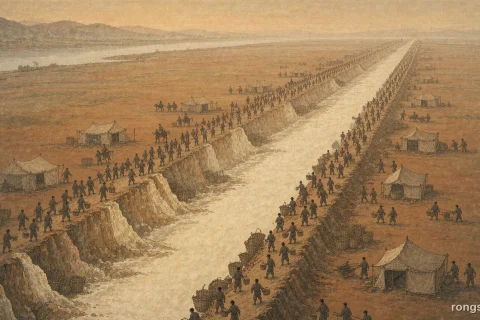
In 605 AD Emperor Yang of the Sui ordered a canal that would join five rivers into one line and run two thousand seven hundred kilometres, from Beijing to Hangzhou. The first section took five months. Four or five men in every ten who dug it died. Here is how the longest artificial waterway on earth was built, who paid for it, and why it outlived the dynasty by thirteen centuries.
-
The Red Cliffs: A Chinese History Story
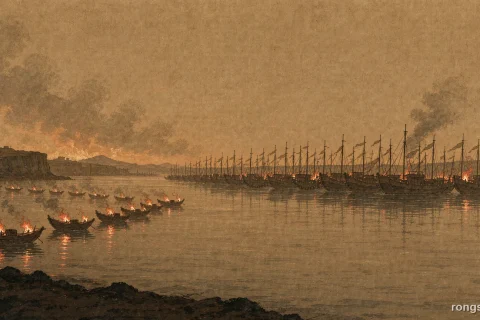
In the winter of 208 AD, Cao Cao lashed his captured fleet together so his northern soldiers could keep their footing. It worked. It also turned a navy into a single target. Ten fire ships, one southeast wind, and the battle that split the Yangtze between three powers for the next seventy years.
-
The Plea Sewn Into a Coat: A Chinese True Crime Story
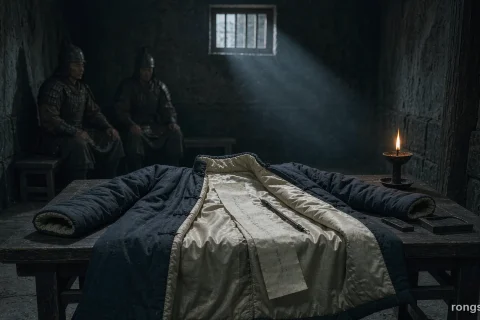
In the first month of 692 the chancellor Di Renjie, the man the English-speaking world knows as Judge Dee, was dragged into a prison cell and accused of treason. He confessed on the spot. Then he wrote his defence on a strip of silk, sewed it into his padded coat, and had the coat sent home to be made lighter for the warmer weather.
-
Who Sent the Assassin: A Chinese True Crime Story
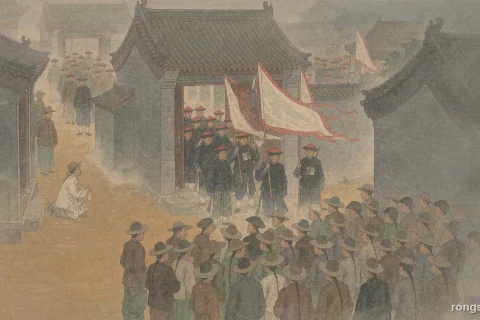
On 22 August 1870 the governor-general of Liangjiang was stabbed to death in the street outside his own office in Nanjing. The assassin was caught on the spot and gave three different motives over eight months of interrogation. The official finding was that nobody sent him. One hundred and fifty years later, that finding is still the problem.
-
The Silver Needle: A Chinese True Crime Story
In 1873 a low-ranking examiner in Zhejiang pushed a silver needle into a dead man and drew it out black. He had not washed it the way the manual required. Three years, two imperial commissioners and one public autopsy later, the case became the first great scandal of the late Qing, and one of the earliest Chinese murder cases followed day by day in a newspaper.
-
Twenty-Eight Years: A Chinese True Crime Story
In March 1992 a twenty-two-year-old medical student was killed in a teaching building in Nanjing, and the only thing the killer left behind was a description given by two campus guards. The case stayed open for twenty-eight years. It was closed by a man who never appeared on any suspect list, and by a stretch of DNA he had inherited from his father.