On 8 November 2016, in a county detention centre in Guizhou, a police officer took the fingerprints of a man who had just been brought in for questioning.
Four months earlier the man had been a deputy director in the Kaili city government, a party cadre at the level the system calls section chief. When the comparison came back, the officers looking at it went quiet. His prints matched a set lifted eighteen years earlier from the scene of a massacre in Kaili.
That scene was flat 501 in the staff housing block of a hospital. The people of the city had given the whole affair a shorter name. They called it the Kaili Two Cases.
One. The missing pistol
The first case began late at night on 17 October 1998, in the corridor of the Kaili film projection company building.
An Quan, deputy head of the Dashi crossroads police station, was killed there. He had been struck on the head with a blunt object and stabbed through the chest with a knife. His service pistol, a Chinese Type 64, was gone, together with six rounds of ammunition.
He was thirty four. The station he helped to run covered the busiest commercial quarter of the city, and the post came with a pistol; he had qualified for the weapon only in March of that year. He was in the habit of coming home between ten and eleven at night to a rented room on the third floor of the projection company building.
The men who killed him knew him. Huang Dekun and Pan Kaiping had grown up in the same compound, gone to the same school, and played in the same streets. So had An Quan. All three were sons of workers at the Kaili road transport company, the biggest state employer in town, the place everyone wanted to get into.
Huang Dekun, born in 1964, was an ethnic Dong, the fourth child in his family, known to everyone as Huang the Fourth. He was short and strong, trained in southern boxing since childhood, and quick with his hands; classmates remembered him breaking a traffic policeman’s nose in a quarrel. In the 1980s he went to work for the transport company as a conductor, then a mechanic, then a minibus driver. In 1992 he resigned and went into business, the first man from the company ever to do so.
He ran a video hall, then a dance hall called Le Man Le, then other shops, all of them inside the commercial quarter that An Quan’s police station covered. In 1996 a fire burned the dance hall out and took his savings with it. He tried an ice cream factory next, and that failed too. Two collapses in a row left him deep in debt.
Pan Kaiping was the same kind of man, and he had always been at Huang’s side. They grew up together, worked at the same company, and when Huang was in business Pan was the one who carried the tools. Whatever Huang said they were going to do, Pan did.
Two men out of money decided to rob. To rob properly they wanted a gun, and so they settled on An Quan.
They prepared carefully. They bought knives and a dumbbell as weapons. They found an abandoned house to use as a store room and rehearsed there. On the night of 17 October they were waiting in the stairwell when An Quan came home. As he reached the turn between the second and third floors, one of them locked an arm around his neck while the other struck his head with the dumbbell and stabbed him.
They had the pistol. The plan had been to use it on a cash delivery van.
Two. Flat 501
After the killing of a police officer, every financial institution in Kaili tightened its security. A cash van was now out of reach, so the two men turned to a gold shop across the road from a bank.
While they were watching it, Huang Dekun saw a man in the street: Le Guijian, the manager of the Kaili branch of the Bank of China. Huang’s wife had once worked in the banking system, and through her he knew the manager. It occurred to him that a bank manager must have money at home. The target changed again.
Le Guijian lived in flat 501 of building 17, in the staff housing of the 418 hospital. By the standards of Kaili at the time it was a good address, with air conditioning, a refrigerator and a television. He came from Danzhai in Guizhou, had gone to a finance college when the university entrance examinations came back in 1977, and had risen to be a deputy factory director before being transferred in 1987 to set up the Kaili branch. By 1996 he was its manager. His wife, Fang Xiaoyuan, was head of personnel at the 418 hospital and came from a family of Shandong officials sent south in the Third Front industrial programme. Their daughter was fourteen, a pupil at the city’s best middle school, and she left for school at about twenty past one every afternoon.
Huang and Pan spent a fortnight learning the family’s routine. In the days before the attack, neighbours remembered two unfamiliar men loitering in the compound.
At midday on 1 December 1998 the two of them had their hair washed, bought two cabbages to carry, and walked up to the block like relatives paying a visit. Before knocking, they blocked the peephole of the flat opposite, number 502.
Inside 501 they found all three of the family at home. An argument began. The telephone rang, Fang Xiaoyuan picked it up, and Pan Kaiping knocked the receiver out of her hand.
One thing has to be said here. The noise from that flat was heard outside it. A doctor who worked at the 418 hospital was at her window in the next block, airing a quilt cover, when she heard a girl scream, and then running footsteps, quarrelling and crying. She and her neighbours assumed the family was beating a child. She went down and found Liu Qiaoyun, a hospital colleague and Fang Xiaoyuan’s closest friend, and asked her to go up and intervene.
Liu Qiaoyun first telephoned the flat. The call was answered and then cut off. She went up anyway.
When she came through the door, Pan Kaiping shut it behind her. Fang Xiaoyuan shouted at her to leave it alone and go home. She tried to go. Huang Dekun shot her in the chest and then stabbed her, many times.
After her came Fang Xiaoyuan, then Le Guijian, then the fourteen year old girl.
Pan Kaiping’s account in court was that Le Guijian was shot in the head and fell back on the brown sofa in the living room, and that the girl was held by the throat by one of them while the other used the knife. What the neighbours found afterwards was Liu Qiaoyun near the door, Le Guijian on the sofa, Fang Xiaoyuan in the passage leading to the bedroom, and the girl beside the bed in the small room. Liu Qiaoyun had twenty one wounds on her body, every one of them serious.
The two men took two thousand yuan in cash and about thirty commemorative coins. Then they did one more thing. They opened the valve of the gas cylinder and cut its hose, turned the electric wok up to full heat and put a bullet inside it, dragged out bedding and clothes and sprinkled them with liquor. They meant the whole thing to look like a fire.
There was not enough gas, and the fire never started. The following afternoon Fang Xiaoyuan’s brother came back from a business trip, opened the door, and found four people dead.
Three. Eighteen years
The two cases were joined by a single cartridge case.
A shell found in the Le flat matched the pistol taken from An Quan. Ballistic examination confirmed that the weapon that killed the family was the same Type 64 that had killed the policeman.
The case reached the Ministry of Public Security in Beijing, which sent a vice minister to Kaili to oversee it and brought in outside forensic expertise. A reward of two hundred thousand yuan was offered, the largest the prefecture had ever posted. It would remain unclaimed for years.
Then came eighteen years.
One detail made this case unusual. The scene was preserved. According to officials who later described the investigation, the bottles of Moutai standing in the living room of flat 501 were still standing there eighteen years later, and neighbours said they saw investigators return to the flat almost every year.
One man was arrested by mistake. Soon after the killings, the son of a deputy factory director, a man in the construction business, was taken away for questioning. He was released about six months later. He had nothing to do with it.
In the meantime the real killers lived ordinary lives.
Around 2000 Huang Dekun went to work as a driver for the Kaili economic development zone, and rose to run the small pool of cars assigned to officials. Over about a decade he drove for more than one senior cadre. He then moved into the zone’s urban management bureau, and by about 2011 he was its head. On one occasion, when a demolition claimant came at people with an axe, he stepped in and restrained the man, and was commended for courage. In August 2015 he was transferred to the city’s shantytown redevelopment office as a deputy director. On that posting his personnel file gave his birth year as 1968, four years later than the truth.
In 2001 he drove out to the Xiasi stretch of the Qingshui river and threw the pistol in.
In 2015, handing over his post, he could not make his accounts balance, and the discipline inspection authorities began to look at him. On 5 July 2016 the prefectural commission for discipline inspection announced that Huang Dekun, deputy director of the Kaili shantytown redevelopment office, was under investigation for serious disciplinary violations.
Four. Four fingers on a coat hanger
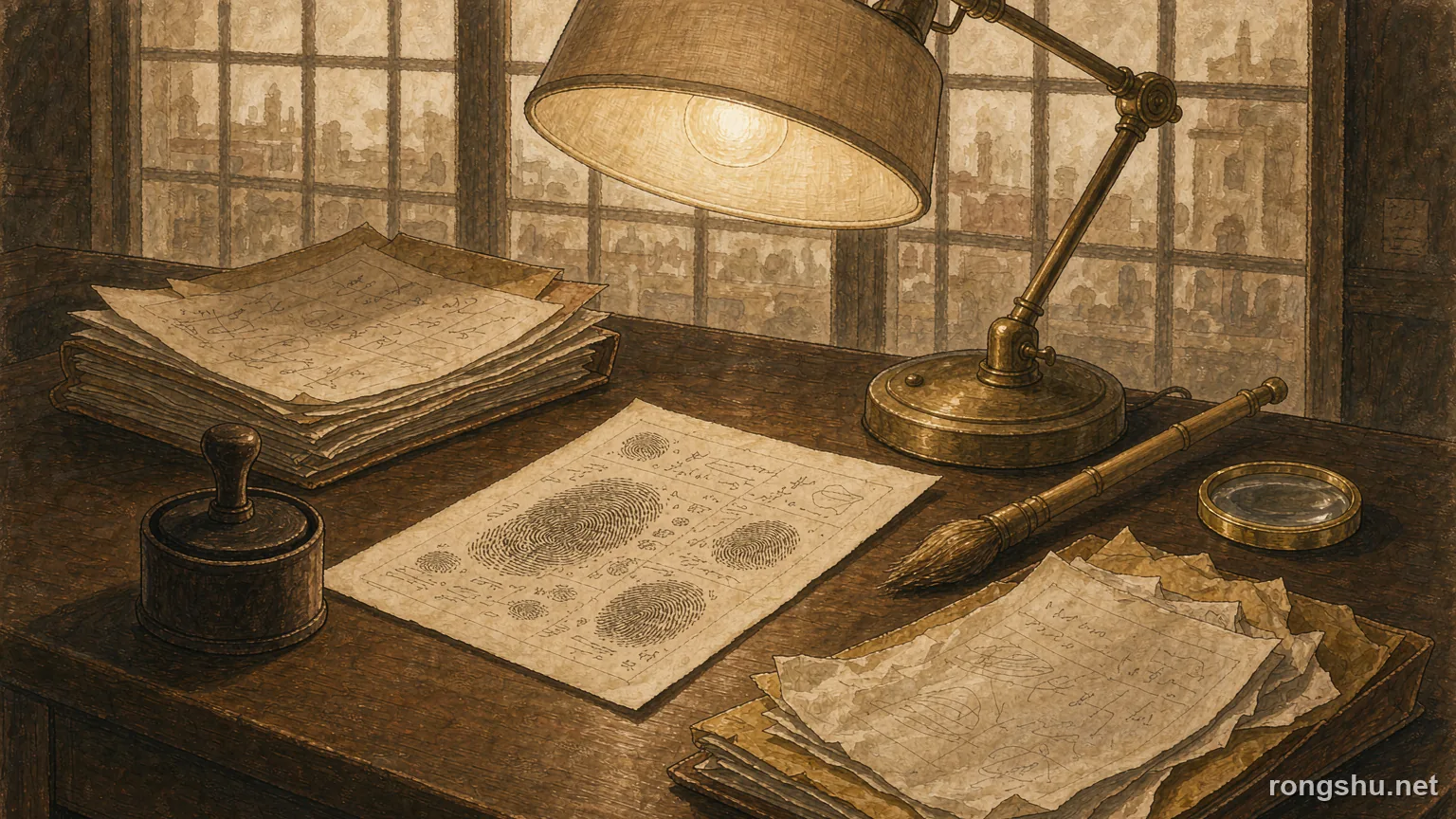
Under the procedure, a person taken in for investigation has his fingerprints recorded and filed.
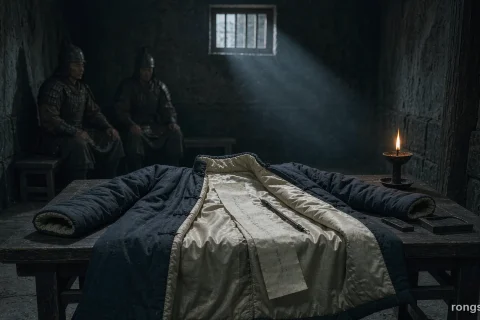
This is how the match came about. Eighteen years earlier, Kaili investigators had lifted a set of prints from a coat hanger on the bed in the main bedroom of the Le flat. The prints of the index, middle, ring and little finger were all on it. On the day of the killings Huang Dekun had fought Le Guijian across the flat, from the living room into the main bedroom, and that was when the hanger was touched.
By 2016 the prints were distorted. The head of the provincial public security department later told a provincial people’s congress that his examiners had defined several hundred points of comparison on the distorted print and run it against the database, and that it came back with a match. He said the breakthrough in this case had come from advances in technology and from the use of large data systems.
In November 2016 the fingerprints Huang Dekun gave while under investigation met the prints on the hanger. He then confessed to both killings and named his accomplice, Pan Kaiping, who was arrested while working as a temporary employee in another government office of the same development zone.
The police went back to the river. At Xiasi they pumped water and dredged silt, and after dozens of tons of mud had been moved, the rusted Type 64 came up. The identification was conclusive. It was An Quan’s pistol.
Physical evidence, fingerprints and confession had closed into a single chain.
Five. In court
The trial opened in the Qian Dongnan prefectural intermediate people’s court on 11 February 2018, and ran for more than eight hours. In a Chinese criminal case the intermediate court takes the most serious charges at first instance, so this was the only courtroom the two men would face.
The prosecutors charged Huang Dekun with robbery of firearms and ammunition, robbery, bribe taking and embezzlement, and charged Pan Kaiping with robbery of firearms and ammunition and robbery. Both men admitted the two robbery charges. Huang disputed the corruption charges.
Huang answered questions in a loud voice, in accented but standard Mandarin, and when an answer grew long he liked to break it into first, second and third points. Onlookers in the public benches remarked to each other that he had been a cadre so long that even his way of talking was official. Pan Kaiping spoke a local dialect quietly enough that the judge had to tell him several times to move back from the microphone.
In his final statement Huang said he was sorry to the victims and their families and was willing to pay them compensation. Pan said he had no education, that for eighteen years he had been unable to eat or sleep in peace, that his guilt was heavy, that he was especially afraid of the dark, and that in recent years his hair had fallen out. If the death sentence was carried out, he said, he wanted to donate his body and his organs.
On 30 July 2018 the court sentenced both men to death, with deprivation of political rights for life and confiscation of all personal property. Neither appealed. The case went up to the provincial high court for review and then to the Supreme People’s Court for approval. According to public reports, both men were executed in 2019.
Six. The step they did not plan for
On that night in 1998, before they went into the stairwell, Huang Dekun and Pan Kaiping had rehearsed the whole thing. They knew what time An Quan came home. They knew how to take him down and take the pistol. They had worked out what to do with the gun afterwards: the cash van first, then the gold shop.
In flat 501 they planned their cover as well: the gas cylinder, the cut hose, the burnt food in the pan, the bedding soaked in liquor. They meant to turn a massacre into an accident.
The one thing they did not plan for was a coat hanger.
The fight with Le Guijian went from the living room into the bedroom. In the bedroom Huang Dekun’s hand closed on the hanger lying on the bed. Nobody knows how hard he gripped it, or for how long. It was enough to leave four fingerprints, and those prints sat in an evidence bag for eighteen years.
Eighteen years later they reached into a government personnel roster for a shantytown redevelopment office and pulled the man out of it.
There is a forensic footnote to this Chinese true crime case. The idea that a fingerprint can identify a person beyond doubt is not old. In 1903 an American prison received a new inmate named Will West and found that his measurements matched those of a prisoner already inside named William West, and that the two men looked alike as well. The system of measuring bodies had produced a false match, and the prison system turned to fingerprints instead. A Chinese county clerk taking prints in 2016 was running the same test. It failed nobody. It simply waited.
In 2024 a Chinese television drama called I Am a Criminal Police Officer built an eight episode arc on this case, renaming it the Qingjiang two cases. Its detectives get there through clues and deduction. In the real one, a man was pulled out of a personnel file by four fingers on a coat hanger, and by nothing more than a routine.