English has a saying that family comes first. Blood is thicker than water, we tell one another. Chinese has an old proverb that runs straight at it from the other side.
The Chinese idiom is 大义灭亲, in pinyin *da yi mie qin*. It means to put the great right above your own kin. When public duty and private love collide, you let the private love go. It does not mean killing your family. It means refusing to bend the law for them.
This Chinese fable comes from the Zuo Commentary, a history of the Spring and Autumn period written more than two thousand years ago. Its hero is an old minister named Shi Que. He set a trap, and the man who walked into it was his own son.
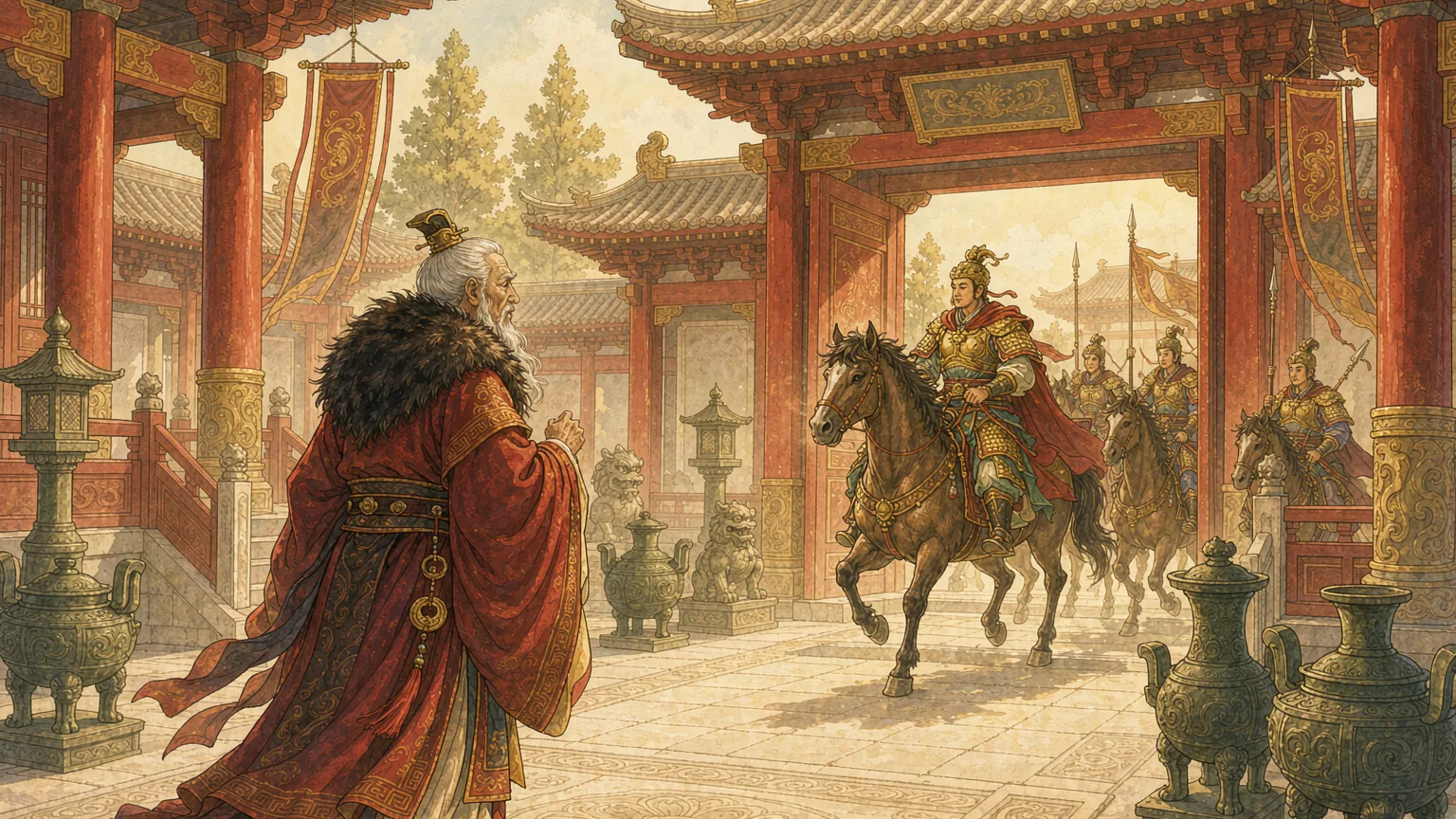
Shi Que was one of the most respected men in the state of Wey.
He had served three rulers in a row. When he spoke, people listened.
The ruler of his day was Duke Zhuang of Wey. The duke had a son named Zhou Xu.
Zhou Xu was not the heir. He was the son of a favorite concubine, and by the rules of the time the throne was never meant for him. But Duke Zhuang doted on the boy. Zhou Xu loved weapons and loved drilling soldiers, and the duke let him. Zhou Xu swaggered through the city, and the duke looked away.
Shi Que could not stay silent. He went to the palace and gave the duke a warning.
He said, I have heard that to love a son, you must teach him by what is right. Teach him what he may do and what he may not, and keep him off crooked roads. Pride, extravagance, indulgence, idleness. Those four are how a young man goes wrong. Indulge him today and you ruin him tomorrow.
The duke smiled, and let it pass.
Shi Que could not move the ruler. So he went home and tried to manage his own son. The boy’s name was Shi Hou.
And Shi Hou and Zhou Xu were the closest of friends.
Shi Que tried to close the gap. He shut his son in the house, hired tutors, and repeated the rules of decent conduct again and again. But Shi Hou’s heart had already flown off to Zhou Xu. He would nod at his father and argue inside. The moment his father turned away, he was over the wall and gone.
Too late, Shi Que understood something. Some words have to be said early. Once a man has grown, once his wings have hardened, pulling him back off a crooked road is nearly impossible.
The two young men stayed inseparable. Shi Hou went with Zhou Xu to drill troops, to hunt, to drink. Between them they puffed up one spoiled prince higher and higher. The father’s words went in one ear and out the other.
Then Duke Zhuang died.
His legitimate son, a man named Wan, took the throne. He is known to history as Duke Huan of Wey.
Duke Huan was gentle and generous. When he took power, he was not blind to the danger. His younger brother Zhou Xu had soldiers at his back and friends inside the city. But he was the elder brother. He thought blood would hold. He thought if he waited, it would pass.
Zhou Xu was not going to wait.
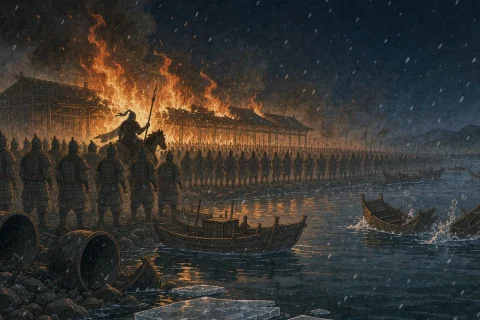
In the spring of the fourth year of Duke Yin, he struck. He gathered his men, caught Duke Huan off guard, and killed his own elder brother. Then he sat himself on the throne.
To murder a ruler and seize his seat was the gravest crime there was. Word went out, and the whole world was shocked.
But once Zhou Xu was seated, he found the seat burning under him.
He tried to repair it. He issued orders and rewarded and punished, doing all the things a ruler does, hoping the people of Wey would accept him. But the old men of Wey called him lord, and their eyes slid away. That look was worse than any curse.
A ruler with no legitimacy is a ruler with no ground. The other states sent no congratulations. The king of Zhou would surely never recognize him. He had soldiers, and he had nothing else.
That was when Shi Hou came to him.
Shi Hou had been Zhou Xu’s companion since boyhood, and now he was a favorite at the new court. He said to Zhou Xu: My father has seen much. He knows how these things are done, how one gets to the king and makes the world accept the paper. Let me go and ask him.
So Shi Hou went home and asked his father: How can the new lord make his position proper?
Shi Que did not answer at once. He sat there, as if thinking for a long, long time.
Then he spoke. Two words.
Go to Chen.
Go to the ruler of the neighboring state of Chen.
Shi Hou blinked. Shi Que explained, slowly. The Duke of Chen now stands high in the Zhou king’s trust. To get an audience with the king, you need someone who can carry your name to him. Chen is our neighbor and our friend. Go to the Duke of Chen. Ask him to speak for you. The road will open.
Shi Hou thought it made sense. He went back and told Zhou Xu, and Zhou Xu nodded.
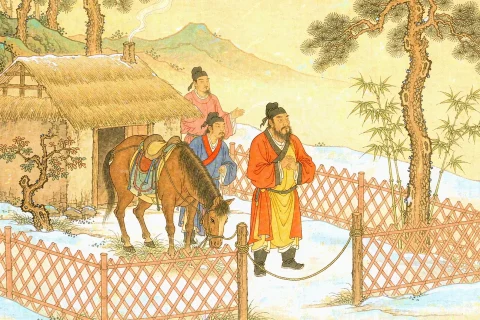
Father and son packed their bags and set out for Chen.
What they did not know was that, on the very days they were traveling, a secret letter had already left Wey by fast horse.
Shi Que had written it with his own hand, for the eyes of the Duke of Chen alone.
It said: Wey is a small place, and I am old, and I can do nothing. But these two men, Zhou Xu and Shi Hou, are the ones who killed our ruler. I beg you, deal with them there, on the spot.
The Duke of Chen read the letter and put it away.
Zhou Xu and Shi Hou arrived in Chen. The Chen officials came out to meet them, all courtesy, and invited them into the city to rest.
The day they settled in, the men of Chen moved. Soldiers surrounded them, and Zhou Xu and Shi Hou were seized and bound.
Chen sent word back to Wey: We have your men. Decide what is to be done, and send an officer to do it in person.
Wey sent a minister, who went to a place called Pu in Chen and put Zhou Xu to death.
One man was left. Shi Hou.
Shi Hou was Shi Que’s own son. People pleaded for him. He was only the accomplice, they said. The plan to kill the ruler was Zhou Xu’s. And he is the old minister’s own flesh. Surely he can be spared.
Shi Que did not soften.
He said: Every wicked thing Zhou Xu did, Shi Hou did with him. Spare him today and the law collapses.
He sent his own household officer to Chen, and had his son put to death as well.
A father had walked his own boy to the executioner.
The Zuo Commentary records it, and then gives the old man his verdict through the voice of a gentleman of the time:
Shi Que was a truly loyal minister. He hated Zhou Xu, and his own son Shi Hou was in it with him. *Da yi mie qin*. Putting the great right above one’s kin. That is what this is.
What stings most in the story is not the verdict. It is the trap.
Shi Que could have done nothing and let Zhou Xu’s throne collapse on its own. He could have killed Zhou Xu and saved his son. Both roads were open. He took the hardest one. He invited the enemy into a friendly state, and then sent his son along with him.
Afterward, Shi Que brought a prince home from exile and set him on the throne, and Wey settled. An old man, having done one terrible, necessary thing, quietly put the state back on its feet.
But no one ever weighed what he carried. Loyalty and family, public and private, made two scales inside him, and the answer they gave was that his son weighed less than the realm.
He never made a speech. He simply lowered his head and did what had to be done, one thing at a time. He did the last thing too, and the last thing was to hand his own son the knife.
People use the Chinese proverb da yi mie qin for someone who puts justice above family and will not bend the law for a relative. It is a hard phrase, hard as stone, and it reads like blood. Behind it stands a father who did not move from where he stood, for a very long time. He did right by the world. He did the worst thing possible to his own house. The Chinese idiom keeps both halves, and makes neither one easy.