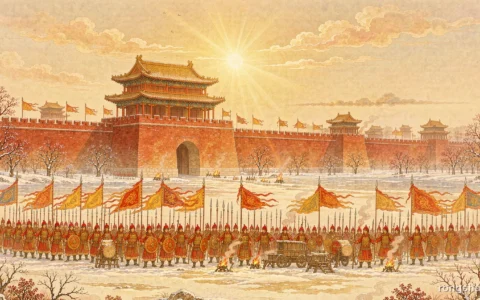
On the twenty eighth day of September, 1898, in Beijing, a crowd packed the execution ground at Caishikou before noon.
The autumn wind had turned cold.
Six men were brought out. They were not bandits or rebels. They were officials of the state, a scholar of the Hanlin Academy, several secretaries of the Grand Council, and one man who had just been raised to a high rank by the emperor himself.
The youngest was Lin Xu, twenty four years old.
The most famous was Tan Sitong. Before he was taken out, he had written a poem on the wall of his cell. The last two lines say that he would laugh at the sky with his blade across his chest, and that the living and the dying both stand tall.
The execution was quick.
The crowd pressed in layer upon layer. In Beijing that autumn, from the teahouses to the government offices, everyone was talking about these six men. Some called them traitors. Others quietly grieved for them.
A hundred and three days earlier, they had believed that they could turn the country around.
After the War
To understand those hundred and three days, we have to begin with another war.
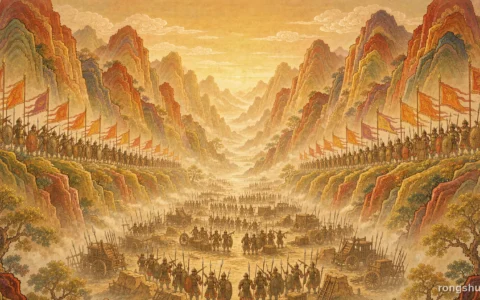
In 1894 China and Japan went to war. By the Chinese calendar the year was Jiawu.
The result surprised many people.
For thirty years the court had believed that a country could be saved by buying and building the machines of the West. Steamships, cannon, factories, a modern navy. All of it had been assembled.
Then came one war. The ships went to the bottom, the guns were lost, and the whole fleet was destroyed.
People saw, all at once, that ships and guns by themselves were not enough.
In 1895 the Qing government signed the Treaty of Shimonoseki. Land was ceded. The indemnity was so large that it took the breath away.
When the news reached home, the country shook.
That year the candidates who had come to Beijing for the imperial examinations signed a joint petition against the peace and in favour of reform. The leaders were Kang Youwei, a scholar from Guangdong, and his student Liang Qichao. This petition is remembered as the letter of the public carriage.
It never reached the emperor. But it made one thing clear. In this country there were people who could no longer sit still.
Kang Youwei and his circle had been local scholars. After that year they were at the centre of the national argument.
Over the next few years they started newspapers, founded study societies, and opened schools. The Strengthening Society in Beijing, the China Progress newspaper in Shanghai, the school at Changsha in Hunan, one after another. Liang Qichao wrote with heat, and the young read him until their blood ran hot.
Their favourite example was the Meiji Restoration in Japan. Here was another country in East Asia, pushed to the wall by Western guns exactly as China had been. Japan had begun reforming early and reformed hard, and in a few decades had turned itself around.
Japan reformed for thirty years and was ready to go to war with China. China reformed for a hundred and three days.
The comparison hurt the eyes.
In the winter of 1897 Germany seized Jiaozhou Bay by force. One after another the powers reached for pieces of the country. Inside the court and out, the feeling grew that there was no more time to wait.
In 1898 Kang Youwei wrote to the emperor again and again, urging him to fix his mind on reform. In one memorial he used eight characters that were quoted for years afterward. If it changes, it survives. If it does not change, it dies.
One Hundred and Three Days
The year 1898 was the year wuxu in the Chinese cycle.
On the eleventh of June the Guangxu Emperor issued an edict that came to be known by its first four words. He fixed the direction of the state. The reform had begun.
Counting from that day to the coup of the twenty first of September, a hundred and three days passed.
Four days into the reform, Cixi did one thing. She forced the emperor to dismiss Weng Tonghe.
Weng Tonghe had been Guangxu’s teacher and was the leading voice for reform in the government. To remove him was to pin down the emperor’s strongest hand. Around the same time Cixi had her own man, Ronglu, take command of the army of Zhili province.
Before the reform had truly spread, most of the ways back had already been closed.
Across those hundred and three days the court sent out more than a hundred edicts. Taken together, they meant to change real things. Abolish the eight legged essay. Reform the examinations. Build modern schools. Send students abroad. Reward the founding of factories, mines, and railways. Cut away a set of offices that drew salaries and did nothing.
Not one of them could be carried out without costing some people their place.
The abolition of the essay and the cutting of offices were the worst.
A scholar had spent his whole life on the eight legged essay, and now it would not be examined. An official had sat in a quiet post for half his life, and now the post was gone. Behind each of these men was a web that ran from the capital out into the provinces.
This was not a small repair.
It reached into a set of rules that had been turning for a hundred years.
The conservative officials in the court never meant to let these edicts take effect.
The edict that abolished the essay was issued, and in some provinces the essay was still examined. The order to found modern schools came down, and some governors simply waited. Once an edict left the palace, it was like water poured into sand.
The orders turned in the air, one after another.
The reformers had only the emperor’s vermilion brush.
And a brush can sign an edict. It cannot sign a change of heart.
An Emperor Without Soldiers
The root of the trouble showed itself quickly.
Guangxu was an emperor who wanted reform. But the real power was not in his hands.
The substance of the state was with the Empress Dowager Cixi. The army, the appointments, the money, all of it lay with her and her conservative ministers.
On one side stood an emperor who issued edicts. On the other stood the people who controlled the soldiers, the silver, and the offices. Sooner or later these two sides had to meet.
On the reformers’ side, almost no one held real power.
Kang Youwei was a scholar. Liang Qichao was a pen. Tan Sitong had held office, but had never led soldiers. They could write, speak, and move an emperor. They could not move a single soldier.
The other side was different.
Cixi had been in the palace for decades. The Grand Council, the six ministries, the governors of the provinces, most of them were hers. She did not even need to issue an edict. One word from her could turn an edict into waste paper.
In September events began to speed up.
On the fifth of September the emperor promoted four men by extraordinary order. Tan Sitong, Yang Rui, Liu Guangdi, and Lin Xu were given the rank of the fourth degree and placed in the Grand Council to take part in the new government. This moved the heart of the reform directly into the central machinery of state.
The objections came up at once.
On the fifteenth of September the emperor called Yang Rui in and gave him a secret edict. About that document, several versions later circulated, with different wording and different recipients, and it is hard to tell which was genuine. Its meaning was roughly this. The situation is dangerous, and these men must find a way out quickly.
Only then did the reformers see how little time was left.
They thought of one man. Yuan Shikai.
Yuan Shikai commanded a modern army stationed near Tianjin. The reformers hoped he would bring his troops into Beijing and stand with the emperor.
On the night of the eighteenth of September, Tan Sitong went alone to Yuan Shikai’s lodging.
He urged Yuan to raise his troops and remove Ronglu, the conservative minister close to Cixi.
There was a heavier step in the plan as well. Yuan’s soldiers were to enter Beijing and surround the Summer Palace.
Cixi was living in the Summer Palace.
Where that step actually went, the histories do not say clearly. What is certain is that Tan Sitong said everything he had come to say, Yuan Shikai agreed to his face, and after that events no longer followed the reformers’ plan.
The Betrayal
What happened next is told in more than one way.
The traditional account goes like this. On the twentieth of September Yuan Shikai hurried back to Tianjin and told Ronglu what the reformers intended. Ronglu left for Beijing that night and reported to Cixi.
Some scholars argue instead that Cixi had already decided to move, and that Yuan Shikai’s report only made her act more quickly and more completely.
The two accounts are still argued over today.
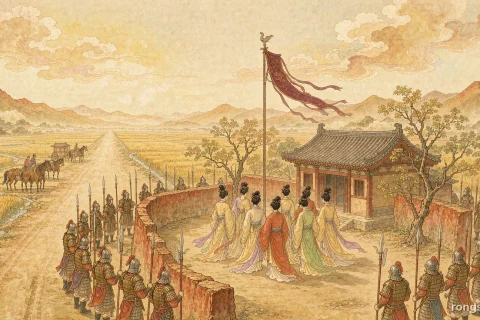
The result is not in doubt. On the twenty first of September Cixi carried out the coup. She announced that she was taking up the government again, and had Guangxu confined to a small waterside building inside the palace.
The reform ended there.
On the nineteenth of September Cixi had come back into the city from the Summer Palace.
Two days later, it was all over.
Over the days that followed, the lists of arrests came out one after another.
Tan Sitong did not go. Yang Rui and Liu Guangdi did not go. Some of them, when they were taken, were still waiting for a new edict from the emperor.
Kang Youwei had left Beijing the day before the coup, and reached Hong Kong under British protection. Liang Qichao slipped out of Tianjin by sea under Japanese cover and went to Japan.
Those who could leave, left.
Tan Sitong could have gone too.
A route had been prepared for him, and people urged him to leave the city that night. He did not go.
He handed his manuscripts and letters to those who were leaving, and stayed in the city to wait for the men who would come for him.
He left behind a sentence that has been repeated ever since. The sense of it is this. Reform in every country has been paid for in blood. In China no one has yet shed blood for reform, and that is why the country is not strong. Let it begin with me.
Six at Caishikou
On the twenty eighth of September, six men were put to death.
Their names were Tan Sitong, Kang Guangren, Lin Xu, Yang Shenxiu, Yang Rui, and Liu Guangdi. Later generations called them the six gentlemen of the year wuxu.
The six were not all the same. Some were the backbone of the new measures. One was a censor who had spoken up. And one, Kang Guangren, was Kang Youwei’s younger brother, who knew little of the reforms themselves and was caught up because of his name.
The killings were meant to be seen by the whole court.
After the order came down, the government withdrew the new measures one by one.
But there was one thing no one touched.
The Imperial University, founded during those hundred and three days, was allowed to remain. It changed its name later. It is Peking University today.
That was, perhaps, the one living thing to come out of those hundred and three days.
Three years later Cixi issued an edict of her own to carry out reforms. Some of what she ordered went further than anything Kang Youwei had proposed.
By then, far fewer people were listening.
A hundred and three days is neither long nor short.
It did not turn the country around. But it taught many people who came afterward a lesson. To reform a vast old system with the backing of one emperor alone is not enough. Without something that reaches the ground, even the best edict is only words on paper.
A few years later, others reached a different conclusion.
If reform through the throne would not work, then the road had to be changed more completely.
The gunfire of 1911 was the next link in the chain.
That was only thirteen years after the reform failed.
Most of the edicts of those hundred and three days became a stack of waste paper.
But the subjects they had raised, modern schools, newspapers, railways, industry, the education of girls, came back years later under other names, one by one.
Some things do not cease to exist merely because they failed.