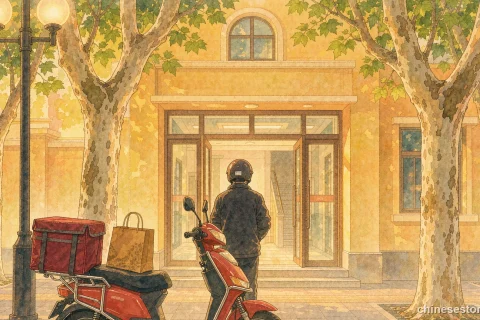
A young woman rents a one-room flat in a coastal city and works at a factory that runs three shifts a day. She has lived there for six years. Her identity card still names a village far inland, and when she tries to enrol a child in the school at the end of her street, that address becomes the most important fact about her.
The line on the card is the hukou, the household registration. It records not only who a person is but where they are said to belong. For decades it has shaped which schools, clinics and pensions a family can reach.
To a visitor, the hukou can sound like dull paperwork. In daily life it works more like a border that runs inside a country, invisible at the railway station and very visible at the school gate.
Most people outside China meet the idea through a single question. Why does a person who has lived in a city for years still count as a guest?
What the Hukou Actually Is
A hukou is a record held by the police. Every family keeps a small booklet, and every person is entered into a register tied to one place.
The register lists a person’s name, birthday, family members and, crucially, the town or district where the household is registered. A child inherits the registration of their parents, usually the father, and it travels with them for life unless they officially move it.
That is the part foreigners find strange. In most countries a national identity number follows the person, not a place. In China the registration is bound to a location, and the location decides which local services a person may use.
So two people can live on the same street, pay the same rent, work the same job, and still hold different claims on the city around them. One is a local resident. The other is a migrant in their own country.
The system also sorts people into categories. For a long time the register marked a person as agricultural or non-agricultural, a rural or an urban household. That single label once carried a whole set of rights and duties, and it still shapes how families think about where they stand.
Moving a registration is possible, but it is never automatic. It means forms, a receiving address and, often, a city willing to accept you. Until the paperwork is complete, a family lives in the space between the place it uses and the place it belongs.
A System With Deep Roots
The hukou is not a recent invention. Its modern form took shape in the 1950s, when a national regulation on household registration set out the basic rule that people and their households would be recorded where they lived.
In those early years the register did more than count the population. It helped the state plan who worked the land and who worked in the cities, at a time when food, housing and jobs were all managed from the centre.
The result was two societies under one flag. A person registered in a city could expect a grain ration, a state job and a place in a school. A person registered in the countryside depended on their village for almost everything else.
For ordinary families the most durable effect was simpler to describe. The city was not simply somewhere you could move to. It was somewhere you needed permission to belong.
Reform came slowly. From the 1980s onward, as factories along the coast began to hire, millions of rural workers moved to the cities to work. The register stayed where it was. Families learned to live with the split, earning in one place and belonging to another.
The rules have loosened a great deal since then. Many smaller cities now set almost no conditions for newcomers, and several provinces have stopped marking households as rural or urban at all, recording everyone as a resident instead.
What has not changed is the habit of mind. Two generations of families have grown up expecting that work and belonging happen in different places, and that expectation is now part of how people plan a life.
What the Card Decides
The reason the hukou matters so much is that a long list of everyday things is still arranged around it.
Public schools are the clearest example. A city school is funded and planned for the children registered in its district. A child whose family holds a hukou elsewhere often needs extra documents, extra years of social insurance payments, or a spare seat, and sometimes there is no seat at all.
Healthcare works in a similar way. Medical insurance has historically been run where a person is registered, which is why paying for treatment in another province used to mean carrying receipts home. That has improved, with more bills now settled directly across regions, but the old logic still shadows the new one.
Housing and social benefits follow the same pattern. Buying property, applying for subsidised housing, or claiming certain forms of assistance can depend on the register. A family can spend a decade in a city and still find that its safety net hangs from a village it rarely visits.
None of this is only about money. It reaches into decisions that feel personal. Because the college entrance exam is normally taken where a student is registered, some families send a teenager back to a province they left years earlier, so the child can sit the exam among strangers. Others stay apart for the final school years, one parent keeping the child near the exam desk while the other keeps the job.
Then there is the quiet effect on planning a life. A couple may delay having a child until they know where that child can go to school. A young worker may turn down a promotion in a city where they cannot settle their parents. The hukou does not stop people from moving. It changes what moving costs them.
The Price of Being a Guest
Every large city has its own quiet list of things a migrant family cannot do as easily as a neighbour can, and the list changes from place to place.
In one city a newcomer needs two years of social insurance to put a child in a public kindergarten. In another the same family must choose between a distant school with open seats and a private one that costs money they had saved for something else. Some cities limit how many people may register a car plate, and the limit lands hardest on those without a local register.
Then there is the paperwork that follows a family through ordinary life. Registering a marriage, adding a newborn, or opening a bank account can mean travelling back to the place of registration to fetch a document that cannot be issued anywhere else.
None of these rules is dramatic on its own. Together they form a texture, a set of small frictions that a local neighbour never notices and a migrant family learns by heart. The system does not announce itself. It simply adds a step, and then another, until living somewhere and belonging somewhere feel like two different things.
The families who cope best are often the ones who plan years ahead. They track the years of social insurance they need, keep their papers in order, and choose a neighbourhood because of a school rather than a flat. The hukou turns ordinary decisions into long calculations.
Why the Reforms Matter
China has been trying to soften the system for years, and the direction is clear even if the pace varies.
A national plan set the goal of registering people where they habitually live, rather than where they were born, with a few of the largest cities kept as exceptions. In practice this has meant that a person who holds a steady job or a legal rental can often move their registration to the city they already live in.
City tiers matter here. For most medium and smaller cities, the door is now wide open. For a handful of very large cities, a points system still controls the numbers, rewarding years of work, tax payments and social insurance contributions.
It helps to see the reform as a door that opens a little every year rather than a wall that falls at once. A few provinces have removed the rural and urban labels entirely and let residents move their registration to any city within the province, apart from the capital. Others still guard their largest cities with points, seniority and quotas.
For a young family the practical question is not whether the system is fair in the abstract. It is whether their city, this year, will accept the lease they hold and the job they have. The answer is different from one postal code to the next, and it can change with a single local announcement.
The numbers behind all this are enormous. By official counts, around 300 million people work away from the place their household is registered, and more than half of them have moved within their own province rather than across the country. Over the same recent period, the share of the population living in cities rose by several percentage points, an official report said, from roughly 63 percent to 67 percent.
Each of those percentage points is a crowd of families working out where they are allowed to put down roots. The paperwork has eased. The question has not disappeared.
The Long Goodbye to a Village
For many families the hukou is also a story about the place left behind, and that part is easy to miss from the outside.
A village may hold the registration of several hundred people while only a few dozen sleep there. Grandparents keep the house and the fields. Adult children keep the jobs in the city. The register becomes the thread that still ties the household together.
This is why a family may refuse to give up a rural registration even as its life moves far away. The registration can carry land rights and a claim to village benefits, and it is a kind of insurance against a bad year in the city. To move it can feel like cutting the rope that holds the other end of the family.
The result is a quiet bargain, repeated across the country. One home, two schedules. Money flows outward from the city, and holidays flow back toward the village. The register sits between them, deciding what each side may claim.
Compared With a Passport
A reader from elsewhere may reach for an analogy, and a passport is the nearest thing, though it fits imperfectly.
A passport says which country you belong to and lets you cross its borders. A hukou says which part of your own country you belong to and decides what you can claim once you are there. It is a border you carry inside your wallet.
Another near comparison is a local residence permit in a city that ties benefits to a home address. Several countries run something like this for newcomers from abroad. The difference is that China applies the rule to its own citizens, on a scale of hundreds of millions.
There is one more difference worth naming. A passport is about entering a country. The hukou is about entering a life: a classroom, a clinic, a pension office. It governs not where you may stand but what you may expect.
Six Years and a School Gate
The young woman from the start of this story is not unusual. Her situation is the ordinary one for a very large number of people.
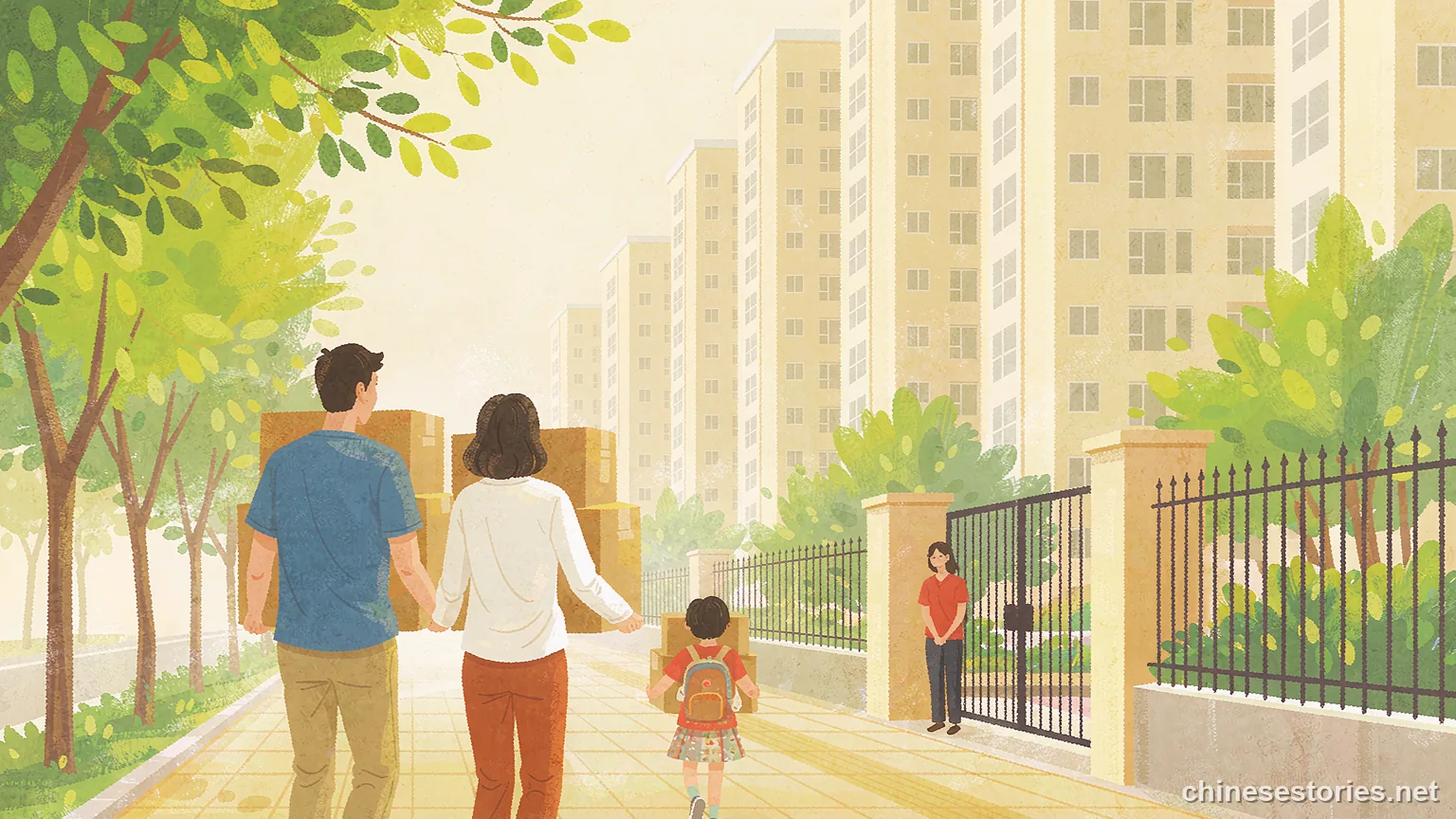
She has paid rent and taxes in the same city for six years. She knows the bus routes better than the ones at home. Yet a form at a school desk can still ask her to prove that she belongs somewhere else.
The reforms mean her case is easier than it once was. Cities that used to turn families away now accept a lease and a work contract. In many places the child can enrol. The gap between living somewhere and belonging somewhere has narrowed, even if it has not closed.
What makes the hukou hard to explain is that it is not really about identity. It is about the seam between a person and a place. Where the two lines meet, everything from a school seat to a hospital bill follows, and families build their plans around the join.
So a visitor who wonders why so much depends on a line of text on a card should remember the simplest version of the answer. In China the question is not only who you are. It is also where you are from, and whether that place will let you stay.
This story is based on publicly documented practices and on reporting in the Chinese and international press. The families described are illustrative, and no individual is identified.