For sixteen years, a county middle school in Hunan province held its sports days and its morning runs on a four-hundred-metre track that had been laid over a grave.
Nobody knew. Ten people in the county did.
The man in the grave was the school official who had been sent to supervise the quality of that track. His name was Deng Shiping, and he disappeared on January 22, 2003.
On June 20, 2019, an excavator was driven onto the field and dug down. That afternoon a human skeleton came up out of the earth. DNA matching identified it as Deng Shiping.
A Chinese true crime story usually ends with an arrest. This one begins with a funeral that is sixteen years late, and with a question that is harder than the question of who did it. The harder question is how a killing can sit in the middle of a town for sixteen years while the whole town runs over the top of it.

One. The man who did not come home
Deng Shiping was born in 1950 and worked in the general affairs office of the first middle school of Xinhuang, a Dong autonomous county in Huaihua, in western Hunan.
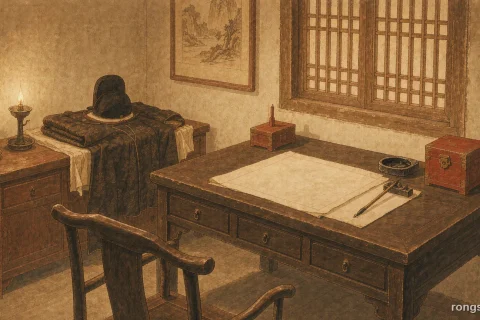
In December 2001 the school set out to build a four-hundred-metre running track. The contract went to one man: Du Shaoping, the nephew of the school principal, Huang Bingsong. As was proper, the school assigned staff to supervise the quality of the work, and it assigned Deng Shiping of the general affairs office and a colleague named Yao Buying. Yao Buying later died of illness.
During the construction Du Shaoping and Deng Shiping fell into a dispute over the quality of the work and other matters, and Du Shaoping nursed a grudge. That finding is written into the judgment of the Huaihua intermediate people’s court.
The general affairs office handled everything behind a school: buildings, equipment, repairs, purchasing. A four-hundred-metre track runs from earthworks to base course to drainage to a rubber surface, and every stage needs somebody watching it. Supervising quality was not a matter of standing nearby and looking once. It meant checking that the materials delivered were the ones the contract specified, that each stage had been done in the proper order, that the measurements were right, and then signing the acceptance sheet.
A signature carries weight on a building site. Sign it and you have vouched for the track. Refuse and the payment does not clear.
The judgment disposes of all of this in a single clause: a dispute over the quality of the work and other matters. The wording is careful. It does not say what Deng Shiping did, and it does not say what Du Shaoping was afraid of.
On January 22, 2003, Deng Shiping went to work and did not come home.
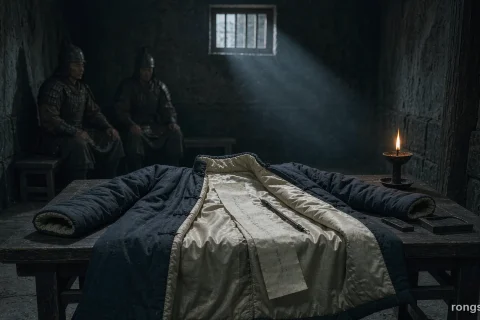
What the court found is this. That day, in the project office at the school, Du Shaoping and Luo Guangzhong killed him. That night the two men buried the body in a pit on the playing field. The next day Luo Guangzhong directed a front loader to fill the pit in.
A month later the track was finished. The students began to run on it.
Two. A family that searched for sixteen years
On January 25, 2003, Deng Shiping’s wife reported his disappearance to the Xinhuang county public security bureau. On February 11 his younger brother reported it again.
A task force was set up. Cao Riquan led it, with Chen Shoudian and Chen Ling as members, and Liu Hongbo, then a deputy director of the bureau, organised, led and took part in the handling of the case. At the Huaihua city level, an investigator and forensic examiner named Deng Shuisheng joined the inquiry and its direction, and Yang Xuewen, a deputy director of the Huaihua city bureau, directed the investigation.
On paper, the police worked the case. From the family’s side of it, the man was never found.
A missing persons case is the easiest kind of case to let go, because nothing has been proved and nobody has been charged. After that, very little survives in the record. The report went into a file, the task force held its meetings, and then nothing moved. When an adult disappears and the family never finds him, a case that cannot be closed tends to become one drawer in a records room. Deng Shiping’s family did not stop looking. What they were up against was a system that had stopped moving.
Sixteen years is a long time. Deng Shiping was fifty-three when he vanished. His children were still at school; later they went to work and married. His wife asked, year after year, until the question had become an old story in other people’s mouths. At the school, the field was used as before, the track was run on as before, and when it wore out it was resurfaced.
That is the part of this case that is hardest to sit with. The place where it happened was not a wilderness and not an abandoned well. It was the ground the children of the whole county ran around every morning. He was there, and more than a thousand people passed over him every day.
Three. Favours, banquets and a wall
Why did nobody dig for sixteen years?
The judgment, and the reports that followed it, give half the answer. Somebody was standing in the way.
After Deng Shiping disappeared, Du Shaoping and his uncle Huang Bingsong went to Yang Jun, then the political commissar of the Xinhuang county public security bureau, and asked him to cover for them. Together with Yang Rongan, then the office director at the school, the pair also approached, entertained and bought off public officials involved in the case, and interfered with, misled and obstructed the investigation.
This is what the official reports mean when they use the phrase protection umbrella. Organised crime in China is prosecuted together with the officials who shelter it, and this case became a textbook illustration of why the two are treated as one problem. It is not an abstraction. Its concrete shape is a missing persons report that stops moving; a man who should have been questioned repeatedly and is never questioned; a dig that should have continued and is buried under something else instead.
So the case sat where it was, for years. And here is the detail that makes the sixteen years legible. The officials did not need to make the case disappear. They only needed to make it go nowhere.
The ten officials convicted in the case form a chain rather than a group. They run from the political commissar and a deputy director of the county public security bureau, through the head, the deputy head and an investigator of its criminal investigation brigade, up to a deputy director and a forensic examiner at the city level. To close a case you need somebody to open it, somebody to investigate, somebody to gather evidence and somebody to pass it upward. To keep a case from closing, all you need is for one person at each stage to relax his hand.
Between 2018 and 2020 China ran a nationwide campaign against organised crime, aimed at two things at once: the criminal groups and the officials who sheltered them. The phrase protection umbrella belongs to that campaign. The playing field in Xinhuang surfaced in the course of it, out of leads from an unrelated organised crime case.
Four. The year 2019
The turn came from outside the case. That is a familiar shape in Chinese criminal cases that have gone cold: the file is reopened not because new evidence has appeared, but because the political weather has changed.
In 2019 the nationwide campaign against organised crime was already two years old. It carried an explicit instruction: do not only chase new cases, but pull out the old ones that had been pressed down by a protection umbrella. The playing field at Xinhuang number one middle school was one of the cases pulled out that way.
While handling a separate organised crime case that year, the Xinhuang county public security bureau found leads among the people involved that reached back to the old disappearance. A fresh task force was set up to re-examine it.
On June 20, 2019, the excavator arrived.
The digging began in the morning. What came up first was soil, stones, and broken brick pressed under the old track. In the afternoon, something else came up.
The skeleton was recovered that afternoon and identified by DNA.
From the day he was buried in that pit, to the day he came up out of it, sixteen years and five months had passed.
Five. The trial
On December 17 and 18, 2019, the Huaihua intermediate people’s court held a public first-instance hearing in the case of Du Shaoping and others, covering both the killing and the organised crime group, and delivered its judgment in court.
The court found Du Shaoping guilty of intentional homicide, intentional injury, picking quarrels and provoking trouble, unlawful detention, affray and forced transactions. The offences were combined and punished as one, and the sentence was death with deprivation of political rights for life and a fine of five hundred thousand yuan. Luo Guangzhong was convicted of intentional homicide and sentenced to death with a two-year reprieve, with deprivation of political rights for life. Twelve other members of the group received fixed terms ranging from one year to eight.
The judgment covers other matters as well. In April 2005, Du Shaoping and others injured a man, causing minor harm. From 2008 onward he led a group of more than a dozen men who used violence and threats to collect high-interest loans and to intervene in private disputes, and who committed a range of offences including picking quarrels and provoking trouble, unlawful detention, affray and forced transactions. In other words, through the whole sixteen years that a man lay under the running track, the man above it never stopped.
Luo Guangzhong received what Chinese law calls a death sentence with a two-year reprieve. It is worth explaining, because the phrase travels badly. The sentence is death, but its execution is suspended while the offender is held and observed for two years. If the two years pass without a new intentional crime, the sentence is reduced to life imprisonment or to a fixed term. It is not a reprieve in the ordinary sense. It is a suspended death, common in Chinese sentencing, and it is the reason two men convicted of the same killing ended up in different places.
Du Shaoping appealed. On January 10, 2020, the Hunan provincial high people’s court dismissed the appeal, upheld the original judgment, and referred the death sentence to the Supreme People’s Court for review. The review was completed on January 16, 2020, and the execution was carried out on January 20, 2020.
The other line of the case was decided in the same period. On December 30, 2019, the people’s court of Jingzhou, a neighbouring Miao and Dong autonomous county, delivered first-instance judgments against ten public officials.
Yang Jun, formerly political commissar of the Xinhuang county public security bureau, and Huang Bingsong, formerly principal of the school, were each sentenced to fifteen years for perverting the course of justice. Deng Shuisheng, formerly an investigator and forensic examiner with the Huaihua city bureau, received fourteen. Liu Hongbo, formerly a deputy director in Xinhuang, along with Chen Shoudian, Cao Riquan, Chen Ling and Yang Rongan, received between ten and thirteen years on the same charge. Yang Xuewen, formerly a deputy director at Huaihua city level, and Jiang Aiguo, formerly director of the Xinhuang county bureau, received nine years and seven years for dereliction of duty.
That the officials were tried in Jingzhou rather than in Xinhuang was not an accident. Chinese procedure allows a case to be moved to a different court in a different jurisdiction when the local court cannot reasonably be expected to try it impartially. The defendants in this group were, after all, the people whose job it had been to run or to police the place where the case died. Nine of them appealed, and on April 3, 2020, the Huaihua intermediate people’s court dismissed the appeals and upheld every judgment.
Six. Afterwards
In June 2020, Deng Shiping was officially recognised as having died in the course of his work. The county human resources and social security bureau issued a determination stating that the case fell within the work injury regulations: violence and other accidental harm suffered at the workplace and in working hours while performing the duties of the job count as a work injury. The family received eighty-eight thousand yuan in death and funeral benefits.
The work injury finding settles something narrow and exact. He was harmed at work, in the workplace, in the course of doing his job, and so his family is entitled to compensation. It is not a criminal judgment, and it cannot answer the other question. That question had already been answered, in December 2019 and January 2020, in two different courtrooms.
The family also gave up its civil claim. Their lawyer said the reason was to leave the criminal courts free to punish the offence quickly and severely.
The playing field is still there. The track has been resurfaced, and classes of students keep graduating. The pit that the excavator opened in 2019 was filled in again.
From January 22, 2003, to June 20, 2019, is a little under six thousand days. Through all of them a county school held its classes and its morning runs and its sports days, and nobody knew what was underfoot. In that county, at least ten people knew.