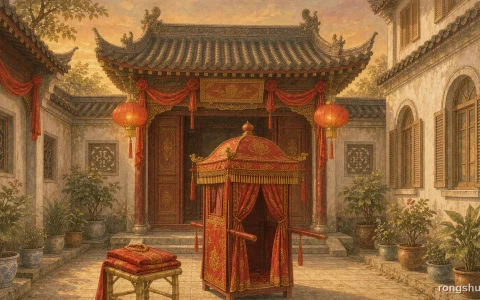
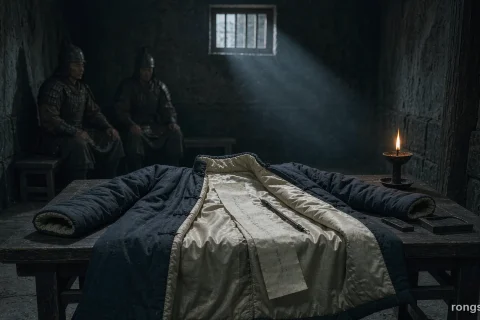
In the Northern Song dynasty, in the western capital of Luoyang, a monk travelling late fell into a dry well.
The well was not empty. There was already a woman’s body at the bottom.
The next morning the householder followed the trail, pulled the monk out along with the corpse, and took him to the district office. The monk did not manage a single word in his own defence. He confessed. He had seduced the woman, he said, taken her away, killed her to keep it quiet, and thrown the body into the well.
By the standards of the file, the case was finished. It was not finished, because the official who took it over noticed something. The stolen goods and the murder weapon had never been found.

One. Where this case comes from
The case is recorded in a collection of criminal cases compiled in the Southern Song by an official named Zheng Ke.
Zheng Ke put the book together more than a century after the Northern Song had fallen. He drew on an earlier collection compiled by a father and son of the Five Dynasties period, added cases he gathered from older documents, added cases from the Northern Song, and appended a short commentary to each one. The entry for this case carries a note on its source: the memoir of Sima Guang, who had himself served as a chancellor. The same episode appears in the official history of the Song dynasty, in the biography of the official who later solved it.
The shape of the book tells you what its compiler cared about. It runs to eight volumes divided into twenty categories, and the very first category is called releasing the wronged. Putting the clearing of wrongful convictions at the front was a statement. The categories that follow, on detecting deceit and on questioning suspects and on punishing the guilty, all sit below it. Do not convict the wrong man first. Catch the right one after.
One thing should be said at the outset. This is not fiction. The best known Chinese detective stories in the English speaking world are the Judge Dee novels written in the 1940s by the Dutch diplomat Robert van Gulik, in which the county magistrate is detective, prosecutor and judge at once. Van Gulik took that figure from collections exactly like this one. What the collections contain are cases that were really investigated, including the one below.
The Song dynasty was a high point in Chinese writing about the investigation of crime. Alongside Zheng Ke’s collection there is another compiled by Gui Wanrong. A little later, in 1247, Song Ci wrote the Collected Writings on the Washing Away of Wrongs, the earliest systematic treatise on forensic medicine to survive anywhere in the world, three hundred years before anything comparable in Europe. What these books share is their audience. They were not written for the public. They were written for the next official, setting out how to examine a body, how to question a suspect, and where mistakes were commonly made.
Two. The monk who was refused a bed
The story begins in an ordinary way.
A monk was walking late and came to a village, where he asked a household for a bed for the night. The householder refused.
He asked for less. Let him sleep in the box of the cart standing outside the gate. That the householder allowed.
He slept badly, because he saw something he should not have seen. Thieves had entered the house and were coming over the wall, helping a woman across and carrying a bundle of clothes.
What the monk thought about was not the crime. He thought about his own position. He had asked for a bed and been refused, and had pressed until he was allowed to stay in the yard. In the morning the family would find the woman and the property gone, and the first person they would suspect was the stranger at the gate, and he would be dragged to the district office with no way to explain himself.
There was a second fear underneath the first. Monks in the Song carried an ordination certificate issued by the state, and it was the document that made a monk a monk. A man caught up in a murder inquiry stood to lose the certificate and with it his standing, his place in any monastery, and his right to travel. For a monk in that position, the immediate danger was not death. It was losing the paper.
So he ran.
Three. The dry well
He did not take the road he had come by. He went through rough grass.
It was dark, the grass was tall, and he did not know the ground. He stepped into nothing and fell into a dry well.
The woman who had gone over the wall, meanwhile, was already dead. Her body was in the well, and the monk landed in her blood.
At daylight the householder followed the trail, found the monk at the well, and took him to the authorities. The man and the property together. The case looked closed.
Here a word on how a death was handled. In the Song a killing set a fixed procedure in motion. An official had to go and inspect, a coroner’s assistant carried out the examination and filled in a formal report describing where the wounds were, what shape they had, and whether they were fatal, and an official countersigned it. The point of all that paperwork was precisely to prevent the situation that arose here, in which a man is beaten until he agrees.
And the one step that mattered most in this case, the pursuit of the stolen bundle and the knife, was never taken by anybody.
What happened next occupies a single sentence in the collection. Unable to endure the beating, he confessed.
The confession he gave was not a bare admission. It was a complete story. He had carried on with the woman, they had agreed to run away together, he had killed her to prevent discovery, and had thrown the body into the well. He had then slipped and fallen in himself. As for the stolen goods and the knife, they had been lying beside the well and someone must have taken them.
With that, the case was solved. The file went up to the prefecture, and the record says that everyone took it as proven.
Four. A debt from a former life
One man in the prefecture did not agree.
His name was Xiang Minzhong.
His objection had nothing to do with how the monk behaved. It was a single fact. Neither the stolen property nor the weapon had been recovered. The monk had confessed to everything, and the two objects that mattered most were nowhere.
He had the monk brought in and questioned him again and again. After several rounds the monk gave one answer and nothing else: he owed this man a life from a former existence, and there was nothing to say.
Read in the file, that answer carries weight. A man who has been beaten, who has admitted a capital offence, has reached the point where he no longer wants to argue. He believes his fate is settled.
Xiang Minzhong kept asking. In the end the monk told him the truth.
Then Xiang Minzhong did something he had no authority to do casually. He sent one of his own clerks out, quietly, to find the real thief.
Five. A conversation in a village shop
The clerk stopped at a small roadside shop in a village to eat.
An old woman there heard that he had come from the prefecture. She did not know he was a clerk and nothing more, and she asked him how the monk’s case had turned out.
The clerk lied. He said the monk had been beaten to death in the market the day before.
The old woman sighed and asked what would happen if the thief were caught now.
The clerk said the prefecture had already decided the case wrongly, and that even if the thief were caught, no one would dare reopen it.
Hearing that, she said there was no harm in telling him, then. The woman, she said, had been killed by a young man of that village.
Where is he, the clerk asked. She pointed out the house.
The clerk went to the house, arrested the man, and recovered the stolen property with him.
The telling part of that exchange is the line the clerk improvised. He said the prefecture had already decided the case wrongly, and that even if the thief were caught, no one would dare reopen it. He was not fishing for information. He was describing how the system actually worked. Once a case has been decided and signed, undoing it is often harder than getting it wrong in the first place, because a wrong verdict damages one man and a reversal disturbs everyone who touched the file. The old woman talked because she had been told that talking could no longer cost anything.
Only then was the monk released. The collection records the reaction in four characters: the whole prefecture thought him a miracle worker.
Six. What Zheng Ke wrote afterwards
Zheng Ke attached a commentary to each case, and this one he paired with another.
In that other case a man had been condemned to death and had decided that without the real culprit there was no way for him to live, and so refused to say a word in his own defence from beginning to end. The official in Luzhou, Wang Huishu, sensed that something was wrong, refused to close the file, and had the real killer found quietly.
Zheng Ke set the two side by side and drew a conclusion. The two men were alike, he wrote. One said there was nothing to say. The other believed that without the real culprit he could never clear himself. In both cases the official declined to sign the case off, and in both the real offender was caught and the wronged man released. What made the difference was not luck. It was what he called a careful and compassionate mind.
Those two words, careful and compassionate, are the standard Zheng Ke set for his own book. Most of the cases he chose are not stories about brilliant detectives. They are stories about officials who, at the moment when the evidence did not add up, chose not to go on.
The case immediately following this one in the same volume makes the same point from the other side, and Zheng Ke placed it there deliberately. In Tongzhou a wealthy man and his sons were accused of conspiring to kill a slave girl who had run away from the household. The officer handling the file had earlier been refused a loan by the family, and he condemned the father and sons to death. The sheriff, Qian Ruoshui, thought something was wrong and simply sat on the case for ten days without signing it. A colleague accused him to his face of having been paid off. He smiled and said nothing. What he had been doing during those ten days was sending men quietly to look for the slave girl who was supposed to be dead. They found her, brought her back, and the family walked out of the cell.
Zheng Ke called this category releasing the wronged, and he put these two cases side by side for a reason. Both of them say the same thing. A confession is least reliable exactly where it is most complete.
Seven. The property and the weapon
To see why this case turned on two missing objects, you have to understand what those objects were for.
In pre-trial practice the property and the weapon were the two anchors of a homicide file, and conviction did not rest on evidence alone or on the confession alone. It rested on the fit between them. The wounds on the body had to match the weapon. The weapon had to match what the confession described. The property had to establish motive and movement. Take one of the three out and the file could not stand.
The Song inherited the legal framework of the Tang, and within that framework a confession had never been sufficient on its own. What the practice required was that property, documents and testimony corroborate one another before a capital case went up to the next level. The corollary is uncomfortable and still useful. The smoother and more complete a confession reads, the more you should look for something beside it holding it up.
The monk’s confession was missing two of them, and missing them in a strange way. A man willing to describe a seduction, an elopement, a killing, the disposal of a body and his own fall into the well had somehow nothing to say about the stolen bundle and the knife, the two items that mattered most.
That gap was what Xiang Minzhong was looking at. It is also the part of the case that is easiest to overlook. A confession is not the same thing as a solved case. Everyone in the file agreeing that there was no problem is not the same thing as there being no problem.
Eight. Afterwards
Xiang Minzhong had a long and successful career. He passed the highest examination in 980, held senior posts at court and in the provinces, and rose under the emperor Zhenzong to the chancellorship. He lived from 949 to 1020. When he heard this case he was still more than two hundred years away from Song Ci and the treatise on forensic medicine, and more than a century away from the collection in which his own ruling would be reprinted as a lesson.
The official history, in his biography, makes one observation about his time in the provinces. Earlier chancellors sent out to govern a region had tended not to interest themselves in the details of administration. Xiang Minzhong did, and his reputation followed him wherever he went. The emperor asked those around him a question that the historian thought worth recording: when a senior minister takes charge of a region, should he not be like Xiang Minzhong?
As for the other people in the case, the record gives them no names. The killer is referred to as a certain young man of the village. The woman who was killed is not named. Neither are the old woman, the shop, or the well.
What survives is a way of working. Everyone in the file was arguing about the monk’s confession. One man went and counted the missing property. When he had counted it, he did not acquit anybody or accuse anybody. He simply refused to pass sentence, and he kept refusing until the two missing things turned up.
Readers who come to Chinese true crime expecting a puzzle are sometimes surprised by how much of it turns on that kind of patience. There is a Chinese criminal case here, and a wrong man with a rope around his neck, and no clever trick. There is only an official who would not sign the paper.