The sky turned dark.
It was time for the baby to sleep.
Mother held the baby close.
The room was warm.
The lamp was low.
Mother rocked the baby gently.
Back and forth.
Back and forth.
Mother sang softly:
Row, row, to Grandmother’s Bridge.
Grandmother calls me her good baby.
A bag of sweets, a bag of fruit.
And cakes, and cakes, and more cakes too.
The baby knew the song.
Row, row, to Grandmother’s Bridge.
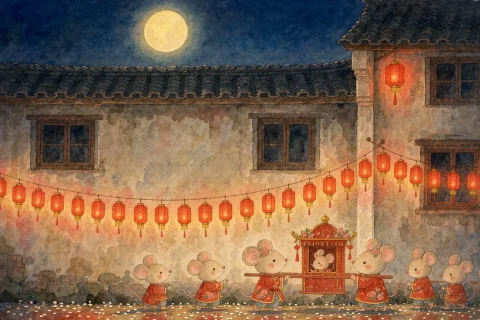
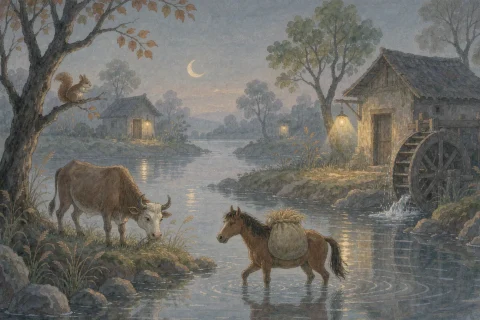
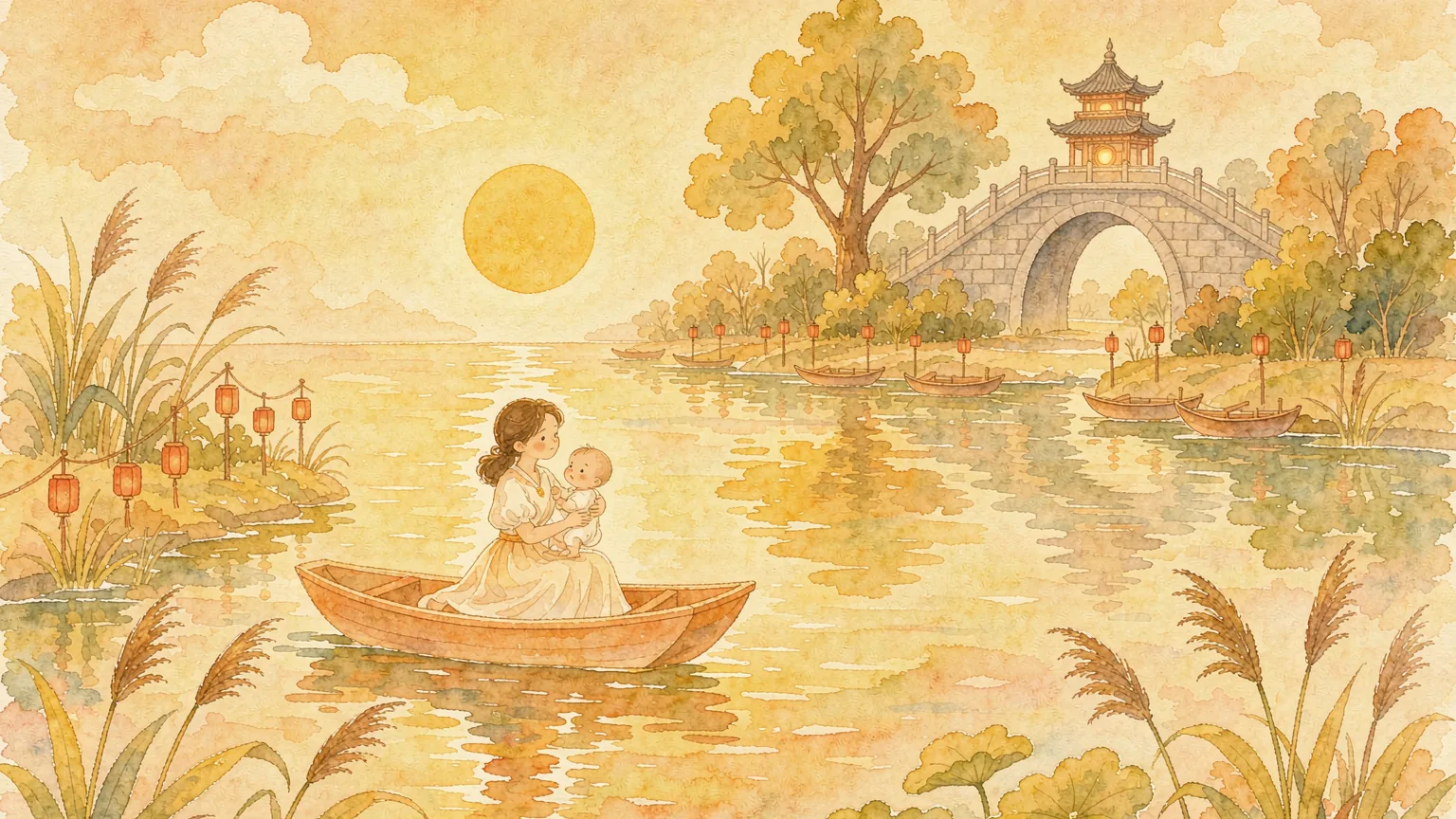
The moon on the river was round.
It floated on the water.
The lamps on the river were red.
They hung on the boats.
A little boat moved slowly.
It moved like a cradle.
The baby sat in the boat.
The baby held a small flower.
The flower was yellow.
The flower was small.
The boat passed the reeds.
The reeds bent down to look at the baby.
The baby waved.
The reeds waved back.
The boat passed the lotus leaves.
The lotus leaves moved aside to let it through.
The baby said thank you.
The boat passed under a stone bridge.
Inside the bridge, the echo was soft.
It said the song back.
The boat passed the rice field.
The rice was yellow.
In the field, the frogs were asleep.
The boat did not wake them.
The boat passed an old willow tree.
The willow was very old.
The willow branches brushed the baby’s head.
It tickled.
The baby closed one eye.
The baby laughed.
In China, every mother knows this little song.
It is very old.
It is very gentle.
One mother teaches it to the next.
And the next, and the next.
Row, row, to Grandmother’s Bridge.
The baby listened and rocked.
The baby rocked left.
The baby rocked right.
Row, row.
The little boat went on.
The boat knew the way.
The water pushed it gently.
The wind blew gently.
The river was smooth.
The baby’s eyes began to fight sleep.
They opened.
They closed.
They opened again.
The baby said, “Are we there yet?”
Mother said, “Almost.”
The lamp of the bridge was near.
Mother sang again:
Row, row, to Grandmother’s Bridge.
They reached the bridge.
The bridge was low.
The bridge was old.
Grandmother stood on the bridge.
Grandmother smiled.
Grandmother held a little bowl.
The bowl was white.
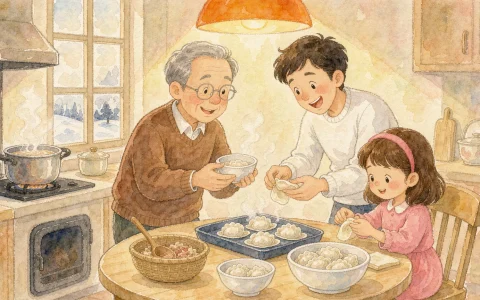
The little balls inside were round.
There were five.
There were six.
A tiny osmanthus flower floated on top.
It smelled sweet.
The baby smelled it.
Grandmother said, “Good baby, take one bite.”
The baby took one small bite.
It was sweet.
It was warm.
Grandmother smiled again.
Grandmother said, “It is late now. Let us go home to sleep.”
The baby nodded.
The baby said good night to the moon.
Mother lifted the baby again.
Mother rocked the baby gently.
Row, row, back home.
Stars in the sky, one by one.
Fireflies in the grass, one by one.
The river showed them all.
The boat passed a little fish.
The little fish wagged its tail and followed.
The little fish said, “I want to come too.”
It followed for a little way.
The mother fish called it home.
The little fish wagged its tail and went back.
The boat went on.
The boat passed a frog.
The frog called softly.
It said good night.
Not far now.
The lamp at the door was lit.
The lamp was orange.
It was warm.
The house was waiting.
Mother laid the baby in the small bed.
The blanket was soft.
The pillow was soft.
The room was still.
Mother sang softly again:
Row, row, to Grandmother’s Bridge.
Grandmother’s bridge is in the dream.
The sweet little balls are in the dream.
The baby’s boat is in Mother’s arms.
The moon on the river followed the boat.
For a long, long way.
The water carried them.
The moon was not tired.
It had all night.
The little boat was sleepy.
The oars slowed down.
The reeds went by slowly.
Once.
Again.
The boat did not move.
The oars stopped.
The river was quiet.
The fish slept.
The frog slept.
Only the moon kept walking, slowly.
The baby’s eyes closed, slowly.
A breath.
Then another.
The baby was asleep.
That is the old song of the road to Grandmother’s Bridge.
It is a gentle Chinese folktale.
It is also a Chinese fairy tale, and one of the oldest Chinese bedtime stories for children.
Now it is time to close your eyes.
Good night, Grandmother’s Bridge.
Good night, little baby.
This is a very old Chinese bedtime story. It is not long, and it is very gentle. Best read slowly, with the lights low.